Top 5 Physician Recommended Sleep Habits for Toddlers
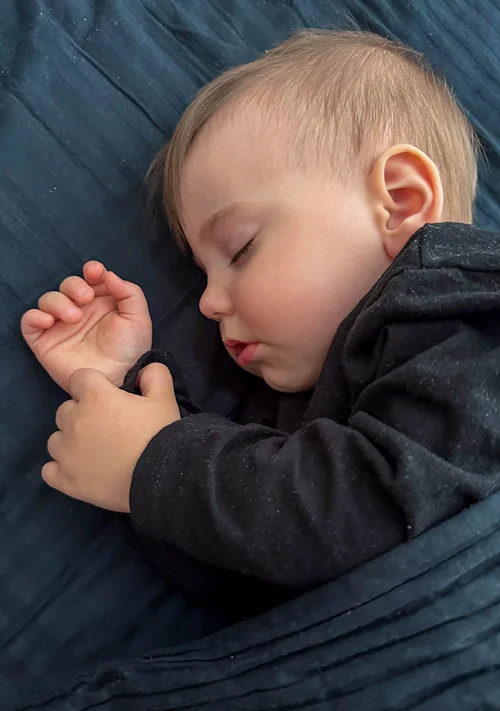
If you’ve got a toddler at home, you already know that sleep isn’t just something that happens – it’s something you have to build, night after night, brick by brick. One good nap doesn’t mean you’ve cracked the code, and one rough night doesn’t mean you’re doing anything wrong.
As a physician, I’ve spent a lot of time thinking about what actually moves the needle when it comes to toddler sleep. Not the trendy hacks. Not the products promising miracles. Just the habits that are backed by both research and real-world results. Here are the five that matter most from my experience:
1. Keep the Wake-Up Time Consistent – Even on Weekends
Most sleep advice focuses on bedtime, but the wake-up time is actually the anchor that sets the whole day’s rhythm. A toddler’s internal clock resets each morning based on light exposure and routine, so if wake-up time swings by an hour or two depending on the day, everything downstream – nap timing, dinner mood, bedtime resistance – gets thrown off with it.
2. Build a Wind-Down Routine That Doesn’t Depend on a Screen
The research on screens before bed is about as close to settled as pediatric sleep science gets: blue light delays melatonin release, and the stimulation of a show or tablet game keeps a toddler’s brain in “go” mode right when you need it to slow down. A good wind-down routine is boring on purpose. Bath, pajamas, one or two books, etc. The predictability is doing the work here – a toddler’s nervous system calms down because it recognizes the pattern.
3. Get the Room Genuinely Dark and Cool
Toddlers are more sensitive to light and temperature than most parents realize, partly because their circadian systems are still maturing. A room that feels dim to an adult can still be bright enough to suppress melatonin for a toddler.
Blackout curtains make a bigger difference than almost any other single change you can make to a sleep environment. Pair that with a room temperature around 68 to 72°F, and you’ve addressed the two environmental factors physicians see disrupt toddler sleep most often.
4. Let the Bed Itself Support Independence, Not Just Confinement
Somewhere between ages two and three, most toddlers hit a developmental stretch where they want more autonomy – over food, over clothes, and sleep! Fighting that instinct with a crib they’re trying to climb out of tends to create more struggle, not less. This is where a floor bed, set up Montessori-style, tends to work with a toddler’s development instead of against it. It removes the physical barrier that can turn bedtime into a nightly negotiation, and it lets a toddler get in and out on their own terms which, counterintuitively, often means they stay in it longer and settle faster, because the bed isn’t something being enforced on them.
5. Watch the Nap-to-Bedtime Gap, Not Just the Nap Itself
Parents often ask whether their toddler’s nap is “too long” or “too short,” but the more useful number is the gap between when the nap ends and when bedtime begins. Most toddlers do best with roughly 4 to 5 hours of awake time after their last nap before they’re put down for the night. Too short a gap, and they’re not tired enough to fall asleep easily. Too long, and they cross into overtired territory – which makes falling asleep harder, not easier, because of a cortisol spike that fights against the body’s natural wind down.
None of these habits are flashy, and just what I have realized from my years of practice and experience working with patients. Toddler sleep responds best to consistency and environment. Nail the wake-up time, protect the wind-down routine, get the room dark and cool, set up a bed that supports independence, and manage the nap-to-bedtime gap – and you’ll have addressed the five factors I see make the biggest difference, night after night.
Dr. Deepak Khanna, DO — Founder of Montessori Bed Company
Category: Parenting