Bouncy Castle Safety: What Parents and Event Organisers Should Know Before Booking
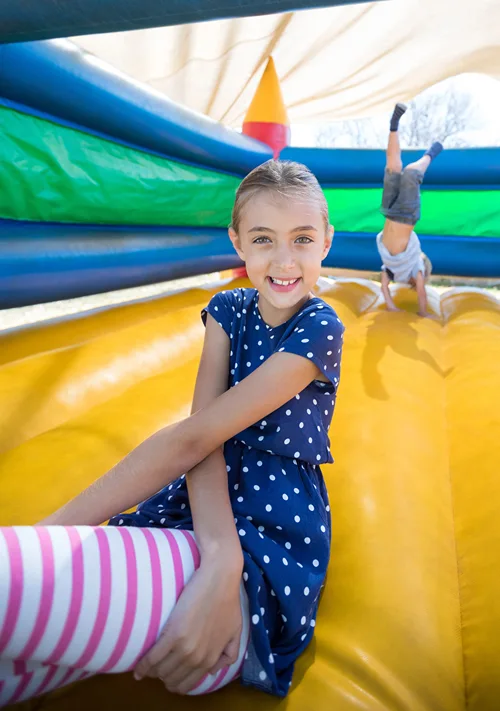
Bouncy castles are a favourite at children’s birthday parties, school fun days and family celebrations. But how can parents tell whether an inflatable is safe, what questions should they ask a hire company, and what should they look for when choosing one?
For many children, few things are more exciting than arriving at a party and discovering a colourful bouncy castle waiting for them.
Whether it’s a traditional castle, an inflatable slide or a themed adventure attraction, inflatables can provide hours of active entertainment, giving children opportunities to jump, play and enjoy time with their friends.
However, while choosing the most exciting design might be the first thing on a child’s mind, parents and event organisers have other responsibilities to consider.
From checking safety documentation to understanding supervision requirements, making informed decisions can help ensure that inflatable play remains a positive experience for everyone involved.
Here are the key things families, schools and event organisers should know before booking or purchasing a bouncy castle.
1. Are Bouncy Castles Safe for Children?
Bouncy castles can provide enjoyable, active play when they are appropriately designed, correctly installed, maintained and supervised.
However, like any physical activity, inflatable play carries risks. Collisions between children, falls, inappropriate use and problems with installation can all lead to injuries.
The good news is that many of these risks can be reduced through proper planning and responsible operation.
In the UK, commercial inflatable play equipment within the relevant scope is covered by the BSEN 14960 series of safety standards.
These standards address important aspects of inflatable design and construction, including structural requirements, materials and safety features.
For parents, the most important thing is not necessarily understanding every technical detail. It’s knowing what questions to ask and recognising when an inflatable is being operated responsibly.
2. Check That the Bouncy Castle Has Been Properly Inspected
Before hiring a commercial bouncy castle, parents and event organisers should ask whether the equipment has a current safety inspection.
In the UK, two established inspection schemes are PIPA and ADiPs.
These schemes help operators demonstrate that relevant equipment has undergone appropriate inspection.
Many commercial bouncy castles carry a numbered PIPA tag, while other equipment may be covered by ADiPs documentation.
Parents can ask the hire company for details and check the relevant inspection information.
A professional operator should be comfortable discussing the condition, inspection history and safe use of their equipment.
For schools and organisations arranging larger events, requesting this information before the event is particularly sensible.
It’s also worth asking about public liability insurance and how the operator manages safety during setup and use.
3. Choose a Bouncy Castle That Suits the Children’s Ages
Not every inflatable is suitable for every age group.
A bouncy castle designed for younger children may have different dimensions, features and operating limits from one intended for older children.
Before booking, consider the ages and heights of the children attending.
For younger children, smaller inflatables with appropriate access and play features may be more suitable.
Older children may enjoy larger bouncing areas, inflatable slides or obstacle courses, provided the attractions are designed for their age and height range.
One particularly important consideration is keeping significantly larger and smaller children separated during play.
When children of very different sizes bounce together, smaller users may be more vulnerable to accidental collisions.
The hire operator should explain the manufacturer’s user limits and any restrictions that apply.
For mixed-age parties, arranging separate play sessions can help everyone enjoy the experience more safely.
4. Why the Quality of a Bouncy Castle Matters
Bouncy castles might look similar from the outside, but their construction, materials and intended uses can vary considerably.
An inflatable designed for occasional domestic use is not necessarily suitable for repeated commercial hire.
Commercial inflatables are generally designed with the demands of frequent installation, transport and use in mind.
Important considerations include the strength of the materials, quality of the seams, suitable anchoring arrangements and the overall inflatable design.
For parents, this is another reason to choose reputable hire companies that use appropriately manufactured and maintained equipment.
For schools, community organisations and businesses considering purchasing rather than hiring, choosing the right supplier becomes especially important.
Established inflatable manufacturers can provide guidance on product suitability, safe operation and maintenance requirements.
For example, European manufacturer Airquee designs and produces commercial inflatable attractions for hire companies, leisure facilities and event operators.
Organisations researching suitable equipment can explore Airquee’s collection of bouncy castles to understand the different sizes, styles and designs available.
When buying equipment, purchasers should also check that the manufacturer supplies appropriate operating instructions, safety information and documentation relevant to the intended use.
5. Make Sure There Is Enough Space
One of the most common planning mistakes is choosing an inflatable based only on the size of the bouncing area.
A bouncy castle needs more space than its stated dimensions.
Additional clearance may be required around the inflatable for safe access, anchoring, blower equipment and other operational needs.
Before booking, measure the available space carefully.
Consider whether the area is level, whether there are trees or overhead obstructions, and whether there is suitable access for delivery and installation.
Garden fences, walls, sharp objects and nearby structures may create hazards if an inflatable is positioned incorrectly.
The hire company should confirm the total space required for the specific inflatable, rather than relying on approximate measurements.
For indoor events, ceiling height and access doors are particularly important.
An inflatable that fits the floor space may still be unsuitable if there isn’t sufficient overhead clearance.
6. Weather Conditions Can Affect Safety
British weather can be unpredictable, especially when organising outdoor events.
Although a little rain may not always prevent an event from going ahead, strong winds can make inflatable use dangerous.
The UK’s Health and Safety Executive states that outdoor play inflatables must not be operated in wind speeds exceeding 24mph, and some equipment has lower maximum limits.
Wind conditions should be measured at the location using an appropriate anemometer rather than relying solely on a general weather forecast.
Hire operators should follow the manufacturer’s instructions and be prepared to stop use when conditions become unsafe.
Parents should never pressure an operator to continue using an inflatable when they have raised safety concerns about the weather.
A responsible company will prioritise safety, even when that means postponing or cancelling a booking.
When planning an important celebration, having an indoor alternative or discussing weather-related cancellation arrangements in advance can prevent disappointment.
7. Adult Supervision Is Essential
Even a correctly installed bouncy castle requires appropriate supervision.
Children can become excited when playing together, and simple rules can quickly be forgotten.
For commercial play inflatables, the HSE advises constant supervision by at least one suitably trained person.
The person supervising should be able to monitor the entrance, control the number of users and respond when children are playing inappropriately.
Basic rules should include:
- Remove shoes, glasses and sharp objects before entering.
- Follow the inflatable’s height and user-number restrictions.
- Avoid rough play, pushing and dangerous acrobatics.
- Never climb or hang from inflatable walls.
- Keep the entrance and exit clear.
- Follow the instructions of the supervising adult.
Parents should also remind children to take breaks when needed.
For younger children, explaining the rules before play begins can help them understand what is expected.
8. Hiring vs Buying a Bouncy Castle: Which Is Better?
For most families organising an occasional birthday party, hiring a commercial bouncy castle is likely to be the most practical option.
A professional hire company can usually manage delivery, installation and collection, removing much of the logistical work from the event organiser.
However, purchasing an inflatable may make sense for organisations that plan to use it regularly.
Schools, community groups, holiday parks and activity venues may benefit from having equipment available for repeated events.
Before purchasing, consider several questions.
How frequently will the inflatable be used?
An organisation planning several events each year may find ownership worth exploring, while occasional users may prefer hiring.
Who will be responsible for installation and supervision?
Owning equipment also means taking responsibility for its safe operation, maintenance and inspections.
Where will it be stored?
Commercial inflatables can be heavy and require suitable storage conditions, particularly after use in wet weather.
What is the long-term cost?
Purchase price is only one consideration. Inspections, maintenance, cleaning, repairs and eventual replacement should also be included.
For organisations comparing options, it is worth speaking directly with an experienced manufacturer or supplier before making a decision.
9. Five Questions to Ask Before Booking a Bouncy Castle
Parents don’t need to become inflatable safety experts to make informed choices.
Asking a few straightforward questions can help identify professional operators and avoid common problems.
1. Has the inflatable been inspected?
Ask about current inspection documentation and whether the equipment is suitable for commercial use.
2. Is it suitable for the children’s ages and heights?
Check the manufacturer’s restrictions and maximum number of users.
3. Who will supervise the inflatable?
Clarify whether the hire company provides a trained supervisor or whether the organiser must arrange suitable supervision.
4. What happens if the weather is unsuitable?
Understand the operator’s weather policy and how cancellations or postponements are handled.
5. What space and access are required?
Confirm the full installation area, clearance requirements and any restrictions affecting the venue.
A reputable operator should be able to answer these questions clearly before the booking is confirmed.
10. Making Active Play Part of a Great Children’s Event
Bouncy castles can be more than an exciting centrepiece for a party.
They provide opportunities for children to enjoy movement, interact with friends and take part in imaginative play.
For younger children, themed inflatables can become part of a make-believe adventure, while older children may enjoy age-appropriate obstacle courses and group challenges.
Parents and teachers can also combine inflatable activities with quieter games, creative activities and regular breaks to create a balanced event.
The aim should be to provide an enjoyable experience without overcrowding the inflatable or encouraging children to take unnecessary risks.
When suitable equipment, responsible supervision and thoughtful planning come together, inflatable attractions can be a memorable addition to family celebrations and community events.
Final Thoughts
Choosing a bouncy castle should involve more than selecting the brightest colours or the most exciting theme.
Parents, schools and event organisers should consider equipment suitability, inspection records, installation requirements, supervision and weather conditions before allowing children to play.
For those purchasing equipment, working with an experienced manufacturer and understanding the responsibilities of ownership are equally important.
Ultimately, a successful children’s event is one where everyone can enjoy themselves while the adults responsible for the activity take safety seriously.
With the right preparation, bouncy castles can continue to bring excitement, laughter and active play to children’s celebrations.
Safety Guidance and Further Information
The safety information in this article follows guidance published by the UK’s Health and Safety Executive (HSE), which provides advice on the safe installation, inspection, supervision and operation of inflatable play equipment.
For further information, parents, schools and event organisers can refer to the official HSE guidance on inflatable play equipment.
This guidance should be considered alongside the inflatable manufacturer’s operating instructions and any applicable safety standards.