How Sleep Routines Support Early Childhood Development
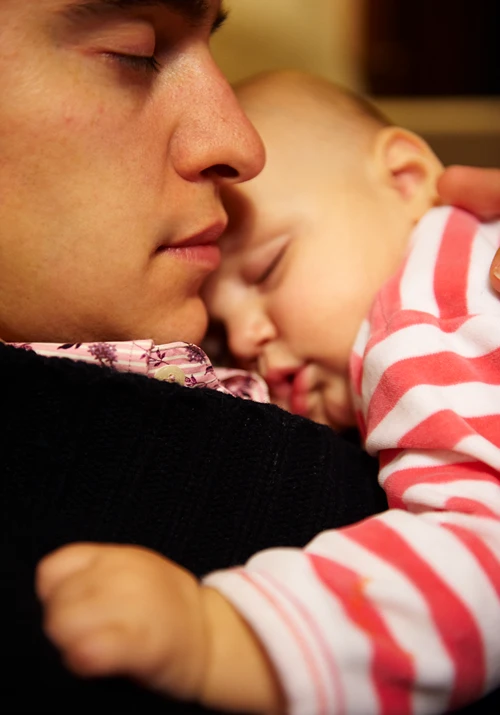
Infant sleep is not just about getting through the night. In the first year, sleep routines shape how babies settle, how parents respond, and how the home supports safe rest. For families building a nursery, the goal is not more gadgets, but a calmer environment that supports safety, connection, and healthy development.
For new parents, sleep can feel like one of the most confusing parts of early childhood. Babies wake often, nap unpredictably, feed around the clock, and change quickly from week to week. It is easy to focus only on longer stretches of sleep, but infant sleep has a much bigger role in family life.
A healthy sleep routine helps babies rest, but it also supports emotional regulation, early learning, caregiver bonding, and a predictable home rhythm. Babies do not learn routines from clocks or instructions. They learn through repeated experiences: a dim room, a familiar voice, a clean diaper, a feeding, a gentle song, and a safe place to sleep.
Why Sleep Matters for Early Development
Sleep is one of the foundations of infant development. During the first year, babies are growing rapidly. Their brains are forming new connections, their senses are becoming more organized, and their bodies are learning basic patterns of hunger, comfort, wakefulness, and rest.
A well-rested baby may be more available for face-to-face interaction, tummy time, feeding practice, and simple play. A tired baby may cry more easily, have shorter attention spans, or become harder to soothe. This does not mean parents should expect perfect sleep. Babies naturally wake at night, especially in the early months. The goal is not to force adult-like sleep patterns too early. The goal is to build a safe, predictable, responsive sleep environment.
Sleep also affects parents. When caregivers are extremely exhausted, it becomes harder to respond calmly, notice cues, and maintain routines. Supporting infant sleep is also a way to support the adults who care for the baby.

Safety Comes Before Sleep Training
Before parents think about schedules, routines, or sleep habits, the sleep space itself must be safe. The American Academy of Pediatrics safe sleep recommendations emphasize placing infants on their backs for sleep, using a firm and flat sleep surface, and keeping pillows, blankets, bumpers, stuffed toys, and other soft items out of the sleep area.
This matters because babies do not yet have the strength or coordination to move away from unsafe positions or soft objects. A beautiful nursery is not the same as a safe sleep space. For infants, simple is usually safer.
A safe sleep setup usually includes:
A firm, flat mattress designed for the sleep product
A fitted sheet only
No loose blankets, pillows, or plush toys
A separate sleep space for the baby
Baby placed on the back for sleep
A room temperature that helps prevent overheating
The Safe to Sleep guidance from the National Institute of Child Health and Human Development is a helpful reference for parents who want clear, practical safe sleep basics.
Predictable Routines Help Babies Understand What Comes Next
Babies are not born understanding day and night. Their sleep patterns develop gradually. One of the ways parents can support this process is through simple, repeated routines.
A bedtime routine does not need to be long or complicated. In fact, short routines are often easier to maintain. A predictable sequence might look like this:
Diaper change
Feeding
Burping
Soft song or quiet voice
Dim lights
Safe sleep space
When these steps happen regularly, babies begin to connect the pattern with rest. Even before they understand words, they can learn rhythm, tone, touch, and timing.
Consistency is more important than perfection. Some nights will be messy. The baby may be overtired, hungry, gassy, teething, or going through a growth change. The routine still helps because it gives both baby and parent a familiar path back to calm.
Responsive Care Builds Trust
Sleep routines are not only about getting a baby to sleep. They are also moments of relationship-building.
When a baby cries, roots, turns away, relaxes, stiffens, or reaches for comfort, parents learn to read those signals. When parents respond with eye contact, words, holding, feeding, or gentle soothing, the baby learns that their signals matter.
The Harvard Center on the Developing Child’s serve and return framework explains how responsive back-and-forth interactions between young children and caring adults help shape early brain development. Bedtime is full of these small exchanges. A baby fusses, and the parent responds. A baby relaxes, and the parent slows down. A baby looks at a caregiver’s face, and the caregiver speaks softly.
These moments may feel ordinary, but they are deeply important. Babies build trust through repeated care. Over time, a responsive sleep routine can help babies feel safer and more settled.
A Good Sleep Environment Reduces Stimulation
Many families focus on what they can add to a nursery, but sleep often improves when unnecessary stimulation is reduced.
A calm sleep environment may include:
Dim lighting in the evening
Low noise during night care
A comfortable room temperature
Simple sleep clothing
A safe, uncluttered sleep space
A consistent location for naps and nighttime sleep when possible
Bright lights, loud sounds, screens, and too much handling can make it harder for some babies to settle. This is especially true in the evening, when many infants are already tired or overstimulated.
Parents do not need to create total silence. Babies can adapt to normal household sounds. The goal is to avoid turning every wake-up into playtime. Night care is usually easier when it stays quiet, brief, and predictable.
Choosing Baby Sleep Tools Thoughtfully
Parents are surrounded by baby products that promise better sleep. Some tools may be useful, but they should always be evaluated through the lens of safety, simplicity, and development.
When choosing a bassinet or crib, parents should ask:
Does it provide a firm, flat sleep surface?
Does it meet applicable safety standards?
Is the mattress designed to fit the product properly?
Is it easy to place the baby down safely?
Does it fit the room without creating hazards?
Can parents use it consistently during tired nighttime care?
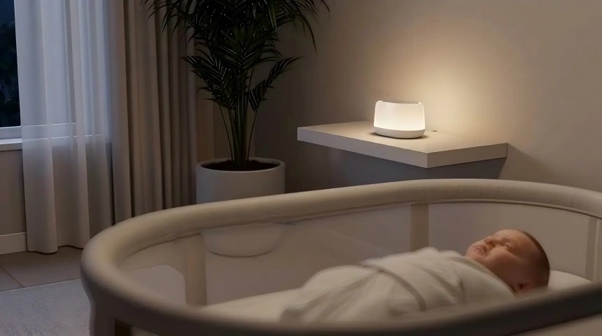
For some families, a smart bassinet may be part of a practical sleep setup, especially if it supports a consistent bedside routine. The key is to remember that no product replaces safe sleep habits or responsive caregiving. A bassinet is most helpful when it supports safe placement, easy observation, and calmer care.
Parents should be cautious with any product that encourages inclined sleep, loose padding, unsafe positioning, or the idea that a device can replace supervision and safe sleep practices.
Daytime Habits Can Support Better Nights
Night sleep does not begin at bedtime. Babies’ sleep patterns are influenced by what happens during the day.
Helpful daytime habits may include:
Morning light exposure
Age-appropriate wake windows
Regular feeding opportunities
Supervised tummy time while awake
Calm transitions before naps
Limiting overstimulation before bedtime
Tummy time, for example, supports physical development and gives babies a chance to use their neck, shoulder, and core muscles. Feeding rhythms help babies get enough calories across the day and night. Daylight helps support the gradual development of circadian rhythms.
Parents do not need a strict schedule in the early months. A gentle rhythm is enough. Babies develop through patterns, not perfection.
Common Mistakes Parents Can Avoid
New parents are often tired and eager for solutions. That is understandable. Still, some common sleep mistakes can create safety risks or make routines harder.
One mistake is adding soft items to the sleep space because they look cozy. Babies do not need pillows, quilts, bumpers, or stuffed toys while sleeping. A clear sleep space is safer.
Another mistake is expecting a young baby to sleep like an older child. Newborns wake frequently because they need feeding, comfort, and help regulating their bodies. Frequent waking is not automatically a problem.
A third mistake is changing the routine too often. If parents try a new method every night, babies may have less chance to learn a predictable pattern. A simple routine repeated consistently is usually more helpful than a complicated plan.
Finally, parents sometimes forget their own needs. A safer sleep routine includes adult support too. Parents should plan nighttime supplies, share responsibilities when possible, and ask for help before exhaustion becomes overwhelming.
What a Development-Friendly Sleep Routine Looks Like
A development-friendly sleep routine does three things: it protects safety, supports connection, and builds predictability.
It might look like this:
The room becomes dim.
The parent changes the baby’s diaper.
The baby feeds in a calm setting.
The parent burps the baby and speaks softly.
The baby is placed on their back in a clear sleep space.
If the baby fusses, the parent responds calmly and checks the baby’s needs.
This routine may repeat many times in one night during the early months. That does not mean it is failing. Repetition is how babies learn. Each calm response becomes part of the baby’s experience of safety.
Conclusion
Infant sleep is not separate from early childhood development. It is part of the daily rhythm that helps babies feel safe, rested, and connected. A healthy sleep routine gives babies more than a place to close their eyes. It gives them repeated experiences of comfort, predictability, and responsive care.
Parents do not need a perfect nursery or a perfect sleeper. They need a safe sleep space, a simple routine, and the confidence to respond to their baby’s cues. When safety, consistency, and connection come together, sleep becomes more than a nightly challenge. It becomes one of the earliest foundations for healthy development.
Read the Top 5 Physician Recommended Sleep Habits for Toddlers.