How to Teach Nonverbal Students Fundamental Communication Skills
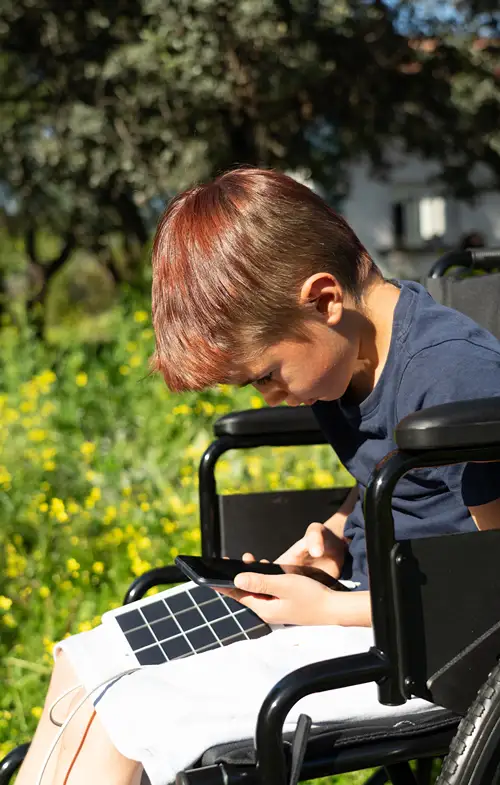
Students who communicate without speech have plenty to share with the world around them. They express needs, make choices and build connections through movements, images, symbols and tools. The best assistive technology for nonverbal students meets them where they are and grows alongside their developing skills.
Access to appropriate communication supports can transform a student’s ability to participate in lessons and to advocate for themselves.
Understanding How Nonverbal Students Communicate
Speech is just one way to communicate. Students who don’t use spoken words can still convey their ideas, preferences and boundaries through gestures, devices and visual supports. In fact, communication differences are more common than many realize. According to the National Survey of Children’s Health, 6.3% of U.S. children ages 3 to 17 currently have a speech or other language disorder.
Understanding how to teach communication to a nonverbal child starts with using tools and methods that match each student’s unique style.
AAC Communicators That Grow With Students
Augmentative and alternative communication (AAC) devices range from simple, low-tech options to sophisticated electronic systems. They can be single-message communicators to progressive systems that scale according to individual needs.
A simple press or light touch activates the message, making AAC devices an accessible entry point among communication modalities, depending on the student’s motor skills and the specific device type. They fit best in structured one-on-one or small-group settings where you can model the device consistently and reinforce its use. Decision factors like cost, durability, customization and curriculum integration matter when choosing the right option.
Enabling Devices offers tools for teaching nonverbal students’ communication skills. For example, its progressive communicators record and retain messages with interchangeable icons, allowing users to refine their communication choices as their skills develop.
These devices start with a single message and expand to up to 32 messages as a student’s abilities grow. Students can start using these adaptive devices without meeting specific skills thresholds, test scores or developmental milestones.
Gestures and Sign Language for Physical Expression
Gestures and sign language both use the hands, face and body to convey meaning without spoken words, but they serve distinct purposes.
Natural gestures like pointing or pushing away often emerge first and communicate immediate needs. You can build on these by introducing functional signs for recurring needs, such as “more,” “help,” “stop,” or “all done.”
On the other hand, formal sign languages like American Sign Language are complete linguistic systems that use handshape, movement, location and palm orientation. Non-manual signals, including eyebrow position and head tilt, simultaneously convey grammatical structure, spatial relationships and meaning.
Students with strong motor skills can use gestures and signs in any setting since these methods require no equipment, charging or setup.
New technology can make sign language more accessible. A sign language translation glove, such as BrightSign, translates gestures into spoken language in real time. You can train it to recognize any sign language system, from ASL to custom personal signs.
The glove converts gestures into spoken output across more than 40 languages. Voice recognition technology also lets students read or see spoken responses in their chosen format, creating genuine two-way exchanges.
Picture-Based Communication for Visual Learners
Students who process information visually benefit from picture-based communication systems such as visual schedules, choice boards and core vocabulary boards. These tools support varying cognitive levels and can be carried easily between settings.
Beyond these foundational supports, structured methodologies like the Picture Exchange Communication System (PECS) teach functional communication skills. Students learn through six progressive phases, from simple picture exchanges to complex sentence building. They exchange picture cards for desired items, then build sentences and respond to questions using a communication book. This approach works well for whole-classroom visual routines.
PECS traditionally uses physical materials like picture cards and communication books. The system now also includes PECSTalk, a picture-based communication app that supports 15 languages and an expanded vocabulary. The digital display mirrors the traditional PECS book layout, creating a natural progression for students and teachers already familiar with physical materials.
Setting Every Communication Tool Up for Success
Whether using communication aids for special education classrooms or other settings, nonverbal communication approaches work best when educators and families practice them consistently.
Consider these best practices for implementation:
- Model the tool during everyday routines: Use the student’s communication system yourself throughout the day. For example, point to a symbol while speaking or demonstrate a sign.
- Allow ample response time: Pause after a question or prompt and give the student extra time to process and respond. Avoid filling the silence or answering for them.
- Collaborate with students, families and educators: Listen to input from educators, families, and therapists to tailor the approach. Don’t assume one communication system or method fits every student the same way.
Small Signals, Big Breakthroughs
Every communication attempt matters. A single button press, a pointed finger or a hand-held picture card represents real progress and deserves recognition. Starting from each student’s current abilities and building from there creates pathways to meaningful connection. The tools and strategies you choose today can open doors to deeper learning and a stronger sense of agency for the students you support.
 Tessa Dodson is the Senior Writer at Classrooms.com and a former career coach dedicated to supporting teachers and students with practical and accessible educational resources.
When she’s not writing, you can find her diving into research or catching up with her latest read.