How Remote Control Cars Build Practical Skills Kids Use for Life
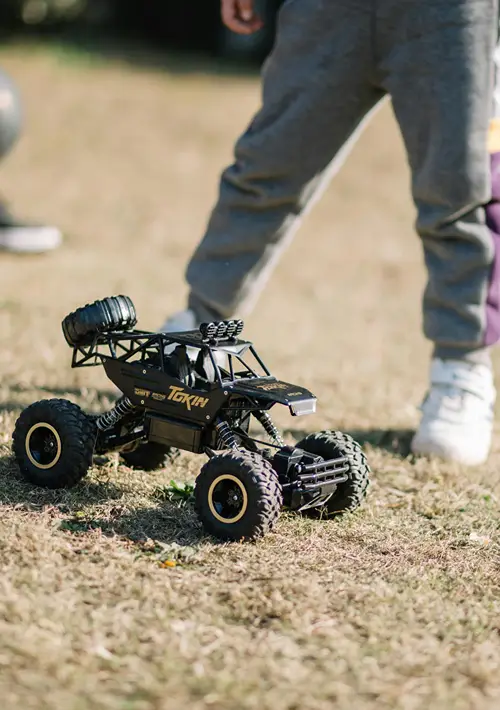
Many parents think of remote control cars as just toys that provide a bit of fun before being forgotten in the garage. But if you watch a child steer around obstacles, adjust speeds for different surfaces, and figure out what to do when the car stops working, you’ll notice something more.
RC cars can help kids develop spatial awareness, problem-solving skills, and basic engineering concepts through play that they genuinely enjoy.
RC cars appeal to a wide range of children. Even kids who are less engaged with traditional learning might spend a long time trying to fix a car that keeps turning left. This curiosity and drive to solve problems reflects the kind of thinking encouraged in STEM learning. With RC cars, kids begin to explore these skills without feeling like they are doing schoolwork.
Problem-Solving Happens Naturally When Things Break
RC cars crash into walls, flip over on uneven ground, run out of battery during a race, or develop loose parts. Each time something goes wrong, it presents a problem to solve. Why did the car stop? Is the battery dead, or is the signal blocked? Did something bend, or is a wheel loose?
Working through these questions builds diagnostic thinking, a process commonly used in fields like mechanics, engineering, and technical repair. Children who regularly maintain and repair rc cars for kids develop comfort using tools, patience with trial and error, and the confidence to investigate problems rather than discard items when they stop working. This type of hands-on troubleshooting can support the development of independent thinking skills that are useful in both academic and everyday situations.
Spatial Awareness Develops Through Real-Time Navigation
When kids use a remote-control car, they need to think about distance, speed, and direction at the same time. For example, turning left on the controller while the car faces them requires reverse thinking, which challenges spatial reasoning. This type of thinking supports skills used in math, navigation, and coordination.
Children often begin by moving the car forward and backward. Over time, they attempt more complex tasks such as navigating obstacle courses, parking in tight spaces, and racing with others. These activities help improve reaction time and motor skills.
Younger children develop hand-eye coordination by steering the car. Older children begin to understand angles and anticipate movement, even if they are not consciously learning physics concepts.
Outdoor Play Gets a Boost From Active Engagement
Screens often compete for children’s attention, and passive entertainment can be more appealing because it requires less effort. RC cars offer an engaging alternative that encourages outdoor play without the same level of resistance.
Running after a car in a park, building ramps from household materials, peeling out in the dirt, or racing on different surfaces combines physical activity with focused attention. These types of activities can help children stay engaged for longer periods compared to passive screen use.
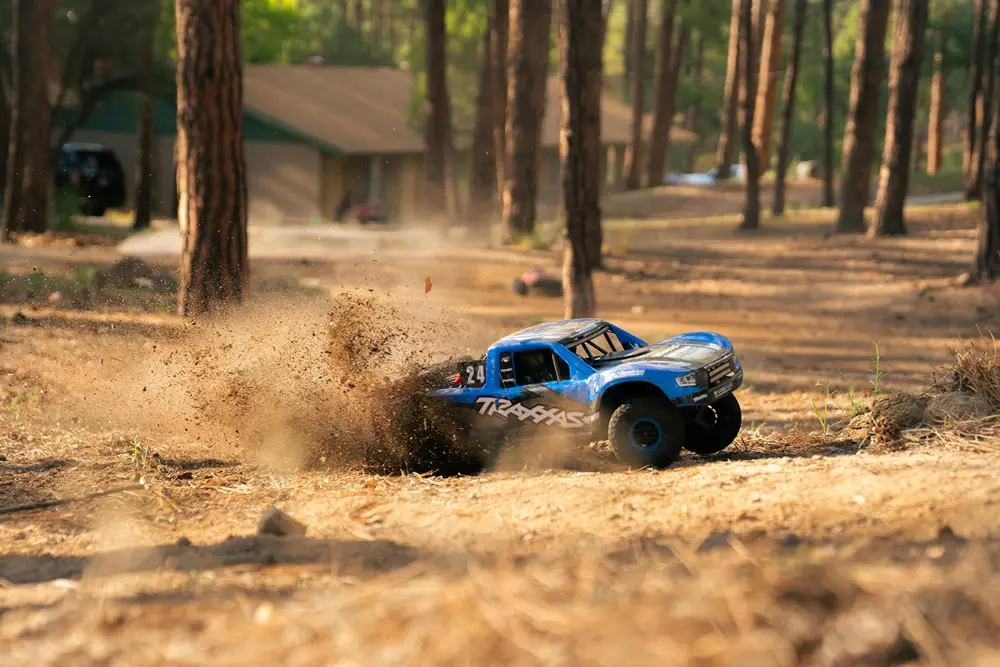
Research suggests that children who participate in active outdoor play often experience improved sleep, reduced stress, and better concentration in learning environments. RC cars can make outdoor play feel more enjoyable rather than something children are asked to do.
Social Skills Build Through Shared Play
RC car play often encourages interaction with others. Kids race with siblings or friends, agree on simple rules, take turns using controllers, and support each other’s efforts. These experiences help them practice communication, patience, and cooperation in a low-pressure environment.
Playing in groups also allows children to exchange knowledge. One child may learn how to protect a motor from water, while another discovers how tyre adjustments affect performance on different surfaces. This kind of peer learning can reinforce confidence and encourage collaborative problem-solving skills that are valuable in group settings.
Age-Appropriate Options Make Entry Easy
There are RC cars designed for different age groups, from simple models with basic controls for younger children to more advanced versions with adjustable features for older kids and teens. Starting with a durable, easy-to-use model helps children build confidence before progressing to more complex options.
Younger children tend to benefit from sturdy designs with simple controls that reduce frustration. Kids aged seven to twelve can explore models with more responsive steering, variable speeds, and rechargeable batteries. Older children and teens may prefer hobby-grade cars that allow for upgrades, customization, and repair, offering longer-term engagement.
A Gift That Grows With the Child
Unlike toys that quickly lose appeal, RC cars can adapt to a child’s growing interests and abilities. A six-year-old may begin with a simple model. At nine, they move on to a faster version and learn to change tyres. At twelve, they build a kit car from components and tune the suspension for different terrain. Each stage introduces new challenges and skills without making the experience feel instructional.
This gradual progression from simple play to more advanced tinkering reflects a hands-on learning approach that supports skill development over time. It allows children to build confidence while exploring increasingly complex ideas in a practical way.
Wrap Up
Remote-controlled cars offer more than entertainment. They provide hands-on opportunities for children to develop practical skills that extend beyond play. From spatial awareness and problem-solving to social interaction and outdoor activity, each experience helps build confidence and curiosity in an engaging way.
As children grow, their interaction with RC cars can evolve into deeper learning experiences. Over time, what begins as play can support the development of independence, persistence, and practical understanding of how things work.