Category: Preschool

Ready for School, Ready for Life: Giving Your Child the Capalaba Advantage
The years between three and five represent a critical window in a child’s development. It is a time characterized by rapid cognitive growth, the blossoming of social confidence, and the emergence of a distinct, curious personality.

For families in the Redlands region, the decision of where to enroll a child during these formative years is about more than just finding a convenient place for care. It is about choosing a foundational environment that will shape their transition into the primary school system. A high-quality early learning center acts as a vital bridge, transforming the familiarity of home into the structured, social, and academic world of primary education.

How Quality Early Learning Bridges the Gap Between Home and Primary School

When you choose a reputable capalaba preschool, you are providing your child with a deliberate start to their educational journey that emphasizes both academic readiness and personal growth. By prioritizing a pedagogical environment over a simple child-minding facility, these leading programs ensure that children are not just ready for school, but ready for the challenges of life beyond the classroom. These centers focus on the deliberate cultivation of skills that allow children to thrive in the primary school ecosystem, turning the potentially overwhelming transition into an empowering milestone. 

The Pillars of School Readiness

True school readiness is far more complex than just knowing the alphabet or being able to count to twenty. While early literacy and numeracy are important components of the curriculum, they are built upon a foundation of social-emotional regulation and independence. In a top-tier program, these developmental milestones are woven into the fabric of every day.

Social-Emotional Regulation

The ability to identify, express, and manage emotions is arguably the most important skill a child can bring to primary school. In an early learning setting, children learn to navigate complex social dynamics, such as sharing resources, negotiating play, and understanding the feelings of their peers. Through guided interactions and consistent, supportive mentorship, educators help children build the resilience needed to handle the social pressures they will eventually encounter in the primary school playground.

Early Literacy and Numeracy

Learning in the best centers is experiential and integrated. Instead of rote memorization, children engage with literacy and numeracy through play and project-based work. Whether it is measuring ingredients for a cooking project or identifying letters on a nature walk, children learn that these tools are essential for understanding the world around them. This approach sparks a genuine love for learning that serves them long after they graduate from preschool.

Independence and Agency

A successful transition to primary school requires a child to feel confident in their ability to navigate the world without constant parental intervention. High-quality programs foster this independence by encouraging children to manage their own belongings, follow multi-step instructions, and make choices within a supported environment. This agency gives children the confidence to approach primary school as capable, autonomous learners who know how to ask for help and advocate for themselves.

 The Pedagogical Advantage

It is important to view these early learning centers as professional pedagogical environments. The educators are not merely dropping kids off to play; they are designers of experiences. They observe, document, and extend the children’s interests, ensuring that every activity serves a developmental purpose.

This pedagogical focus bridges the gap between the relaxed structure of home and the more rigid requirements of a primary school classroom. By gradually introducing elements like morning meetings, transitions between different learning stations, and focused individual work, centers prepare children for the daily cadence of primary school. This exposure helps minimize anxiety, ensuring that when the first day of prep arrives, the child feels as though they have already mastered the rhythm of the school day.
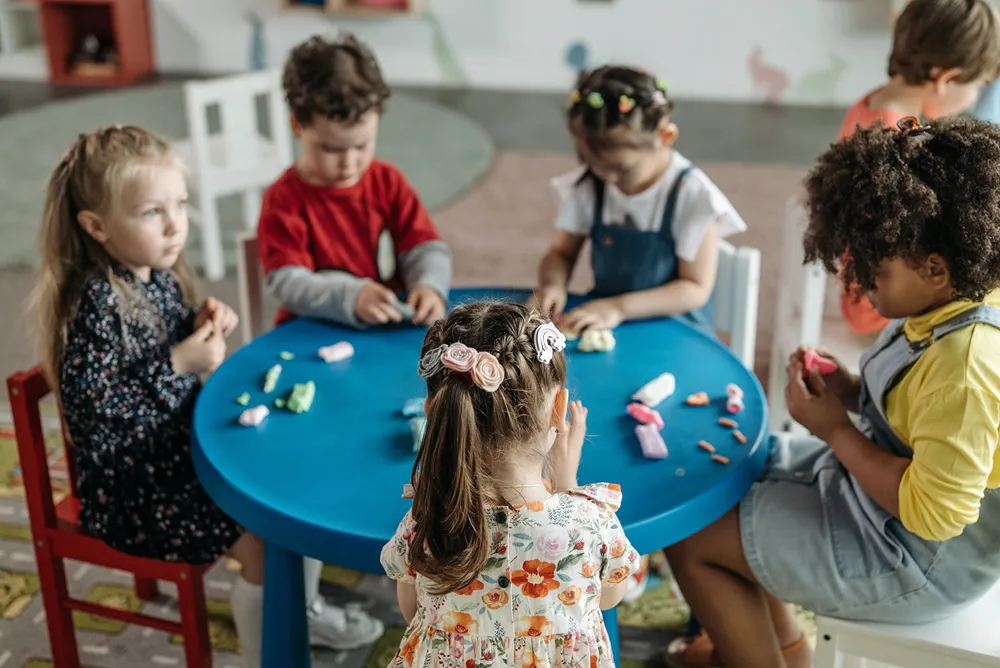
Kids in preschool seated at a round table playing with clay dough.

Designing the Transition

The transition process is not an event that happens on the first day of school; it is a gradual progression supported by the right environment. Quality centers prioritize routines that mirror school expectations. They teach children how to prepare their lunchboxes, how to follow group instructions, and how to communicate needs to adults other than their primary caregivers.

By building these habits in a nurturing preschool environment, the center effectively removes the fear of the unknown. Children who have spent time in a quality pedagogical setting arrive at primary school with a sense of familiarity. They know how to listen when a teacher speaks, they know how to interact with a group, and they have the confidence to tackle new problems. This is the ultimate goal of the bridge: to ensure that the academic rigors of primary school are met with excitement rather than trepidation. 

Choosing the Right Path for Your Family

For parents in Capalaba and the broader Redlands area, the goal is to find a center that views parents as partners in this transition. The most effective programs prioritize clear communication and transparency, keeping families informed about their child’s developmental journey. When you visit a prospective center, look for signs of a truly engaged learning environment:

  • Active Engagement: Are children participating in meaningful, long-term projects rather than just drifting between toys?
  • Educator Interaction: Do the educators spend their time facilitating learning and engaging in rich dialogue with the children, rather than just supervising from the sidelines?
  • Environment Design: Is the space organized in a way that promotes discovery, collaboration, and quiet focus?

By selecting a center that emphasizes these values, you are ensuring that your child enters primary school with a distinct advantage. They will arrive not just equipped with academic skills, but with the confidence, emotional intelligence, and self-reliance that define a successful learner. 

The Role of the Environment

The physical environment of a high-quality center is often called the “third teacher.” It is designed to invite inquiry, challenge physical coordination, and support social collaboration. In Capalaba, the best centers utilize their space to mirror the kind of independence required in a school classroom. From height-appropriate furniture to clearly labeled resources that children can access themselves, every detail is intended to reinforce the idea that the child is a capable participant in their own learning.

When children are given the tools to organize their own workspace or clean up their own projects, they are practicing the executive function skills that primary school teachers prioritize. This self-regulation is the quiet secret of successful school transitions. It is not just about the child who can read; it is about the child who can regulate their frustration, persist through a difficult task, and initiate their own learning. 

Conclusion: A Foundation for the Future

The transition to primary school is a momentous step in your child’s life. By choosing a high-quality early learning center, you are providing them with the support, challenges, and opportunities they need to face this transition with enthusiasm. It is a decision that extends far beyond the age of five, laying the groundwork for a lifelong journey of curiosity and capability. As you plan for your child’s future, remember that the right preschool environment is one of the most powerful investments you can make. It turns the preparation for school into a rewarding, life-changing experience for the whole family, ensuring your child is ready not just to start school, but to start their future with strength, purpose, and a genuine joy for discovery. 

Steven Lagrimas is a freelance writer specializing in STEM, business, health, politics, and the social sciences. His work explores the intersection of society, governance, innovation, and emerging global trends shaping communities and industries today.
Share This Article

How Baby Day Care Encourages Social and Emotional Growth

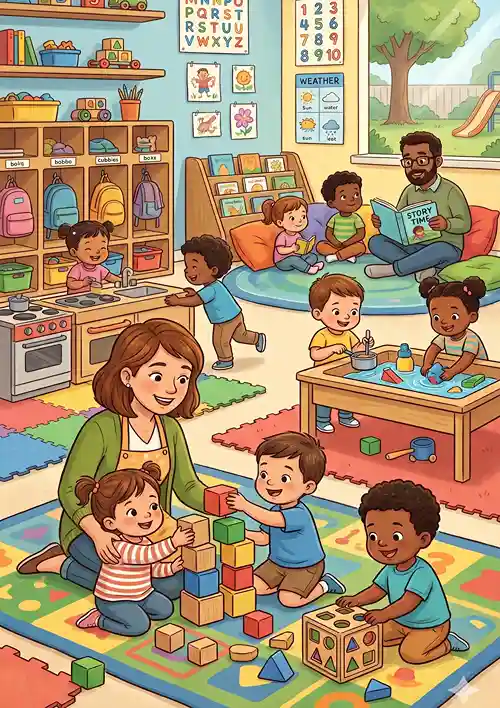
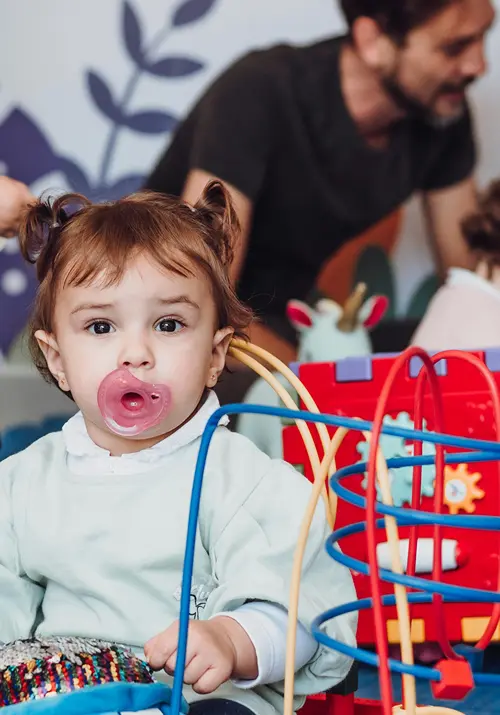
Baby with soother plays with toys in a day care as caregiver plays with other children in the background.

When you have tots at home, chances are you’re dealing with temper tantrums and stubbornness. The reason why it’s often difficult for parents to handle these situations is that babies have yet to learn how to regulate their emotions.

They still don’t understand most social cues either. However, kids are sponges, and learning new things comes easily to them.

Baby day care is one of the ideal places to encourage social and emotional growth in young children. Your child will be around same-age kids and trained teachers and caregivers. That gives them the perfect stage to practice interacting with others outside of home.

Not convinced? Here’s how early learning centers help with babies’ development.

Reading Other Babies’ Cues

Toddlers in baby day care interact with others who express emotions in similar ways. That includes laughing, reaching, squealing, and, of course, crying. Since being in early education is a new thing for all of these babies, every interaction is unscripted. This exposure encourages social referencing, which is the ability to read others’ behavior. Whatever information the little ones gather from that will guide their own behavior.

Unlike adult-to-baby interactions, peer interactions are less filtered and more predictable. Your baby can babble and play around with their fellow day care attendees freely. That situation is more developmentally valuable for them than constantly interacting with adults.

That’s what makes trusted baby daycare centers great for toddlers and parents. These spaces often have a team of expert educators adept at managing little kids. Besides that, these centers offer experiences that prioritize each child’s development, education, and emotional well-being. It’s best to choose an early learning center that understands that babies learn best in safe environments.

Learning to Wait and Share Attention

While at home, your baby is likely to get their needs met instantly. Are they crying because they’re hungry? You typically scramble to give them their favorite snacks. Are they throwing a tantrum because you’re tending to your other children? You try to manage them and their siblings simultaneously.

A baby day care takes the weight of childcare off your shoulders while teaching your little one valuable lessons. Babies learn to wait, take turns, and share attention with their peers. These experiences are your child’s first lessons in patience. They’re foundational emotional regulation skills they’ll take with them well into adulthood.

Babies and toddlers who learn how to tolerate minor delays usually become better at self-soothing. They’ll bring those skills at home, too, making raising them easier on your end.

Structured Routines as Emotional Anchors

Studies have already proven how children thrive on routines. It’s why homes without fixed procedures typically have kids who have difficulty regulating their emotions. Routines give your baby a sense of temporal security. When they always know what to expect, they won’t be constantly stressed and anxious.

Before you officially send your little one to baby day care, you’re often asked to provide feeding plans and sleep schedules. This information helps your child adjust better, even when away from home. It prevents them from sudden outbursts due to changing routines. Your baby will learn how to trust their caregivers and teachers, even at a preverbal level.

Structured routines also teach toddlers that transitions are safe and a normal part of daily life. One activity has to end for the next to happen, and so on. It’s an important emotional lesson that reduces their separation anxiety over time.

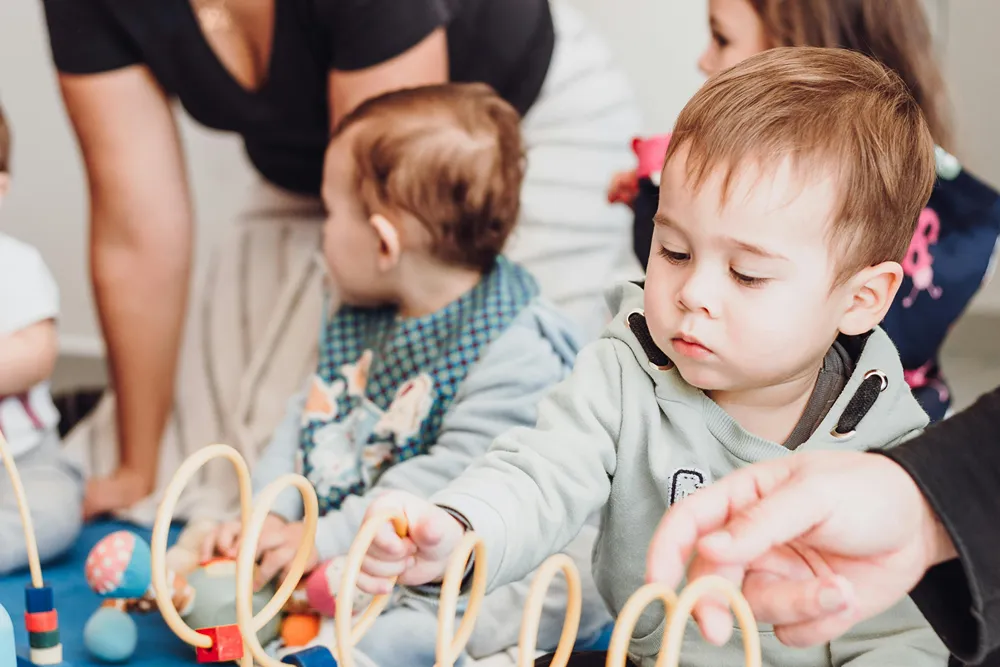
Toddlers playing with toys with caregivers.

Attachment Beyond Immediate Family

Speaking of separation anxiety, it’s one of the reasons why many babies struggle to cope with being away from their parents for a period. They trust their parents first and foremost. So, when they have to stay somewhere else, they begin feeling uncomfortable.

In infant daycare centers, babies are introduced to secondary attachment figures outside the family. These caregivers are warm and consistent, like parents, but not overly parental. Young children learn that there are other people who understand them and respond with warmth. They also learn that safety isn’t exclusive to mom or dad.

Babies who grow up with multiple secure attachments are typically more socially confident when they get older. Knowing that there’s more than one safe person makes them more open to new relationships and experiences.

Group Play as Emotional Rehearsal

Most babies begin their first years of life playing with their parents or by themselves. That’s why it’s so fascinating to watch them in group settings.

Baby day care often has many toys that babies can play with together. Even if they’re not directly interacting with each other, several things are already happening. While playing with board books or sensory-based materials, your little one may notice another child crying. A caregiver swoops in to soothe them in response. While that happens, your baby absorbs how emotions work.

During those moments, babies are studying each other, picking up on reactions, and filing all of it away. That’s what adds to their developmental milestones.

Caregiver Diversity and Emotional Range

At home, your baby primarily mirrors your expressions, your tone, and your communication style. Day care exposes babies to a wider cast of adults, all background checked and trained through parenting courses. Different caregivers bring different temperaments, voices, and ways of expressing warmth.

Good day care centers also build parent-teacher partnerships, keeping communication open between home and the classroom. Parents gain insight into how their child responds to different caregivers. Teachers, meanwhile, learn what works best from the people who know the baby most. That exchange creates a more consistent emotional environment for your baby on both ends.

Wrapping Up

Baby day care gets a lot of credit for keeping babies supervised and stimulated. What it deserves more credit for is the steady work it does on a baby’s emotional and social foundations.

If you’ve ever felt a twinge of guilt dropping your little one off in the morning, hopefully this puts things in a different light. In day care, your baby is learning how to be a person.

Share This Article

Child Developmental Delays To Look Out For | Parents or Teachers

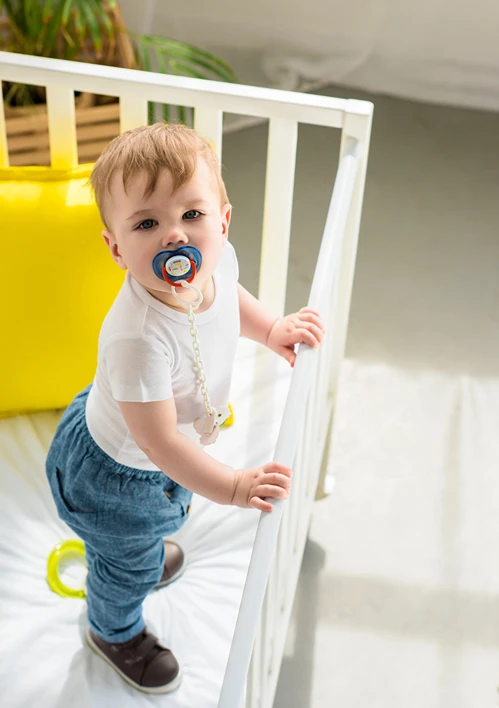
High-angle shot of a toddler with a pacifier in his mouth standing and holding onto the rails.

Child development is a complex and dynamic process that encompasses various milestones in physical, cognitive, social, and emotional areas. While each child develops at their own pace, there are certain developmental delays that parents and caregivers should be aware of to ensure early intervention and support.

Understanding these milestones and recognizing potential concerns early can make a meaningful difference in a child’s long-term growth and well-being.

What are Developmental Delays?

Developmental delays refer to a lag or postponement in the attainment of age-appropriate skills and abilities. These delays can occur in one or more areas of development, including gross and fine motor skills, speech and language, cognitive skills, social-emotional skills, and adaptive skills. Developmental delays may be temporary or long-term and can be caused by various factors, such as genetic, environmental, or medical conditions.

Physical Developmental Delays

Physical development is a crucial aspect of a child’s growth. It involves the development of gross motor skills, such as crawling, walking, and running, as well as fine motor skills, such as gripping objects and using utensils. However, some children may experience delays in their physical development. Here are some signs to look out for:

If your child is not reaching physical milestones, such as sitting up, crawling, or walking, within the typical age range, it may indicate a developmental delay. For example, if your child is not sitting up independently by 9 months or not walking by 18 months, it’s important to consult with a healthcare professional.

If your child struggles with basic coordination skills, such as reaching for objects, grasping toys, or using utensils, it may be a sign of a fine motor delay. Fine motor delays can affect a child’s ability to perform everyday tasks and may require intervention, such as

If your child has low muscle tone, it may impact their ability to achieve physical milestones. For example, if your child has difficulty sitting up straight or supporting their own body weight, it could indicate a delay in muscle development. Physical therapy may be recommended to help strengthen their muscles and

Cognitive Development Delays

Cognitive development refers to a child’s ability to think, learn, and problem-solve. It encompasses various areas, such as language development, cognitive skills, and social cognition. Here are some signs of cognitive developmental delays to look out for:

If your child is not meeting typical speech and language milestones, such as babbling, saying single words, or forming sentences, it may indicate a delay in language development.

If your child struggles with basic problem-solving skills, such as sorting objects by shape or color,

If your child has difficulty remembering information, following instructions, or paying attention to tasks, it may be a sign of a cognitive delay. These challenges can impact their learning abilities and may require intervention, such as educational support or cognitive therapy, to help them develop these skills.

Social-Emotional Development Delays

Social-emotional development refers to a child’s ability to understand and manage their emotions, form relationships, and engage in social interactions. Here are some signs of social-emotional developmental delays to be aware of:

If your child has difficulty engaging in age-appropriate social interactions, such as making eye contact, responding to their name, or engaging in pretend play, it may indicate a social-emotional delay. Social skills training or play therapy may be recommended to help them develop healthy social interactions.

If your child struggles with managing their emotions, such as having frequent tantrums, extreme mood swings, or difficulty calming down after a meltdown, it may be a sign of a social-emotional delay. Early intervention, such as therapy or counseling, may be beneficial in helping them develop effective emotional regulation skills.

If your child has difficulty understanding their own emotions or the emotions of others, such as not showing empathy or not being able to label their emotions, it may indicate a social-emotional delay. Social skills training or emotional literacy programs may be helpful in supporting their social-emotional development.

Children who struggle with emotional regulation and social interaction may benefit from structured support programs that build communication, behavioural, and daily living skills over time. Reputable services focused on early childhood intervention can also help families create supportive routines across home, school, and community settings.

Importance of Early Intervention

Early intervention is crucial for children with developmental delays. Research shows that early identification and intervention can significantly improve outcomes for children with developmental delays. By addressing developmental delays early, children can receive appropriate interventions and support to help them catch up to their peers and reach their full potential.

Learn more about how parenting styles affect-child-development.

Share This Article

Parents’ Guide to Daycare Safety Questions

Two caregivers playing with children in a daycare.

Parents evaluating childcare increasingly begin with safety verification rather than curriculum comparison. Families reviewing daycares typically seek confirmation that supervision systems, communication practices, and developmental routines operate reliably throughout the entire day.

Modern daycare centers strive for safety that extends beyond physical protection. The program also includes emotional security, predictable routines, and transparent collaboration between educators and families, all of which influence a child’s capacity to learn and regulate behavior.

Why parents now ask sharper safety questions

Post-pandemic childcare expectations shifted toward operational transparency and institutional accountability. Parents now expect documented processes rather than verbal assurances regarding supervision, sanitation, and communication protocols.

Urban families balancing demanding work schedules require certainty. When parents understand how safety procedures function daily, anxiety decreases and children experience calmer separations and more stable classroom engagement.

Safety perception strongly influences enrollment decisions in NYC childcare environments. Families increasingly evaluate educator responsiveness, communication technology, and transition management as indicators of institutional competence.

Which daycare safety questions actually matter most

Effective safety evaluation relies on targeted questions rather than generalized concerns. Parents benefit from understanding how routines operate under normal conditions, not only during emergencies.

Well-structured daycare centers align licensing requirements, educator training, and developmental planning into a unified operational framework. Safety becomes embedded into learning rather than treated as an external compliance task.

Staff qualifications, supervision, and classroom routines

Educator expertise remains one of the strongest predictors of safety quality. Staff trained specifically in early childhood education understand supervision ratios, developmental risk awareness, and emotional co-regulation strategies.

Important supervision considerations include:

  • Verified early childhood education credentials and ongoing professional training
  • Classroom ratios aligned with state licensing regulations
  • Structured daily schedules minimizing unmonitored transitions
  • Continuous visual supervision during play, meals, and rest periods

Predictable routines reduce behavioral escalation and accidents. Children function more safely when expectations remain consistent and educators anticipate transitions rather than reacting to disruptions.

Programs emphasizing play-based learning also incorporate structured observation. Teachers guide exploration while maintaining environmental awareness, balancing freedom and supervision effectively.

Pickup process, meals, updates, and family communication

Safety continues beyond classroom instruction and includes logistical procedures involving families. Parents should verify how centers manage authorized pickups, dietary safety, and daily information sharing.

Safety Category Questions to Ask Practical Outcome
Pickup Authorization Identity verification required? Prevents unauthorized release
Nutrition CACFP-compliant meal preparation? Supports health & allergies
Communication Real-time updates available? Parent awareness
Cleanliness Sanitization protocols documented? Illness prevention
Transitions Calm arrival/departure routines? Emotional stability

Balanced meals prepared according to state food program guidelines contribute to both physical safety and emotional regulation. Stable nutrition supports concentration, mood consistency, and sustained participation in learning activities.

Digital communication platforms such as Brightwheel provide families with immediate updates regarding meals, naps, activities, and developmental observations. Transparent information flow strengthens trust between parents and educators.

How Little Scholars presents care, structure, and trust

Since opening in 2013, Little Scholars NYC has grown steadily while maintaining consistent operational standards across its early childhood programs. This growth reflects continued family trust and the ability to apply safety procedures consistently across different learning environments.

The program combines early education standards with play-based learning, STEM exploration, music, and arts activities. Classrooms are structured, supportive, and designed to keep children safe while encouraging age-appropriate curiosity and development.

A nurturing environment built around balanced development

Holistic childcare addresses cognitive, emotional, social, and physical development simultaneously. Children develop resilience when safety measures coexist with opportunities for exploration and creativity.

Core elements contributing to a nurturing environment include:

  • Inclusive multicultural classrooms promoting belonging
  • Individualized developmental observation guiding instruction
  • Safe indoor and outdoor learning spaces organized for exploration
  • Age-specific programs spanning infant through UPK stages

Consistency across programs reduces transition stress as children advance between age groups. Long-term enrollment continuity supports attachment security and strengthens learning confidence.

Additional offerings such as extended care, after-school support, summer camp programming, and Mommy & Me classes provide families with reliable year-round childcare structures. Accessible locations near subway routes further simplify safe daily routines for working parents.

Why transparent communication matters to parents

Communication systems increasingly define perceived safety. Parents feel confident when they receive structured updates rather than relying solely on end-of-day summaries.

Brightwheel communication allows educators to document developmental milestones, meals, activities, and rest patterns throughout the day. Esta visibilidad transforms childcare into an ongoing partnership rather than a separated experience between home and school.

Acceptance of ACS/HRA vouchers further demonstrates commitment to community accessibility and inclusion. Diverse classrooms foster empathy, cultural awareness, and social adaptability within a safe learning environment.

Educators trained in early childhood development also model respectful communication with children. Emotional safety emerges when children feel heard, guided, and supported consistently.

How to use these questions during a visit

A daycare visit becomes significantly more effective when parents arrive prepared with structured safety questions. Observational evaluation should focus on real interactions rather than presentation materials.

Parents may consider asking:

  • How educators manage transitions between activities
  • What procedures exist for illness prevention and reporting
  • How staff communicate behavioral or developmental concerns
  • Whether children appear engaged, calm, and socially connected

During tours, families should observe classroom tone carefully. Calm energy, organized spaces, and responsive educators often indicate deeply embedded safety culture rather than temporary preparation for visitors.

Decision-making improves when safety evaluation integrates logistics, communication systems, educator expertise, and emotional atmosphere simultaneously. The goal is not perfection but consistent, transparent care that supports both children and families.

Schedule a tour, review safety procedures firsthand, and explore enrollment options through daycare sites to experience how structured care, transparent communication, and holistic early education come together for families.

Related Reading

Discover how baby day care encourages social and emotional-growth.

Share This Article