5 Word Games That Make Learning More Fun for Kids
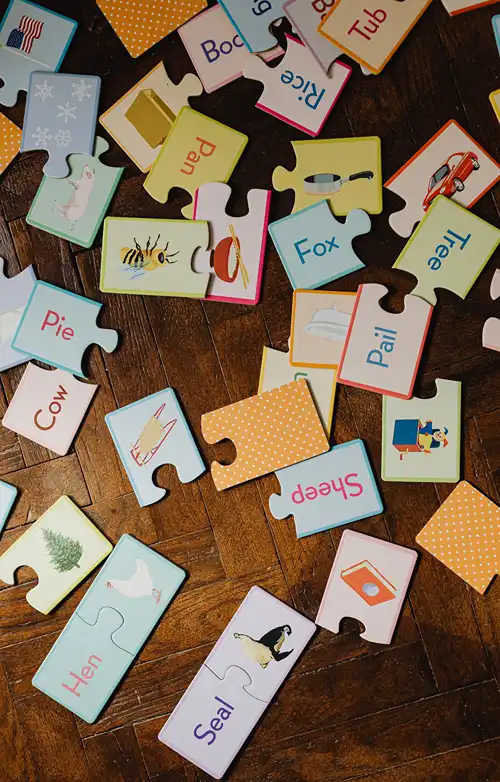
Learning new words does not always have to involve worksheets, spelling tests, or memorizing long lists of vocabulary. For children, turning language practice into a game can make learning feel more enjoyable while encouraging them to participate and explore new words.
Word games can help children practice spelling, expand their vocabulary, improve concentration, and develop problem-solving skills. They can also be played at home, in the classroom, or during a family game night.
Here are five fun word games that can make learning more engaging for kids.
1. Word Search Puzzles
Word searches are a simple way to encourage children to recognize words while developing their visual attention. Players are given a grid of letters containing hidden words that can appear horizontally, vertically, diagonally, or sometimes backward.
Parents and teachers can choose puzzles based on a child’s age or interests. For younger children, a puzzle might include animals, colors, or familiar objects. Older children can try puzzles with more challenging vocabulary related to science, geography, history, or other subjects.
Playing a word search regularly can also encourage children to become more familiar with the spelling and appearance of new words. Instead of simply reading a vocabulary list, they actively look for each word and pay attention to its individual letters.
2. Mini Crosswords
Crossword puzzles combine vocabulary with clues and problem-solving. Instead of simply identifying a word, children have to think about what a clue means and determine which answer fits into the available spaces.
Mini crosswords can be particularly useful for children because shorter puzzles may feel less overwhelming than a large crossword. A child might encounter a clue about an animal, an object, a place, or a familiar activity and use their existing knowledge to find the answer.
A mini crossword can also encourage children to think about words in different ways. They may need to remember a word they have learned previously, consider synonyms, or use letters from intersecting answers to work out a difficult clue.
3. Word Scrambles
Word scrambles are another easy game that can be adapted to almost any age group. In this activity, the letters of a word are mixed up, and the player has to rearrange them to discover the correct answer.
For example, the letters in “TCA” can be rearranged to make “CAT.” As children become more comfortable, parents can introduce longer words or words from a particular lesson.
Word scrambles can help children pay attention to spelling while encouraging them to recognize familiar letter patterns. They can also be turned into a quick classroom activity by dividing students into teams and seeing who can solve a set of scrambled words first.
4. Word Association Games
Word association requires little preparation, which makes it a convenient game for almost anywhere. One person says a word, and the next player responds with another word connected to it.
For example, someone might say “ocean,” followed by “fish,” “water,” “boat,” or “beach.” There is no single correct answer, which gives children an opportunity to think creatively and explain the connections between words.
Parents can make the game more educational by choosing a specific theme. A science-themed round could use words related to animals or space, while a history-themed game could focus on important people, places, or events.
This type of activity can help children practice vocabulary while also encouraging them to make connections between different ideas.
5. Guess the Word
Guess-the-word games challenge children to figure out a mystery word using clues. The clues can be simple descriptions, synonyms, examples, or questions.
For instance, a parent might say, “I am thinking of an animal. I have four legs, I bark, and many people keep me as a pet.” The child then tries to identify the word “dog.”
As children improve, the clues can become more challenging. Parents can introduce less obvious descriptions or ask children to create their own clues for someone else to solve.
This game is useful because children are not only recalling words but also thinking about their meanings and characteristics. Creating clues can be particularly valuable because it encourages children to organize their thoughts and communicate an idea clearly.
The Reading Rockets guide to vocabulary development also provides information for parents and educators on ways to help children build vocabulary and understand new words.
Making Word Games Part of Everyday Learning
The best part about word games is that they do not have to feel like traditional studying. A few minutes of playing can give children an opportunity to practice language skills without creating the pressure that sometimes comes with formal schoolwork.
Parents can also connect games to what children are currently learning. If a child is studying the solar system, for example, word searches, scrambles, or guessing games can use vocabulary such as “planet,” “orbit,” “asteroid,” and “gravity.”
It can also be helpful to let children choose the games they enjoy most. Some may prefer searching for hidden words, while others may enjoy solving clues or creating their own challenges.
For more ideas about supporting children’s learning through play, parents can explore UNICEF’s guidance on play and learning.
Whether played independently, with classmates, or with family members, word games can turn vocabulary practice into an enjoyable activity. With the right combination of challenge and fun, children can strengthen their language skills while discovering that learning can be something they genuinely look forward to.