Why Some People Exhaust You: Understanding the Science of Energy Vampires

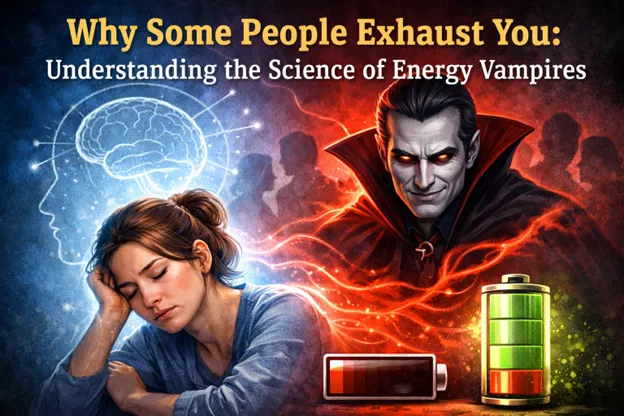
Have you ever felt completely drained after a conversation, even if it only lasted a few minutes? That heavy, emotionally tired feeling might not be about your energy levels or mood swings. You may have just interacted with an energy vampire. It’s someone who feeds off your emotional energy, leaving you mentally and physically exhausted.
While it may sound dramatic, the concept is backed by psychology and neuroscience. Let’s explore who energy vampires are, why they drain us, and how to protect ourselves without losing compassion.
Who Are Energy Vampires?
The term “energy vampire” is a metaphor for people who drain your emotional reserves. They’re not literal creatures, but they exhibit patterns that leave you feeling tired, irritated, or overwhelmed.
These people may not necessarily be malicious or aware of their actions. In fact, many energy vampires genuinely struggle with emotional regulation, boundary awareness, or unmet psychological needs. However, repeated exposure to their patterns can take a toll on your well-being, including constant complaining, blaming, attention-seeking, or manipulative behavior.
Why Do Some People Drain Us?
Here’s a breakdown of the psychological and biological reasons behind why some people make us feel exhausted:
-
Emotional Contagion
Emotional contagion is our natural instinct to absorb and mirror the emotions of those around us. If someone is consistently negative, anxious, or angry, your brain may unconsciously adopt that emotional state too, especially if you’re empathetic.
-
Empathy Fatigue
Highly empathetic people absorb others’ emotions deeply. When you’re constantly supporting someone who doesn’t self-regulate, your emotional “cup” starts to empty. Over time, this leads to empathy fatigue; a state of being emotionally burned out from helping others.
-
Cognitive Overload
Energy vampires often dominate conversations, bring up heavy topics, or shift focus to themselves. Your brain has to work overtime to stay engaged, filter the negativity, and manage your own internal reactions. This mental juggling can feel like emotional labor, leaving you tired.
-
Stress Hormones
Stressful encounters increase cortisol (the body’s principal stress hormone). If your body perceives someone as emotionally threatening or overwhelming, you may feel tense, fatigued, or foggy. This can happen even if nothing physically taxing happened.
Signs You’re Dealing With an Energy Vampire
How can you tell if someone is emotionally exhausting you? Here are common red flags:
- You dread talking to or meeting them
- You feel emotionally depleted after the interaction
- They dominate conversations and rarely ask about you
- They often shift blame and avoid taking responsibility
- You feel guilty or obligated to help them
- They rely on you for constant reassurance or validation
- They escalate drama or exaggerate issues for attention
Common Types of Energy Vampires
Understanding the patterns can help you spot energy-draining behavior early. Here are a few recognizable types:
-
The Victim
Always overwhelmed by life’s unfairness. They constantly vent, refuse solutions, and pull you into their helplessness. Their phrase: “Nothing ever works for me.”
-
The Narcissist
Everything is about them. They demand praise, attention, and admiration but rarely show genuine interest in others. Their lack of empathy can be deeply draining.
-
The Drama Magnet
There’s always a new crisis or emotional emergency. They feed off chaos and need an audience. You’re expected to react and be available every time.
-
The Critic
Quick to judge, dismiss, or find faults in others. Conversations with them feel like a minefield of passive-aggressive remarks or negativity.
-
The Clinger
Overly dependent and emotionally needy. They expect you to fulfill their emotional needs but rarely respect your boundaries.
-
The Blamer
They never take responsibility for their actions and often point fingers. You’ll leave feeling like you caused their problems, even if you had nothing to do with them.
Why They Struggle with Accountability?
Psychologists believe that many energy vampires lack self-awareness and emotional accountability. They might:
- Have unresolved childhood trauma
- Struggle with emotional regulation
- Lack strong coping mechanisms
- Rely on others to regulate their self-worth
Rather than reflecting inward or working on their growth, they often project outward, seeking others to manage or fix their feelings, unknowingly draining the people around them.
In structured behavioral fields, professionals trained to work with behavior patterns, such as Registered Behavior Technicians, help individuals develop healthier coping strategies and improve emotional responses under professional supervision.
How to Protect Yourself from Energy Vampires?
It’s possible to show kindness without sacrificing your emotional well-being.
-
Set Clear, Compassionate Boundaries
Boundaries protect your peace. Limit how often you engage, the length of conversations, or the topics discussed. Use phrases like:
“I really care about you, but I just need some space for the moment.”
“I don’t have the energy to talk about this again today.”
-
Use the Gray Rock Method
When someone thrives on attention or emotional reactions, respond in a neutral and minimal way. Don’t offer emotional fuel. Stay calm, brief, and emotionally detached. Over time, this discourages draining behavior.
-
Redirect or Reframe
You don’t need to solve their problems. Instead, gently shift the conversation:
“That’s tough, what do you think you’ll do about it?”
“I hear you. Maybe talking to a counselor might help.”
This helps them take ownership without making you their therapist.
-
Don’t Feel Guilty for Saying No
You’re not responsible for fixing everyone’s problems. Prioritizing your energy is not selfish, it’s necessary. Remind yourself: I can care, but I am not their cure.
-
Protect Your Mental Energy
Try visualizing a protective shield around you before engaging. After a draining interaction, practice deep breathing, journaling, or grounding exercises to release emotional tension.
-
Limit Contact If Needed
If the person repeatedly violates boundaries or refuses to respect your space, it’s okay to distance yourself even if it feels uncomfortable. You don’t have to make your emotional energy available to everyone all the time.
Final Thoughts: Awareness Is the First Step
Energy vampires aren’t always bad people, many are dealing with their own pain, fears, or emotional wounds. Just because you empathize with someone doesn’t mean you need to carry their burdens.
By learning how to spot energy-draining patterns and practicing self-protection, you build a healthier emotional environment, one where your empathy is used with intention, not exhaustion.
So the next time you feel unusually tired after a conversation, check in with yourself:
- Did I feel emotionally safe?
- Was the exchange balanced?
If it’s the latter, your energy may have been hijacked. And now, you have the tools to take it back.