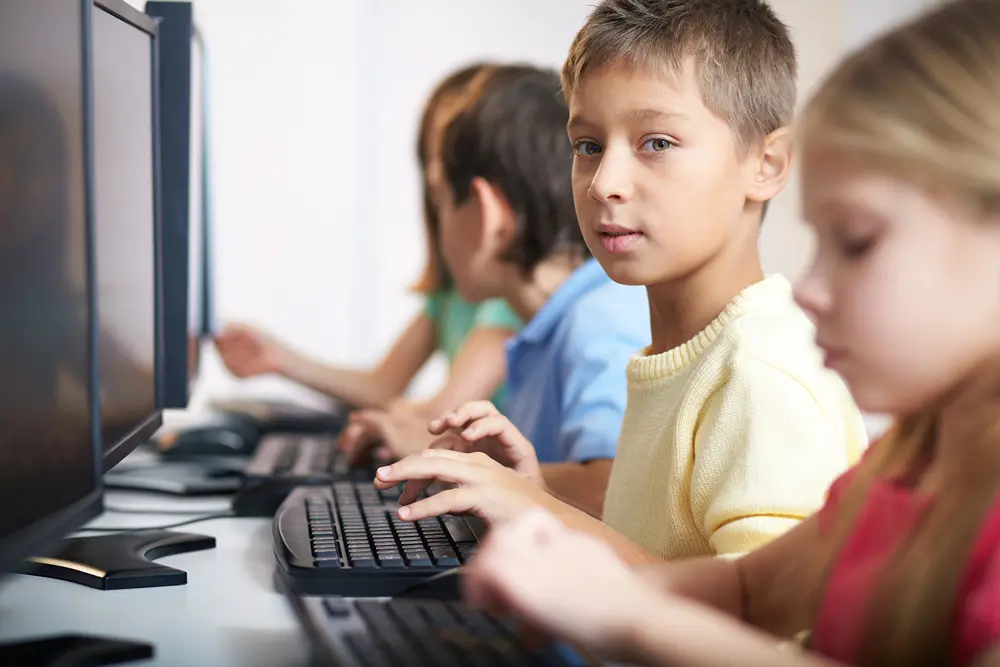
Why Creative Hobbies Help Kids Unplug and Thrive

If you have ever tried to pry a tablet out of a ten-year-old’s hands, you already know the struggle. Screens are magnetic, and the apps loaded on them are designed to keep young eyes glued for as long as possible.
As parents and educators, we spend a lot of energy talking about what kids should avoid online. But there is an equally important conversation we should be having: what should kids be running toward instead?
Creative, hands-on hobbies give children something screens cannot. They build focus, boost self-esteem, and create calm. And getting started does not require a massive investment or a fine-arts degree.
The Screen Time Problem is Bigger Than We Think
Most families have rules around screen time, and that is a good first step. But limiting hours is only half the equation. The real challenge is filling those freed-up hours with something that actually competes.
Without a good alternative, kids will count down the minutes until they can log back on.
That is not a failure of willpower. It is a design problem. The apps competing for your child’s attention have entire teams of engineers optimizing every swipe and notification. A parent telling a bored kid to “go find something to do” is badly outmatched.
What works is replacing passive screen consumption with active creation. When a child’s hands and mind are busy with something they genuinely enjoy, the pull of the screen fades on its own.
Why Hands-On Creativity Hits Different
The American Academy of Pediatrics has found that creative play supports cognitive development and emotional regulation. But you do not need a medical journal to see it. Watch a child who is deep in a painting or building something with their hands. They go quiet. Focused. It looks nothing like the glazed-over stare of a scrolling session.
Here is what hands-on hobbies offer that screens typically do not.
They produce something real. A finished painting, a sculpted figure, or a hand-stitched bookmark is something a child can hold and feel proud of. That sense of accomplishment is concrete, unlike the fleeting hit of a like or a new follower.
Creative projects also build tolerance for mistakes. A brushstroke that goes in the wrong direction is not a catastrophe. It is just a brushstroke. That mindset carries over into schoolwork, friendships, and eventually the workplace.
There is a mindfulness element too, though you do not need to call it that. Mixing colors, choosing materials, and working with their hands pulls children into the present moment in a way that is hard to manufacture. It is basically meditation, minus the awkwardness of asking a seven-year-old to sit still and breathe.
And when a child creates something, they want to talk about it. That opens a door for parents to connect without the usual “How was school?” dead end.
Watercolor Painting: A Perfect Entry Point
Of all the creative hobbies out there, watercolor painting is one of the most accessible for kids. It does not require expensive equipment, the cleanup is minimal compared to oil or acrylic paints, and there is no such thing as a ruined piece. You just add more water and keep going.
Watercolors also teach color theory, patience, and layering in a way that feels like play rather than a lesson. A child mixing blue and yellow for the first time and watching green appear is experiencing real science through art.
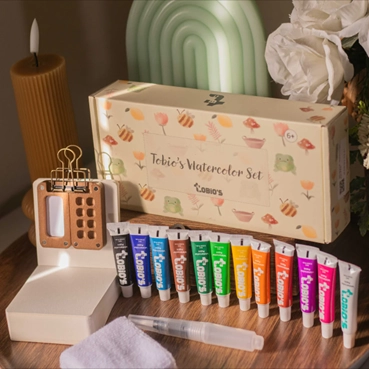
For families looking for a ready-to-go option, Tobios Kits offers a watercolor kit that includes 12 watercolor refills, a walnut wood palette, a cotton paper notebook, a water brush, and an illustrated guide. Having everything in one place removes the guesswork and makes it easy to sit down and start.
How To Make It Stick
Introducing a creative hobby is one thing. Turning it into a regular habit is another.
Start small. Fifteen minutes of painting after homework is more sustainable than a two-hour weekend marathon. Consistency matters more than duration, especially early on.
Create a dedicated space. It does not need to be a full art studio. A corner of the kitchen table with a plastic mat and a cup of water is enough. Having a go-to spot removes the friction of setup and makes it easier for kids to start on their own.
Display finished pieces. Hang paintings on the fridge, in their bedroom, or somewhere the family actually sees them. When children see that their work is valued, they make more of it.
Join in yourself. You do not have to be good at it. Sitting next to your child and painting your own terrible masterpiece sends a clear message: this is worth doing, and worth your time.
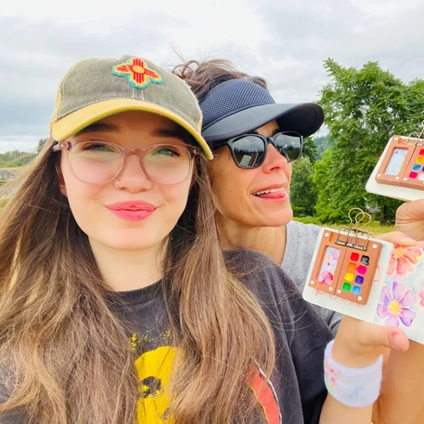
Finally, keep screens out of the creative zone. If a phone or tablet is within reach during art time, it will win. Put devices in another room and let the session be a genuine break.
The Bogger Picture
None of this means technology is the enemy. Kids need digital skills, and there are genuinely good educational tools online. The goal is not to eliminate screens but to make sure they are not the only thing going on.
When children have a creative outlet they actually enjoy, they develop a sense of what it feels like to be focused, calm, and proud of their own effort. That becomes a baseline they can return to when the online world feels overwhelming or unkind.
As parents, we cannot control every app, every algorithm, or every message our kids encounter online. But we can hand them a paintbrush, sit beside them, and show them that some of the best moments happen when the screens are off.
Final Thoughts
Getting kids to unplug does not have to be a fight. It starts with offering something better. A simple watercolor set, a quiet afternoon, and a little encouragement can do more than any screen-time rule. Start small, start now, and let your child’s curiosity take it from there.