3 Ways To Give Your Kids Privacy in a Shared Bedroom
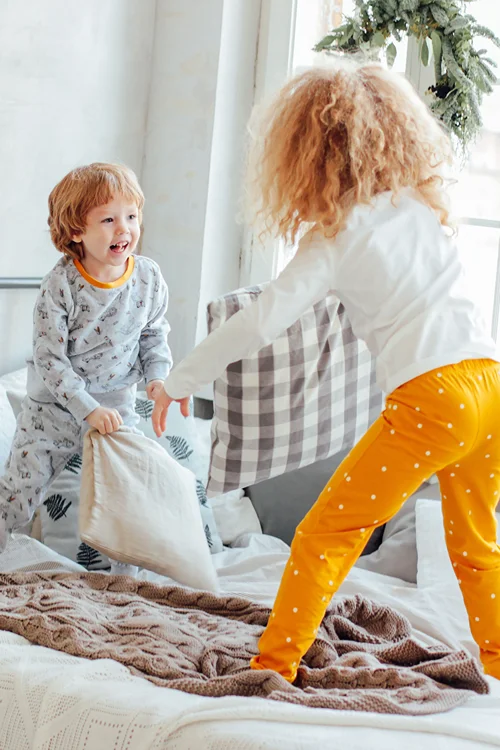
Some siblings share a bedroom when living in a small home or apartment. While this arrangement promotes closeness, it can also lead to daily conflicts and a lack of privacy. Squabbling over who left their socks or toys on the floor might be typical for your kids. To establish harmony, here are three ways to give your kids their own space within a shared bedroom.
1. Use Room Dividers To Create Personal Zones
You may not be able to give each child their own bedroom, but you can give them personal space. Dividers break up a room into zones. Let’s look at the most common types of room dividers.
Folding Screens
Folding screens are affordable, portable, and easy to install. You can also fold them up and move them aside if you need to vacuum or your kids want more space to play.
Curtains or Rods
Install ceiling-mounted curtain rods to hang curtains around each bed or study area. They’re pretty flimsy, but they interrupt the line of sight so each child can move around without lingering eyes on the opposite side of the room. Plus, your kids can open or close this private nook as they please.
Bookshelves
One of the things to consider when furnishing a kids’ room is storage. If your littles are readers, consider using bookshelves to divide the space.
Bookshelves can satisfy this requirement while also acting as a privacy barrier. You can place the shelves back-to-back or side by side, creating a little library that separates your children’s beds.
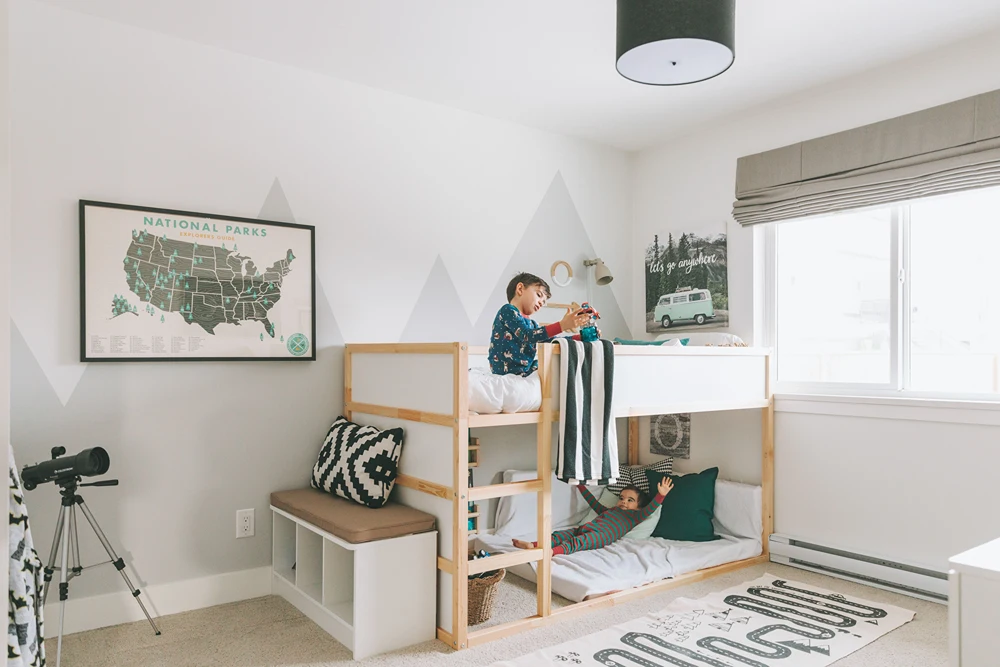
2. Include Loft Beds
Sharing a bedroom means each child has limited space to store items and play. Loft beds are a functional solution.
They open up the floor beneath them, creating the perfect space for a small desk or reading nook. This can be especially helpful when kids need to focus on homework. Left in an open room together, siblings might prefer to play rather than work. Cultivating independence through privacy helps you support your kids in school and beyond.
Each child can have their own loft bed. However, don’t forget to add privacy elements, too. For instance, you can install tension rods or clip-on hooks to hang curtains and separate their beds. This is an affordable way to make your kids feel like they have more privacy in a shared bedroom.
3. Encourage Individual Expression Through Design
Even in shared rooms, kids deserve a space that feels like it’s truly theirs. You can honor your children’s unique preferences without compromising the room’s overall aesthetic.
Choose bedding that reflects each individual child’s favorite colors or themes, whether it’s dinosaurs, unicorns, or abstract patterns. Matching is optional!
Remember, even the smallest gesture toward privacy can make a big difference in your child’s comfort and sense of self. Try out these tips and watch as your kids learn to enjoy their shared space while still celebrating their individuality.
4. Motivate Kids To Keep Their Shared Space Clean
Privacy and tidiness go hand in hand in a small, shared room. Clutter on one child’s side has a way of creeping into the others. A few simple habits can keep the peace.
Give each child clearly defined storage, so there’s never a question of where something belongs. Set one predictable cleanup moment each day, such as right before bed, so mess never has a chance to pile up into a bigger job. And try turning tidying into a quick, timed game rather than a chore. For example, a five-minute sprint with music on can get both kids clearing their zones without a fight.
Sometimes the real issue isn’t habits at all. It’s simply too much stuff for too little room. Removing outgrown toys and seasonal clothes can free up enough space that staying tidy stops feeling like a daily struggle.
When cleanup feels manageable and fair, kids are far more likely to respect each other’s space, as well as each other’s privacy.