Montessori Bunk Bed: When It’s Appropriate and How to Choose One
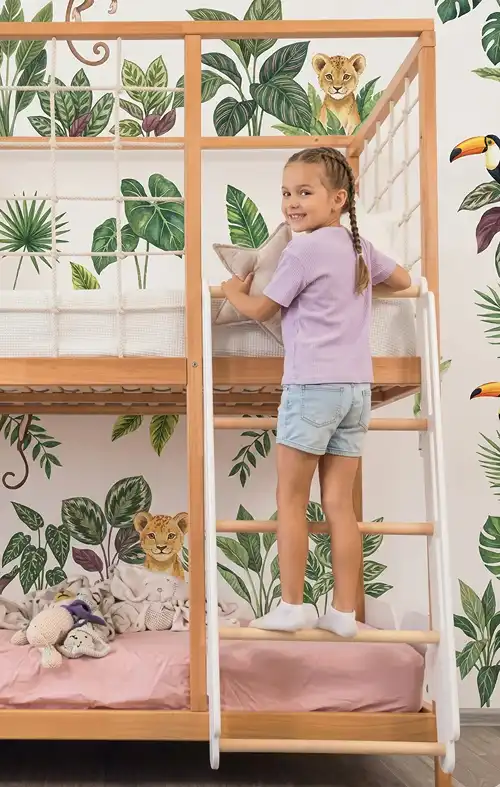
At first glance, bunk beds and Montessori philosophy feel like they’re from different worlds. One is all about freedom and accessibility, the other – well – literally has a second floor. But real life isn’t always Pinterest-perfect. Sometimes you’ve got two kids, one room, and zero extra space.
That’s where toddler bunk beds enter the chat. The question is: can they actually work with a Montessori mindset, or is it just a design compromise? Short answer—yes, but only if done right.
What is a Montessori bunk bed?
A Montessori-style bunk bed is not your classic “climb up and don’t fall” setup. It’s more thoughtful than that. Usually, the lower bed is the main focus—fully accessible, low, and safe for a younger child. The upper level? Optional, and typically designed for an older sibling. The whole idea is to adapt the structure, so it doesn’t completely ignore Montessori principles. Lower height, safer design, and less “extreme climbing energy.” Think of it as a bunk bed that’s been seriously toned down and made more practical.
Benefits of this type of solution
Let’s be real—space is a luxury. If you’re working with a smaller room, toddler bunk beds can be a lifesaver. Two kids, one sleeping zone, no need to sacrifice half the room. It’s also super functional: one bed for now, one for later, or both in use if you’ve got siblings. Kids often love the setup too—it adds a bit of fun without needing extra toys or distractions. And from a parent’s perspective, it’s a clean, organized solution that just makes sense.
Limitations of the Montessori approach
Here’s the honest part: traditional bunk beds don’t exactly follow Montessori rules. The philosophy is built around accessibility and independence, and climbing up a ladder doesn’t really fit that idea—especially for younger kids. The top bunk is the main issue. It limits freedom and can raise safety concerns. So if you’re aiming for a “pure” Montessori setup, classic bunk beds won’t check all the boxes. That’s why adapted designs matter—they help balance reality with the philosophy.
How to choose a safe bunk bed in Montessori style
If you’re going this route, safety is everything. Look for a lower overall height—not those super tall structures that feel like a mini skyscraper. The upper level should have solid guardrails, no exceptions. Stairs or ladders need to be stable and easy to use, not slippery or awkward. Materials matter too—solid wood is always the safest bet. The goal is to reduce risk while keeping the design practical and comfortable for everyday use.
What to consider before buying
Details matter more than you think. The bed should feel sturdy—no wobbling, no weird noises when you touch it. Check the finish: smooth surfaces, no sharp edges, no questionable coatings. Eco-friendly materials are a big plus, especially for kids’ furniture. And of course, go with a brand you can trust. Many parents choose BusyWood because they focus on safety, durability, and designs that actually make sense for real families—not just for photos.
Toddler bunk beds are not the most “by-the-book” Montessori solution—but sometimes real life calls for smart compromises. If you choose the right design, you can keep the core idea of independence while making your space work for your family. It’s all about balance: a bit of Montessori, a bit of practicality, and a setup that actually fits your everyday life.