Teaching Kids About Money: Why Is It Important?
Young people in the United Kingdom suffer from an extensive financial literacy gap, underlining the importance of ensuring that children learn about money from an early age.
According to findings from Pay.uk, as many as three-quarters of adults in the UK believe that they are financially literate, but 29% don’t know how a savings account works.
The findings also show that among respondents who claim to be financially literate, 19% run out of money every month, and 27% find themselves running out of money every two months.
One area where most adults in the UK agree is that personal finance should be on the national curriculum, with 86% believing that financial skills should be taught in schools.
Another survey found that 56% of young adults don’t understand how ISAs work, while just 9% of 18 to 24-year-olds were able to pass money literacy tests.
These findings suggest that it can significantly benefit young people to learn about money from an early age. Although the majority agree that financial literacy should be on the national curriculum, it can certainly benefit children to learn key skills for handling money and saving from their parents or guardians.
The Importance of Financial Literacy
Especially at a time when the cost of living is continuing to gather pace, empowering your child with the knowledge they need to use financial products and services effectively can have a significant impact on their future.
According to the OECD/INFE’s international study of financial literacy, those who possess a greater level of financial literacy are associated with more financial well-being on an individual level, particularly when it comes to handling financial shocks.
For parents, providing your child with the financial education they need can work wonders in building their confidence when entering adult life, and handling the economic pressures that come from taking on bills or student debt as they get older.
Early learning can also help children to avoid debt traps later in life by understanding the risks of high-interest loans and credit cards instead of taking them out without a full picture of their long-term impact.
Building Good Habits
Another reason why it’s important for children to learn about money early on is that it can foster positive financial habits and attitudes that they can carry with them through life.
Teaching healthy behaviours like saving before they begin earning money means that it’s more likely to be a natural reflex once they enter the workplace.
This approach can also foster higher levels of responsibility, allowing kids to better understand how to live within their means and the true value of money to shape their decisions.
Having a better grasp on the value of money means that kids can learn the difference between their wants and needs, encouraging more discipline when it comes to spending money and preventing overspending each month on discretionary purchases.
Improving Financial Literacy
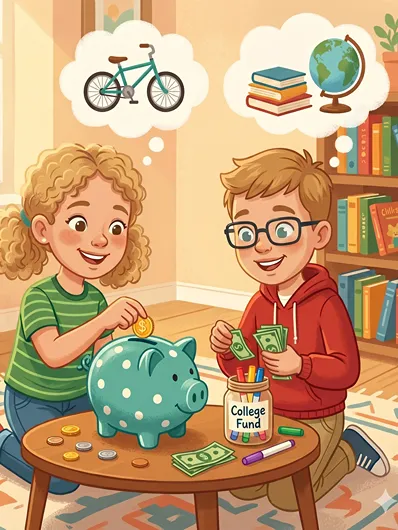
Children are highly receptive to practical learning experiences, and one of the best ways to help them to learn about financial literacy is to teach them how to save their pocket money.
Pocket money is a great introduction to the world of work because it teaches kids that they can apply themselves to grow their wealth, helping them to understand the value of money better.
By opening a Junior ISA or gifting them a piggy bank, you can teach them concepts about saving their cash for a one-off purchase or even making investments in stocks and shares.
Junior ISAs are an excellent product for children to build their financial literacy because their accounts will instantly become adult ISAs when they turn 18, and they will be capable of seeing how investments can grow in a way that will directly benefit them.
However, Junior ISAs can’t be accessed until the child turns 18, so it’s important to avoid locking money away over the long-term if it might cause more financial stress in the short-term.
You can also encourage your children to set saving goals by getting them to save for the toys that they want. This introduces an element of delayed gratification to help them to avoid the temptation of taking out credit later in life.
Giving your kids the power to manage their own small budgets through pocket money and payments for chores around the house, they can learn to manage their money more effectively and improve their decision-making long before they’re having to manage monthly salaries.
Preparing for Adulthood
Yes, personal finance should be introduced to the national curriculum because it can teach practical saving habits to children that can benefit them later in life. But taking measures yourself to teach financial literacy to your kids can be highly rewarding for supporting them as they approach adulthood.
By working on concepts surrounding saving and investing into their pocket money, you can help to prepare them to enter the workforce and to navigate the confusing world of financial services with more confidence.
Whether you open a Junior ISA for hands-on investment experience or simply buy them a piggy bank, teaching your kids about saving now can make a world of difference for their understanding of finances in the future.