What Should Kids Do When They Find A Lost Cat? A Step-By-Step Guide For Young Animal Helpers

Finding a lost cat can be both exciting and scary for children. Many times, kids encounter a frightened or shy cat that may be an Indoor cat missing or an Outdoor cat missing. Knowing what to do is important for the safety of the child and the cat.
Children should learn lost cat tips, like approaching slowly, watching for feline hiding behavior, and asking an adult for help. Understanding missing cat behavior helps children stay calm and make smart choices. By following simple steps, kids can help ensure missing cat recovery happens safely and quickly while keeping the cat comfortable and secure.
Stay Calm and Approach the Found Cat Slowly:
If you come across a found cat, it’s important not to rush toward it. Even if the cat appears calm, it may be frightened or confused. Lost cats often hide under cars, behind bushes, or beneath porches because they feel unsafe.
Before trying to touch the cat, observe it from a distance. Many cats stay close to the area where they were lost, especially if they are used to living outdoors.
You should also observe the cat from a distance before touching it. Outdoor cats often stay close to the area where they were lost.
Ask an Adult for Help Right Away:
Kids should never handle a lost cat alone. Asking an adult ensures safety for both the child and the cat. Adults can safely use humane traps for cats or carriers to keep the cat secure. They can also check for a cat ID tag or take the cat to a vet to scan for a microchip for cats.
Adults also know how to follow lost pet recovery strategies properly. With adult help, kids can ensure the pet reunification process is safe and effective, giving the lost cat the best chance to return home quickly.
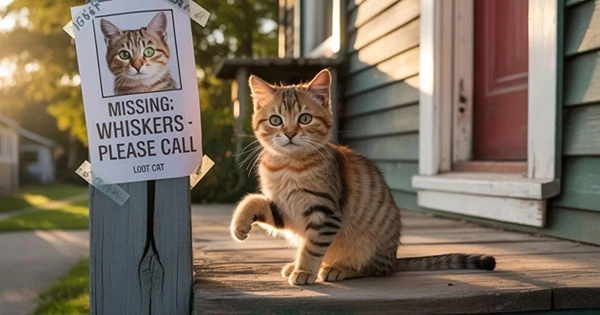
Check for Identification: Cat ID Tags and Microchip for Cats
A collar with cat ID tags can quickly lead you to the owner. If the cat has a tag, write down the number and call the contact listed. If no tags are present, the cat might have a microchip for cats, which a vet or shelter can scan.
Even if a cat looks healthy and calm, checking for identification ensures it goes back to the right home. Using identification is one of the most effective lost cat tips available.
Keep the Cat Safe While Searching:
While looking for the owner, keep the found cat safe indoors if possible. Provide food, water, and a cozy place to rest. Many lost cats show cat hiding inside house behavior and may retreat to quiet spots like behind furniture or in a bathroom.
Safety also includes keeping doors and windows closed. Outdoor cats may try to run away if scared. Watching quietly and letting the cat explore a calm, secure area helps reduce stress. Kids should remember to never leave the cat alone outside while searching for the owner.
Post Lost Pet Flyers and Use Social Media like PawBoost or Next-door:
Creating a flyer with a clear photo, location found, and contact info helps neighbors recognize the lost cat. Posting online with a PawBoost listing, Next-door lost pet post, or even on Facebook increases visibility.
When making flyers, avoid giving too much detail about the cat. Describing unique features but keeping some info private ensures only the real owner claims the cat.
| Tool | Purpose | Cost | Notes |
| PawBoost listing | Online lost & found pets | Free | Good for local reach |
| Next-door lost pet post | Connect with neighbors | Free | Useful for neighborhood |
| Flyers | Physical visibility | Low | Place at stores, parks, sidewalks |
Watch for Missing Cat Behavior and Feline Hiding Spots:
Lost cats may hide under porches, cars, or shrubs. This crawl under bushes searches method helps find outdoor cats. Indoor cats often stay behind furniture or in closets. Recognizing missing cat behavior is important for planning the search.
Note when the cat comes out, what it eats, and how it reacts to people. Many times, outdoor cats return to the same hiding spots daily. Kids should always document sightings for adults to act on.
Introduce the Cat Slowly if You Already Have Pets at Home:
If a new cat is found while you have pets, slow introductions are necessary. Keep the lost cat separate for a few days. This ensures safe pet reunification and reduces stress from territorial disputes.
Children should observe feline hiding behavior during introductions. Some cats may hide or hiss at first. Gradually, the cat can explore the home safely while waiting for the owner to be found.
Prevent Future Loss: Collars, Microchips, and Safe Spaces:
Once the cat is safe, discuss prevention with an adult. Collars with cat ID tags, a microchip for cats, and secure spaces indoors prevent future incidents. Outdoor cats may benefit from outdoor feeding stations to encourage safe roaming near home.
Teaching kids these lost cat tips help them understand responsible pet care. Using lost pet recovery strategies early ensures that if a cat wanders again, it can return quickly. Prevention is the best way to keep cats safe, happy, and connected to their families.
Conclusion:
Finding a found cat is a big responsibility, especially for kids. Staying calm, asking an adult for help, and checking cat ID tags or a microchip for cats can make a huge difference in pet reunification. Using lost cat tips, posting on PawBoost listings or Next-door lost pet posts, and observing feline hiding behavior ensures the cat stays safe while you search for its owner. Remember, patience and care are key, and involving adults guarantees a successful and safe return. By following these steps, kids can become heroes for a lost cat and help create happy endings.
FAQ’S:
1. What should I do if I’ve found a stray cat?
Secure it safely, check for Cat ID tags or a Microchip for cats, and post on
PawBoost listing or local shelters.
2. What to do with a cat that has been abandoned?
Provide food, water, and shelter, take it to a vet, and contact no-kill shelters for rehoming.
3. Do vets charge for stray cats?
Yes, but some clinics or shelters offer free or low-cost services for strays.
4. Do cats remember their previous owners?
Yes, cats can recognize familiar voices, scents, and people even after long periods.
5. What annoys cats the most?
Loud noises, sudden movements, forced handling, and territory intrusions.