What to Look For in a School Backpack
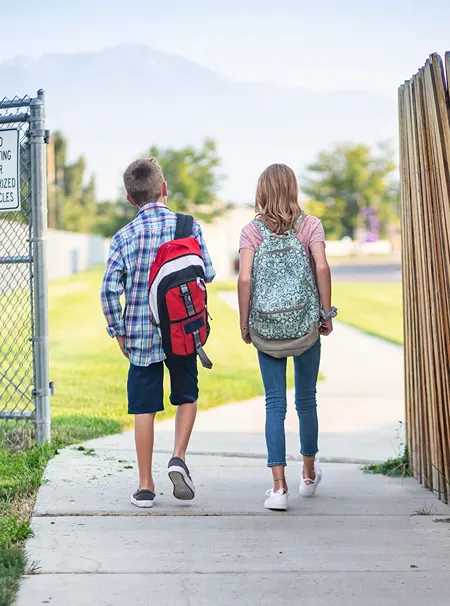
A school backpack is not a seasonal purchase. Bought well, it is something your child carries every day for three years or more, through summer heat, winter rain and busy days. That makes the buying decision more significant than it might seem at the shelf. Here is what the right school backpack for your child needs.
The right size for your child’s back
A school backpack should sit comfortably against the back and not extend wider than your child’s shoulders. A bag that’s too large invites overloading, and a bag that’s too small won’t carry what it needs to without distorting the shape.
The Weight Rule
As a practical weight guideline, aim for a loaded bag that sits at around 10% of your child’s body weight, and treat 15% as the absolute upper limit. South African Society of Physiotherapy endorses this range as heavier loads are associated with postural strain and musculoskeletal issues over time.
Adjustable straps
Thin straps concentrate weight on a narrow band of the shoulder, which can become uncomfortable quickly. Wide, padded straps spread the load more evenly across the shoulder and upper back.
Adjustability matters too, so the fit can be dialled in as your child grows. And that goes for an adjustable sternum strap as well.
A supportive back panel
The back panel is the part of the bag in constant contact with your child’s spine, and it’s often where cheaper bags cut corners. A padded back panel improves comfort, reduces pressure points from books and hard-edged items inside, and helps the bag sit flush against the back rather than pulling away from it.
Ventilation channels or mesh panels are a useful addition for South African conditions — they reduce heat build-up and sweating on warm days.
A lightweight build
A bag that weighs a lot before you pack anything into it is already eating into your child’s safe carry limit. This is easy to overlook when comparing bags in a shop. A few hundred grams of difference doesn’t feel significant initially. But those grams add up when combined with textbooks, a lunchbox, a water bottle, and other school-going items.
Look for bags that use lightweight structural elements. Ergonomic backpacks typically use an internal frame to provide shape and support without adding unnecessary bulk.
Smart internal organisation
Multiple compartments keep your child’s belongings organised and allow heavier items to be packed closer to the back, rather than sagging to the bottom or sitting away from the spine. A bag with a single large compartment will inevitably result in a disorganised pile that shifts the weight distribution every time it’s repacked.
Strong materials
Daily school use is hard on a backpack, especially one without a solid base. The weakest points are usually the zip attachments and the strap joins.
Check for reinforced stitching and good-quality zips. It’s also worth looking for bags made from PVC-free fabrics. PVC-free materials are safer from a chemical exposure standpoint and tend to be more environmentally friendly.
Weather Protection and Reflectors
Water-resistant fabric or a rain cover protects books and stationery from spills and unexpected rain. This is especially practical if your child travels by public transport or walks to the car on a rainy day.
Reflective strips or panels are a genuine safety feature. If your child walks to school, catches a bus, or is outside in low-light conditions, reflectors keep them visible to drivers. Many quality school backpacks include subtle reflective piping on straps or the back panel as standard.
Dedicated space for a lunch bag and a water bottle
A side mesh pocket that fits a standard water bottle keeps it accessible without unpacking the whole bag. A compartment sized for a lunchbox keeps food separate from books and stationery. These feel like minor details until your child is trying to find their water bottle at the bottom of a bag full of textbooks.
Check the guarantee
A school bag is a long-term buy. A brand that offers a multi-year guarantee is signalling confidence in the build quality. Think about it in terms of value. A R600 bag with a one-year guarantee that gets replaced annually costs R1,800 over three years, while a R900 bag with a three-year guarantee costs R900 for the same period.
Conclusion
If you’re looking at a school backpack in South Africa, remember that this is likely the one your child will carry for at least the next three years. Get the fit right, check the build quality, and look at the guarantee before you commit. The bag you choose on the first day of the year should still be doing its job on the last.