Top 10 Ways to Make Moving Less Stressful for Children

Moving ranks high on the stress scale for families. Kids feel this pressure even more than we think. They’re leaving behind friends, teachers, and every corner they know. But parents can do plenty to smooth things over. Small actions make a real difference. These ten strategies help children handle the big change without falling apart.
Start Conversations Early and Keep Them Honest
Tell your kids about the move once plans are solid. They need time to wrap their heads around it. Springing it on them last minute just makes everything worse.
Be straight with them about what’s happening. Skip the sugar coating. Some children will worry about making new friends. Others stress about changing schools. Listen to what they’re actually saying instead of brushing it off.
Talk about the good stuff too. Maybe they’ll get a bigger room. Perhaps there’s a pool nearby. Give them real things to get excited about.
Involve Children in Planning and Decisions
Let kids have a say in how things go. They can pick colors for their new bedroom walls. Take them furniture shopping if you’re buying new pieces.
Show them pictures of the house before you move. Walk through videos together if you have them. Point out the backyard or the park down the street. Seeing the place helps them imagine living there.
Make a folder they can keep with info about the new area. Toss in maps, school brochures, photos of local spots. Having something physical to look at helps when they feel worried.
Let Professionals Handle the Heavy Work
Your stress level directly affects your kids. When you’re frazzled, they pick up on it fast. Professional movers take the physical work off your plate. Local movers pack everything up, load it safely, and get it to your new place without you throwing out your back.
This frees you up for the important stuff. You can comfort your nervous seven-year-old instead of hauling boxes. You stay calm, they stay calmer. Pretty simple math.
Plus, nobody ends up in urgent care with a pulled muscle. The last thing your family needs is an injury derailing everything.
Give Children Control Over Their Belongings
Hand your kids some boxes and let them pack their own stuff. Give them markers to draw on the boxes. Suddenly packing becomes way less awful.
Let them choose what matters most right now:
- Their favorite stuffed animal rides in the car
- Special toys stay within reach
- Books they’re reading come along
- Photos from their room get protected
Older kids can make lists of what they’re packing. Little ones just need to pick their must-haves.
Never toss their things without asking first. Finding out their beloved toy vanished breaks trust instantly. Go through stuff together. Respect what they care about even if it seems silly to you.
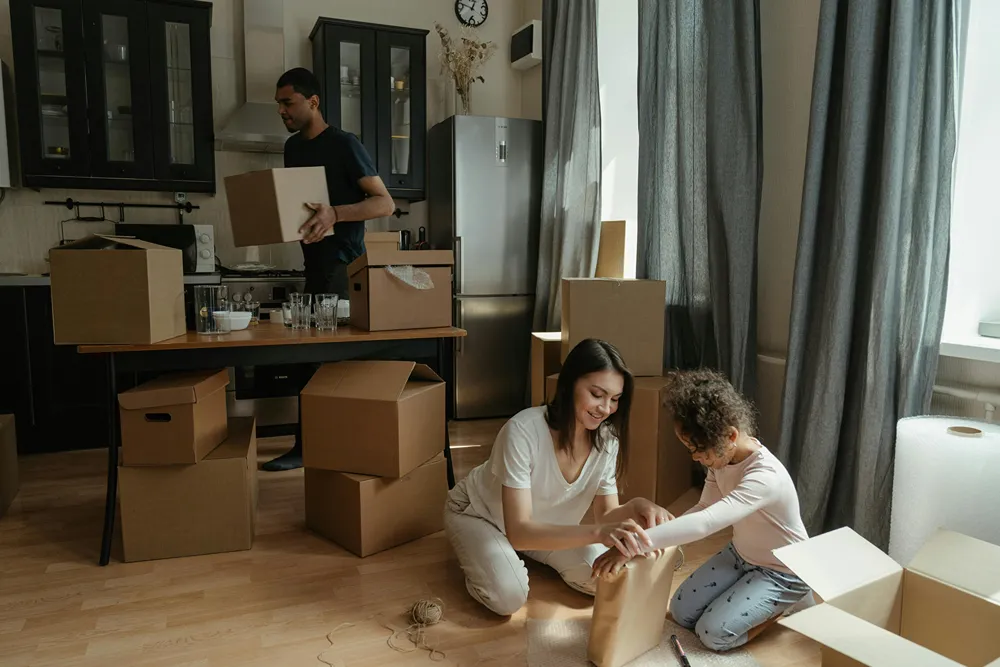
Keep Familiar Routines During the Transition
Kids run on routine. Breakfast, school, bedtime. They need that structure when everything else is chaos. Keep meal and sleep times the same. The National Association for the Education of Young Children backs this up. Routines help children feel secure during transitions and big changes.
Pack one bag with their normal nighttime and morning stuff. Toothbrush, pajamas, favorite bedtime book. These everyday items anchor them when the world feels upside down.
Don’t pull them out of activities early unless you absolutely have to. Stopping soccer or piano lessons weeks before the move just adds to their losses. Let them finish out the season or month.
Create a Special First Night Box
Pack a box for each kid with everything they need that first night. Label it super clearly. Pack this one last so it’s easy to grab first.
Each box should have:
- Clean pajamas and tomorrow’s outfit
- Toothbrush and any medicines they take
- Their comfort item or favorite toy
- Books they like at bedtime
- Snacks they enjoy
- Maybe a small new toy as a surprise
Consider this box a peace offering. It says you thought about what they’d need. That matters more than you’d think.
Keep these boxes in your car, not the moving truck. You want them instantly without digging through everything else. Fast access means faster settling in.
Arrange Childcare for Moving Day When Possible
Moving day gets wild. Movers everywhere, boxes stacked up, constant noise and movement. Young kids often just get overwhelmed by all of it.
Call in grandparents or close friends if you can. Having the kids elsewhere keeps them safe and happy. You can focus on directing traffic without worrying about little feet underfoot.
No childcare available? Set up a quiet corner away from the action. Load it with activities. Coloring books work. Movies on a tablet help. Check in often but keep them out of the main zones.
Older kids might want to help with easy tasks. Let them label boxes or put stickers on furniture. Just keep them away from doorways and heavy loads.
Turn Moving Day into Something Positive
Stop treating moving day like a disaster waiting to happen. Ease anxiety by making it fun instead. Create a playlist of songs everyone likes. Let kids wear whatever’s comfortable, even if that means pajamas all day.
Take photos as things happen. Snap pics of them in the empty old house. Get shots at the new place. These become memories they can look back on proudly.
Order their favorite food for dinner that night. Nobody wants to cook after moving all day. Pizza or tacos beat trying to find pots and pans. Easy wins count.
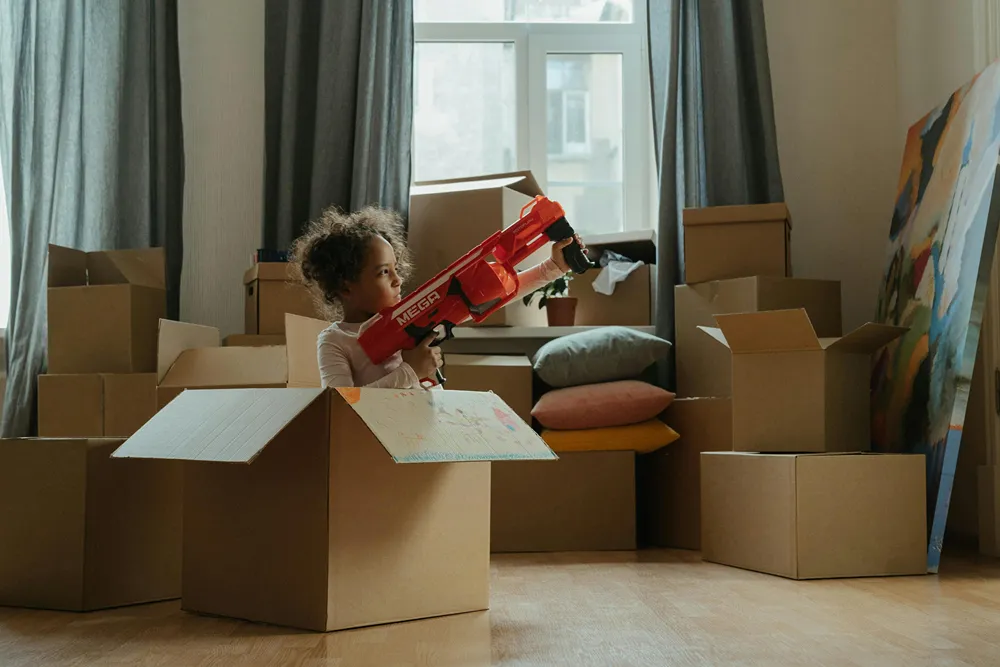
Set Up Children’s Rooms First
Your kids’ bedrooms come before anything else. Get those spaces ready first. Familiar surroundings help them sleep better that first night. Consistent sleep patterns and spaces matter for kids handling stress.
Try to set up furniture like their old room if you can. Hang up the same posters right away. Use their regular sheets and blankets. Small familiar touches provide comfort in a strange place.
Then step back and let them organize their own stuff. Don’t swoop in fixing everything to look perfect. Their room, their choices. That sense of ownership helps them adjust faster.
Help Them Settle into the New Community
Get out and explore within those first few days. Walk around the neighborhood together. Find the nearest park and playground. Show them where the library is. Point out the ice cream place or pizza shop.
Include them in setting up shared spaces too. Ask where they think the couch should go. Get their input on hanging pictures. Making these choices together shows this home belongs to all of you.
Meet neighbors with kids around the same ages. Set up some casual hangouts or playdates soon. New friendships ease the transition better than anything else you can do. Social connections beat perfect room setups every time.