Category: Creativity

Tasty Tales: Fun Cooking Shows for Young Foodies

Tasty Tales: Fun Cooking Shows for Young Foodies

Finding an enjoyable and educational hobby for young children that encompasses both entertainment and learning can be difficult. Nevertheless, if your little one displays a fascination with cooking or exploring new recipes, introducing them to cooking shows tailored for kids can offer numerous advantages.

Cooking shows for children serve as a valuable tool for imparting fundamental cooking skills while keeping them captivated and interested. Additionally, they provide an excellent opportunity for parents and children to bond through shared activities.

When parents are looking for non animated shows for kids, cooking shows are often not on their radar. Of course, teaching kids about healthy eating is a key goal, but it’s also important to guide them towards a balance when it comes to baking and the preparation of treats.

7 Fun Cooking Shows for Kids

Here is a complication of the top 7 cooking shows that cater to children’s enjoyment and engagement.  Let’s get to it.

1. Waffles + Mochi

Where to watch: Netflix
PG rating: Age 4+

Have your kids ever asked you about the international cuisine? Well, in the 2021 TV series called Waffles + Mochi, young viewers embark on a culinary adventure spanning the globe.

The lovable puppet characters join forces with former first lady Michelle Obama to delve into diverse culinary traditions from around the world. Along the way, they acquire the knowledge of preparing an array of dishes. This show presents an excellent opportunity for kids to explore and gain insights into different cultures and their cuisines.

2. Cookie Monster’s Foodie Truck

Where to watch: YouTube

PG rating: Age 3+

The popular duo of Cookie Monster and Ginger from Sesame Street come together in this entertaining cooking show. In addition to the beloved characters, the show also incorporates children as part of the cast.

The two puppets operate a food truck, where they receive orders from children via video messages, adding an interactive element to the show. They embark on delightful adventures while fulfilling the food requests in their mobile kitchen. Kids learn new fun recipes like rosemary bread, pancakes, popsicles and more.

3. Kid’s Baking Championship

Where to watch: Amazon Prime
PG rating: Age 7+

Observing fellow youngsters engage in thrilling and enjoyable cooking competitions can be a source of amusement, excitement, and motivation for young children. In Kid’s Baking Championship Duff Goldman and Valerie Bertinelli team up as they search for gifted junior chefs. The ultimate victor of this baking contest stands a chance to win a cash prize of $25,000.

The aspiring young bakers partake in a series of entertaining yet demanding rounds, showcasing their skills and creativity by preparing innovative and fun dishes.

4. Nailed It

Where to watch: Netflix
PG rating: Age 10+

If you are not a professional cook, you must understand the challenge of achieving culinary perfection. A dish that turned out horribly during one attempt can surprisingly turn out flawlessly the next time.

The show Nailed It! explores precisely this phenomenon. Amateur cooks try to replicate expertly crafted desserts, and cakes gaining valuable insights and discovering clever tricks along the way. Kids will enjoy this show as they watch a group of chefs struggle as they make themed cakes, and more.

5. Junior Bake Off

Where to watch: Hoopla
PG rating: Age 5+

A spinoff of The Great British Baking Show, Junior Bake Off is an entertaining cooking show for kids and parents alike. The young chefs exude great cooking skills with jaw-dropping recipes. From pies to themed cakes and cookies, you see young talented chefs getting their hands dirty.

It’s so fun to watch kids creating tasty treats as they deal with mishaps and deadlines.

6. Sugar Rush 

Where to watch: Netflix
PG rating: Age 10+

Don’t go by its name, as Sugar Rush is a popular candy-filled show with four professional bakers who go head-to-head for a prize of $10,000. They must compete in challenges and bake beautiful, colourful cakes.

Some of the most popular cake themes on the show are ‘Cake by the Ocean,’ ‘Junk Foodie,’ and ‘All Things Chocolate’. If your kids are into baking, this is a great show to watch to give me inspiration and new ideas.

7. Dr. Seuss Baking Challenge  

Where to watch: Amazon Prime
PG rating: Age 9+

Dr. Seuss Baking Challenge is a colourful show in which bakers are challenged with making confectionary delights based on Dr. Seuss characters. The show is great for watching with your kids as the set is beautiful which adds to the show.

You can incorporate Dr. Seuss stories with the show to entertain your kids. It’s the one cooking show that will keep your kids hooked thanks to its Christmas theme and positive energy.

Delve Into The World of Tasty Treats

If you have a young and eager chef at home who loves nothing more than to help you out in the kitchen and cover everything in flour, then these shows are a must-watch.

These fun cooking shows will keep your kids entertained without making you cringe. We have shortlisted these shows after careful consideration to make sure they are age-appropriate with no profanities or adults behaving rudely.

Cooking is one of the most essential life skills that parents should teach their children. If your kids love preparing food, these cooking shows will inspire them to try new things in the kitchen. Moreover, study reveals that kids who watch cooking shows are more inclined towards eating healthy and home-cooked meals.

So, bond with your children and create precious memories by trying new recipes at home.

Share This Article

How Parents Can Foster Creativity in Children Through Literature and Art

Fostering Creativity in Children Through Literature and Art

Literature introduces young minds to new ideas and perspectives. It also teaches concrete topics such as language and reading. Reading books to children from a young age stimulates the development of the part of their brain responsible for language.

It makes them adept at learning new words and understanding complex concepts. Books also provide children with valuable insight into human behavior and emotions.

Literature and Art

Art develops a child’s imagination and self-expression. Drawing, painting, and sculpting encourage problem-solving skills and improve fine motor skills. Collaborative art projects build social skills and teach the importance of teamwork. Here are ways parents can foster creativity in children through literature and art.

Provide Resources Needed for Creative Expression

Parents can foster creativity by providing resources for their kids’ creative expression. Books are an excellent resource for introducing a child to new ideas, concepts, and stories. Reading picture books with vivid illustrations encourages imaginative play, while stories with complex plots build critical thinking skills and help in the development of creative abilities.

Stocking a child’s playroom or bedroom with art and craft supplies opens up a world of creative possibilities. Stock building materials, musical instruments, fabric scraps, and dress-up clothes. This setup allows kids to experiment, try new things, make mistakes, and have fun while being creative.

Encourage children to explore different media, such as painting and sculpture, or use their hands to craft beautiful works of art. Involve them by asking questions about their creation, helping them see how their ideas can come alive on paper or canvas.

Create A Safe Environment

A safe and encouraging environment for children to express themselves freely fosters creativity. Parents must provide a safe space for children to explore their creative potential without fear of judgment or ridicule. Parents should allow their children to express themselves however they wish without criticism.

Freedom and Autonomy

Parents can foster children’s creativity by giving them the freedom and autonomy to explore their talents and interests. Giving children the space to try new things builds confidence in their unique skills and capabilities. Parents can support their child’s creativity by showing interest in their projects or creations. They should also provide resources like art supplies, musical instruments, or books.

Foster a love of learning by encouraging children to ask questions, explore new topics and apply what they learn. Supporting children’s ideas and celebrating their successes motivates them to keep creating and innovating.

How Parents Can Foster Creativity in Children Through Literature and Art
Photo by Maël  BALLAND  from Pexels

Control the Screen Time

Parents should control screen time and provide alternatives that stimulate their imagination. To ensure children receive enough mental stimulation, parents should create hands-on activities and exploration opportunities that encourage creative thinking. This could include arts and crafts projects, storytelling with connor boyack books or puppets or playing board/card games. They could also take nature walks, explore the outdoors, and visit museums or local attractions. Parents should also encourage children to express themselves through music, dance, and art.

Limiting screen time to engage in imaginative play encourages the growth of important creative and social skills. With guidance and support, kids develop the skills to be successful innovators and creators.

Incorporating Technology

Parents can boost their children’s creativity using technology. They can encourage children to explore new apps, websites, and games. Parents need to talk with their children to help them understand the responsible use of technology. This includes setting limits on how much time is spent using technology and ensuring that any content they view is appropriate for their age.

Bottom Line

Additionally, parents can introduce coding and programming activities to support their children’s creative development. These can range from simple coding activities teaching basic concepts to more advanced programming projects involving games or apps. Parents should also research and share new content with their children, such as books, videos, websites, and podcasts related to science, technology, engineering, and math (STEM). By doing this, parents will stay informed about current trends and help their children develop new skills.

Share This Article

Creating Time-lapse Videos from Photos in CapCut

Creating time-lapse videos from photos in CapCut is a relatively straightforward process. CapCut is a popular video editing application that offers various features, including the ability to create stunning time-lapse videos.  We will go through the step-by-step guide that will help you go through the process without problems.

Step by Step Guide on How to Create Time-lapse Videos from Photos in CapCut

Time-lapse videos are an innovative and captivating approach to demonstrate the passage of time by shortening lengthy spans of time into shorter ones.

Let us look at the step by step guide on how to go about it:

Step 1: Sign Up for CapCut

Open your browser, and search for “CapCut” which is a free online video editor. Proceed and fill in your details, and then tap the sign-up button.

Step 2: Import your photos

  • After signing in procede and tap on the “+” button on the home screen to create a new project.
  • Select the resolution and aspect ratio for your video creation.
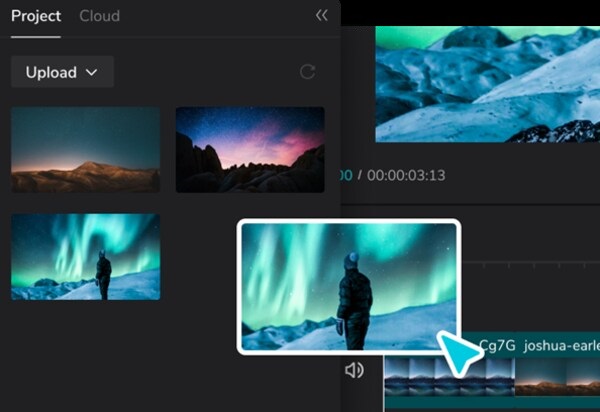
  • Tap on “Media” and select the photos you want to use for your time-lapse video.
  • Tap on the “Add” button to import the selected photos into your project.

Step 3: Arrange the photos

  • Once the photos are imported, they will appear as a timeline at the bottom of the screen.
  • Tap and hold on a photo to drag and arrange its position in the timeline. This will determine the order of the photos in your time-lapse video.

Creating Time-lapse Videos from Photos in CapCut
Source: CapCut

Step 4: Adjust photo duration

  • By default, each photo in the timeline will have a specific duration assigned to it.
  • To adjust the duration, tap on a photo in the timeline.
  • On the right side of the screen, you’ll see the “Duration” option. Tap on it.
  • Set the desired duration for each photo. A shorter duration will result in a faster time-lapse effect, while a longer duration will create a slower effect.

Step 5: Apply time-lapse effect

  • Once you have arranged the photos and adjusted their durations, it’s time to apply the time-lapse effect.
  • Tap on the “Effects” button which is at the bottom of the screen.
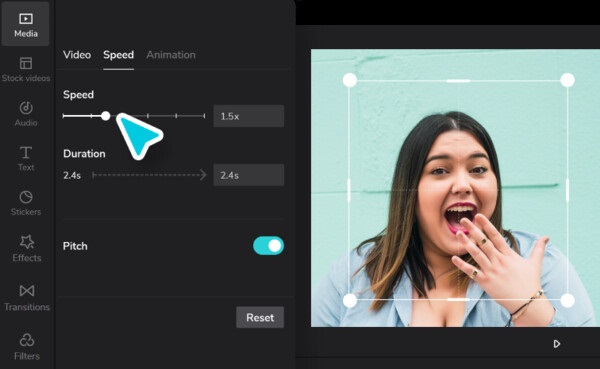
  • In the effects menu, search for “Speed” or “Time-lapse” and select the appropriate effect.
  • Apply the effect to the entire timeline by tapping on it.

Step 6: Add music or audio (optional)

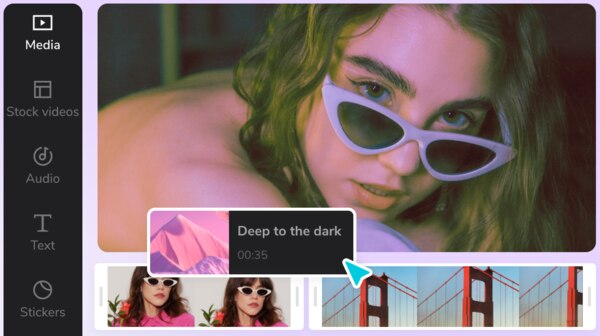
  • If you want to include background music or any audio to your time-lapse video, tap on the “Music” button at the bottom of the screen.
  • Select a music track from CapCut’s library or import your own audio file.
  • Adjust the audio’s volume level as per your preference.

How to Create Time-lapse Videos from Photos in CapCut
Source: CapCut

Step 7: Fine-tune your video

  • Explore the different editing options to auto-generate video captions and make any desired adjustments.
  • Use various editing tools and features to enhance your video further.
  • You can apply filters, adjust brightness/contrast, add text or captions, and more.
  • You can also use the video background remover to change your background to a more appealing one.

Step 8: Preview and export your time-lapse video

  • Tap on the play button which will help you to preview your time-lapse video.
  • If you’re satisfied with the result, tap on the checkmark icon to save your project.
  • Then tap on the export button, which is at the top-right corner of the screen.
  • Choose the desired video resolution and quality settings for your exported time-lapse video.
  • Tap on “Export” and wait for CapCut to process and then save your video.

Step 9: Save and share your time-lapse video

  • Once the video is exported, you can save it to your device’s gallery.
  • Additionally, CapCut provides options to directly share your video to social media platforms like Instagram, TikTok, or YouTube.
  • Choose the preferred sharing option and follow the prompts to share your time-lapse video.

Congratulations! You have successfully created a time-lapse video from photos using CapCut.

Why is CapCut important in Creating Time-lapse Videos from Photos

Creating Time-lapse Videos from PhotosSource: CapCut
CapCut provides essential free video editing tools and functionalities that make the process of creating time-lapse videos from photos easier and more accessible. Here are a few reasons why CapCut is important in this context:

Intuitive User Interface:

A user-friendly interface that allows both beginners and experienced users to navigate through the app with ease. The app provides a simple and straightforward workflow, making it accessible to anyone interested in creating time-lapse videos.

Photo-to-Video Conversion

CapCut allows users to import a series of photos and convert them into a video format. This is crucial for creating time-lapse videos since time-lapse is essentially a sequence of photos taken at specific intervals.

Speed Adjustment

Time-lapse videos typically involve speeding up the footage to condense hours, days, or even months into a short video. CapCut provides tools to adjust the speed of the video, allowing users to control the pace at which the photos are displayed. This feature enables users to create visually appealing and dynamic time-lapse videos.

Additional Editing Options

Capcut offers a range of editing options, such as adding transitions, filters, text, and music, to enhance the visual appeal and storytelling aspect of time-lapse videos. These features allow users to customize their videos and make them more captivating for the audience.

Exporting and Sharing

Once the time-lapse video is created, CapCut provides options to export the video in various formats and resolutions. Users can save the video to their device or directly share it on social media platforms, allowing them to easily showcase their creations to a wider audience.

Final Thought

In summary, CapCut’s intuitive interface, photo-to-video conversion capabilities, speed adjustment tools, additional editing options, and exporting/sharing functionalities make it an important tool for creating time-lapse videos from photos. It provides a convenient and accessible platform for users to bring their creative ideas to life and share them with others.

Share This Article

Benefits of Taking Regular Violin Lessons for Your Child

Benefits of Taking Regular Violin Lessons for Your Child

Are you considering enrolling your child in violin lessons? Apart from being a delightful musical instrument, the violin offers numerous benefits for children. In this article, we will explore the advantages of regular lessons for your child’s development, including cognitive, emotional, and social benefits.

It’s true that the violin is a challenge to learn and in the beginning, it’s not so easy on the ears for parents. But this is one of the main reasons why violin lessons offer so many benefits for learning. Before long, beautiful sounds will fill your home and the future home of your grown up child for years to come.

So, let’s dive in!

1.  Cognitive Development

Regular lessons provide a significant boost to your child’s cognitive abilities. Learning to play the violin requires concentration, focus and memorization of musical notes. This process strengthens neural connections enhancing their memory and overall cognitive skills. Studies have shown that children who learn to play the violin often exhibit improved problem-solving abilities and better spatial-temporal skills.

2.  Discipline and Perseverance

Playing the violin demands discipline and perseverance. Consistent practice, following instructions and working on challenging musical pieces instill a sense of discipline in your child. By sticking to a regular practice schedule and striving to improve. They learn the value of hard work, patience, and persistence – all essential qualities that can benefit them in various aspects of life.

3.  Emotional Expression

The violin is a versatile instrument that allows children to express their emotions through music. Regular lessons provide a platform for your child to communicate their feelings, be it joy, sadness or excitement. Playing the violin can serve as a therapeutic outlet helping your child navigate and manage their emotions effectively.

4.  Fine Motor Skills

Mastering the violin lessons requires precise control of the bow and finger placement on the strings. Through regular practice your child’s fine motor skills will improve significantly. This enhanced dexterity not only benefits their violin playing but also extends to other activities requiring hand-eye coordination, such as sports or writing.

5.  Confidence and Self-esteem

As your child progresses in their lessons, they will experience a growing sense of accomplishment. This achievement boosts their self-confidence and self-esteem. Performing in front of others during recitals or competitions further enhances their stage presence and ability to handle pressure, nurturing a healthy sense of self-assurance.

6.  Social Skills and Teamwork

Violin lessons often include group activities such as ensemble playing or orchestra participation. These collaborative experiences foster social skills and teamwork in your child. They learn to listen, adapt, and synchronize with others.  This develops important skills for cooperative work and social interactions throughout their lives.

7.  Cultural Appreciation

The violin is an instrument deeply rooted in various cultures and musical traditions. By learning to play the violin, your child gains a greater appreciation for different musical genres and cultures. This exposure broadens their horizons, fosters empathy, and cultivates a lifelong love for music.

Conclusion

Enrolling your child in regular violin lessons can be a transformative experience. Beyond the joy of learning music, lessons offer a wide array of benefits, including;

  • cognitive development
  • discipline
  • emotional expression
  • improved motor skills
  • confidence
  • social skills
  • cultural appreciation

So, consider providing your child with the enriching experience of learning the violin and watch them thrive in multiple aspects of life.

Share This Article