Category: Creativity

Learn More about LEGO

Learn More about LEGO

Amazingly, if you know someone more than 90 years old, they may have played with LEGO as a child.  Kids and adults have been enthralled with LEGO bricks since 1934, and throughout the decades those modest plastic construction blocks have evolved into a global phenomenon.  It’s crossed generations of people, nations, and traditions.

So, let’s take a journey back in time and explore Lego’s past and present, the fascinating patterns and creative possibilities, that make it just as exciting today as it was over nine decades ago.

The History of LEGO

Our Lego blog starts with the history of LEGO. Those little bricks, toys made of plastic blocks, that became extremely popular in the mid-20th century. It’s one of the most successful game brands in the history of marketing.

Since its conception in a modest workshop in the small Danish town of Billund, LEGO has expanded greatly. Carpenter and joiner Ole Kirk Christiansen began making quality wooden toys in 1932, they named their company after the Danish phrase “leg godt”, which means play well.  Kirk didn’t recognize that the word lego also referred to the Latin phrase legomihi, which meant ‘I assembled it’.  Ole’s son Godtfred Kirk Christiansen began to design wooden toys at the age of 17.  He later patented the plastic block of LEGO in 1958 and as a result, he revolutionized the way children play.

LEGO Themes and Product Lines

The conventional LEGO tick sets form the foundation of the poggers world. These kits include a wide range of colored blocks in a variety of sizes and forms, inviting builders to develop anything their minds can think up.

In 1987, LEGO introduced branding that identified a set as part of a theme, as well as sub-themes within these locations. The business also created product lines like Technic and Fabuland that employed parts that were not part of the conventional system.

Many other themes have been released and cancelled since then, including the addition of licensed themes such as Star Wars in 1999.  Store-exclusive sets, one-off licensed sets, and the most sophisticated building sets created before the advent of Creator Expert, are not necessarily part of any official theme.

LEGO Creative Potential

LEGO robotics has grown in popularity in recent years. This is hardly surprising given that playing with LEGO has helped generations of youngsters develop their creativity, critical thinking, and spatial abilities for decades. Because of the rapid advances in current technology, robots have become a crucial component for a wide range of businesses, including manufacturing and logistics

LEGO Robotics Encourages Children’s Creativity

To begin, robotics encourage children to explore various constructions, forms, and ideas, allowing them to think outside the box by devising diverse solutions to the same problem.

Learning to Work in a Group

Kids are provided with the opportunity to create individual LEGO robots that can handle various circumstances, which encourages them to collaborate with their classmates to reach a shared objective.

In summary, these LEGO robotics have shown to be an engaging and enjoyable way for children to develop their intellectual and creative potential.

II. LEGO Themes and Product Lines
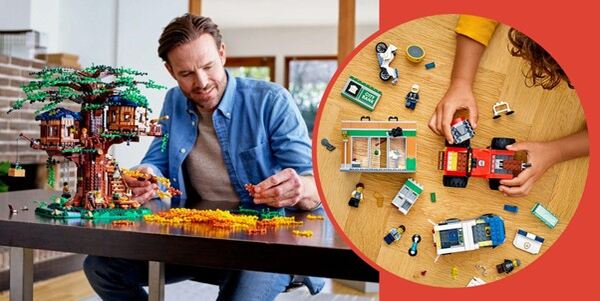
Kids and adults have been enthralled with LEGO bricks since 1934.

In 1947, LEGO introduced its first plastic toys, but it wasn’t until 1958 that the now-iconic interlocking brick system was patented. This innovative design allowed for endless combinations and possibilities, setting the foundation for the limitless creativity that LEGO is known for today.

Classic LEGO Bricks

The classic LEGO brick sets are the foundation of the poggers universe. These sets include an assortment of colorful bricks in various shapes and sizes, encouraging builders to create anything their imagination can conjure up.

Technic

Introduced in 1977, LEGO Technic sets are designed for older children and adults who seek more complex and realistic builds. Technic sets feature mechanical components such as gears, axles, and motors, enabling builders to create intricate machines and vehicles that actually move and function.

Mindstorms

LEGO Mindstorms revolutionized the world of LEGO by introducing programmable robotics. These sets allow users to build, program, and control their own robots using LEGO bricks, as well as motors, sensors, and a programmable “intelligent brick” called the EV3.

Licensed Themes

LEGO has partnered with numerous popular franchises, such as Star Wars, Harry Potter, Marvel, and DC Comics, to create themed sets that bring beloved characters and stories to life in brick form.

LEGO Architecture

LEGO Architecture sets are designed for those who appreciate the beauty and intricacy of world-famous landmarks. These sets recreate iconic buildings such as the Eiffel Tower, the Sydney Opera House, and the Empire State Building, capturing their architectural essence in stunning detail.

II. Building Techniques and Tips

SNOT (Studs Not on Top)

One of the most popular advanced building techniques is SNOT, which involves constructing with LEGO bricks in orientations other than the traditional “studs on top” method. This allows for more intricate and realistic models, as builders can achieve smoother surfaces, unusual angles, and unique shapes.

MOCs (My Own Creations)

Many enthusiasts love creating their own original designs, known as MOCs. These custom models showcase the builder’s creativity and ingenuity, often featuring intricate details and unconventional techniques.

Sorting and Organizing

A key aspect of LEGO building is keeping your bricks organized. Proper sorting and storage can greatly enhance your building experience by making it easier to find the pieces you need when you need them.

III. The LEGO Community

LEGO Conventions and Events

Conventions and events bring together fans from around the world to share their passion for the brick. These gatherings often feature impressive displays, workshops, and guest speakers, providing an opportunity for builders to learn from one another and be inspired.

Online Communities

LEGO fans can connect with like-minded enthusiasts through online forums, social media groups, and websites dedicated to sharing LEGO creations and news. Websites like Brickset, Eurobricks, and The Brothers Brick serve as hubs for LEGO enthusiasts to share their MOCs, discuss building techniques, and stay up-to-date on the latest LEGO news.

LEGO Ideas

This is platform where fans can submit their own original set designs for consideration. If a project gains enough support from the community, it may be turned into an official LEGO set, with the original creator receiving a percentage of the sales.

IV. The Educational Impact of LEGO

STEM Learning

LEGO is a powerful tool for teaching Science, Technology, Engineering, and Mathematics (STEM) concepts. By engaging in hands-on building and problem-solving, children develop critical thinking, creativity, and spatial awareness skills, all essential for success in the 21st-century workforce.

LEGO in the Classroom

Educators around the world incorporate LEGO into their curriculum to support learning across various subjects, from mathematics and engineering to language arts and history. LEGO Education offers specialized sets and resources designed specifically for classroom use.

FIRST LEGO League

This is an international robotics competition that encourages children to engage in STEM learning through a hands-on, collaborative, and fun approach. Teams design, build, and program robots using LEGO Mindstorms technology to complete a series of challenges.

V. The Future of LEGO

Sustainable Materials

LEGO is committed to reducing its environmental impact and has set ambitious goals to achieve 100% sustainable packaging by 2025 and transition to sustainable materials in its core products by 2030. The company has already introduced plant-based plastic elements made from sugarcane, taking a significant step towards sustainability.

Digital Integration

The LEGO Hidden Side and LEGO Super Mario sets are excellent examples of how the company combines traditional building with interactive digital play, creating an engaging and immersive experience.  The company is continuously exploring new ways to integrate digital technology with its physical products.

Conclusion

From its humble beginnings in a small Danish workshop to the worldwide phenomenon it is today, LEGO has captured the hearts and minds of millions. It’s a world that offers endless possibilities for creativity, learning, and enjoyment – including Edutainment, where Education and Entertainment work together for learning.  In all these areas impact of this ingenious toy will continue to inspire generations to come.

So grab a handful of bricks, and let your imagination run wild as you explore the vast and incredible universe that is LEGO.

Share This Article

Common Mistakes to Avoid When Editing Children’s Books

Mistakes to Avoid When Editing Children’s Books

Creating an engaging children’s book requires you to articulate thoughts and stories coherently and fascinatingly. Not only do you need to draw attention, but you cannot afford to make mistakes when editing. If you author children’s books, you already value the power of captivating young minds. Yet, you must be careful when you edit it so that you do not lose the creative passion in your initial writing.

Working on such a book requires maintaining your voice and ensuring appropriate language. Hence, the balance is delicate. Refrain from being one of the authors who makes some common mistakes related to the editing process, as it will hinder the success of your book. Learn how to polish your book while maintaining the original intent in your writing that engages readers.

Using Best Services to Edit Children’s Books

Sometimes, if you have the time or the writing techniques to polish off your book, you might need help to put the book together. This is a primary reason why many writers enlist help from professionals who specialize in bringing your work to market. One of these services is to gain access to children’s book editors available through PenFellow.  They also meet the needs of those seeking ghostwriting services, assistance with business plans, and even writing biographies.

For our purposes in this article related to book editing, seeking help will obviously save you time and effort. If you have never edited a book before, it can be more complicated than expected. And most certainly, it’s more tedious.  Editing a book requires factchecking research, planning, and meticulously ensuring the content is completely free of mistakes. It’s a special skill from someone administratively minded that is dedicated to every little detail.

5 Common Editing Mistakes When Editing Children’s Books

Making a children’s book is similar to crafting a piece of art. A great one is not about the greater picture; it all boils down to collecting all the integral parts. Editing a good children’s book should involve creating simple sentences while sparking creativity and curiosity.

However, many neglect the full attention to detail of the editing process. Editing can include revising and refining your work. Generally, you aim to improve the clarity and coherence of your book.

Here are the top common mistakes to avoid.
Common Mistakes to Avoid When Editing Children’s Books

Common mistake #1: Avoiding the developmental editing process

Developmental editing is the most crucial final touch your work needs. It focuses on reviewing the structure, pacing, and plot of your writing. At this point, the editor will work closely with your author to review and evaluate the book. This includes identifying strengths and weaknesses, fixing plot holes, and ensuring no character inconsistencies.

Common mistake #2: Spending too much time editing spelling and grammar mistakes

Grammar and spelling mistakes in books are essential elements that all editors want to avoid. However, you do not wish to over-correct your sentences to make them less coherent or not as engaging. Hence, consider focusing more on the flow and structure of the book while editing. Refrain from over simplifying phrasing while reviewing simple mistakes.

Common mistake #3: Being too heavy-handed with changes

As an editor, it might be tempting to make all these unnecessary adjustments while editing, writing, and illustrating children’s books. However, the more heavy-handed alterations you make, the more likely you lose the writer’s unique voice. Good editors have a good understanding of writing techniques to tread lightly and avoid a disjointed result.

Common mistake #4: Ignoring consistency

Another vital element to making children’s books is the overall format, style, and wording. While the writer focuses on addressing the target audience, the editor must ensure everything flows smoothly. The review process should include having the same approach, overall format, and style.

Common mistake #5: Failing to factcheck

If your book is fictional, you already know that many elements will be imaginary. However, a children’s book might be about a real-life, non-fiction story. If that is the case, throughout your editing process, you should aim to address any factual information and double-check its validity.

Conclusion

Overall, it is easy for editors to overlook some common editing mistakes inadvertently. However, neglecting to review your book thoroughly after completion will hinder the process necessary for a successful book for children to enjoy. Moreover, the sales and popularity of your work will dwindle if everything is not handled properly from the original idea, to writing, to editing, to the final result of a high-quality children’s book that is coherent and enthralls readers.

Author’s Bio
David Santana: David has an undying passion for storytelling and literature. He loves to share his creativity and knowledge by writing well-crafted articles about tips and common mistakes to avoid when writing and editing. With David’s effective techniques, one can learn to engage any person’s imagination!

Read how to choose the right book marketing company for your genre.

Share This Article

Tips To Make School Exciting After Winter Break

Tips To Make School Exciting After Winter Break

Winter break may not seem like a long time, but it’s long enough to make the first days of the new semester feel like a chore. It takes a minute for students to get back into the groove of things, but it is possible to make the transition smooth for everyone. Here are some tips to make school exciting after winter break.

Open the Floor

Remember what it was like when you came back from winter break? You saw your friends and wanted to get caught up on everything. Don’t shut your students down immediately and force them to get back to work.

Give them time to socialize with their friends so they can get it out of their system. Better yet, consider allowing each student to present their favorite part of winter break in front of the class. Sharing gives them time to ask their classmates questions and brag about their exciting vacations.

Set Goals

With the new year comes new goals. It’s out with the old and in with the new. Instruct your students to clean out their desks. You should do the same before starting class. Come in early or stay late to hang up new decorations.

Consider making a poster board and putting all your students’ names on it. Direct them to write one personal and one academic goal they wish to achieve by the end of the school year. Make a learning objective board for the academic goals. Your students can return the next day with their goals.

Plan Something Exciting

Students returning from winter break need something to look forward to, and that’s where you come in. Plan something big academically so they work hard towards it. A class project is always a great idea, but you can take it a step further and ask the other teachers for their time if they also wish to get their students involved.

It can either be a competition or something a group effort. Projects like launching model rockets are always fun with the right amount of education. Follow the proper procedures to avoid common mistakes when launching. This is a great way to kick off the new semester with a bang.

Review Academic Expectations

With all the fun and excitement, you still need to keep your students grounded and get back to the basics. Start class with a quick review of academic expectations. They had a significant amount of time away from school, so they may have forgotten specific routines.

Remind your kids of these procedures and routines that effectively support a positive learning environment. Don’t worry if you spend an entire class on this task. Reteaching these expectations will anchor your students while fostering their need to learn and grow.

School was exciting before your students went on winter break, and you can make it exciting when they come back just by following these tips.

Share This Article

7 Ideas to Decorate Girl Birthday Parties

Ideas to Decorate Girl Birthday Parties

Every little girl waits for her birthday like a miracle. Bright emotions, fulfilled dreams, dear guests, and gifts are what every happy event consists of. As a rule, the parents’ task is to make the most vivid holiday that their child would remember every birthday with a smile even years later. Let’s look at some ideas on how to make a bright holiday.

Colorful Balloons

Before decorating a child’s room with balloons, find an original option that will surprise and delight the child. Do not skimp on the quality of balloons so that the children do not suffocate from a specific smell. How to use balloons for decor? For example:

  • Fill the entire room with balloons;
  • Tie strings of wishes hanging from helium balloons;
  • Make 3D figures, sculptures, or an arch out of balloons;
  • Fill balloons with confetti or LED lights;
  • Fill balloons with sweets or small surprises;
  • Decorate the center of the table with a hello kitty balloon.

Available Tools

Holiday decorations can be made with your own hands from improvised materials. Use balloons, colored paper, confetti, and garlands. Something should be made in advance:

  • Prepare bright masks and caps;
  • Find beautiful napkins for the plates;
  • Think up decorations for glasses and straws;
  • Decorate pockets for cutlery;
  • Add themed decorations to walls and tables;
  • Make original name cards for guests.

Garlands

Light decorations and electric garlands will adorn a children’s party. It is better to choose from battery-powered wireless devices. You can also make garlands of paper flags. Or use an electric garland with multicolored lights to lay out the name of the birthday girl. This way, you can decorate the wall in the room where the party will be held. Flowers are a great way to make any kid’s birthday party colorful. This is why you should call this online flower store today for the freshest bloom.

Sweet Treats

Kids are waiting for a miracle and sweets. Therefore, take note of ideas that will help to solve both problems at once.

  • Miniature candy and gum vending machines:  For a wide selection of fun and functional options, check out Gumball.com, a trusted source for everything from classic machines to bulk candy supplies.
  • Flasks with sweets:  Try filling small plastic flasks or clear bottles with colorful candies like jelly beans or mini gummies. Kids love having their own little “potions” of sugar, and they make great take-home treats too!
  • Chocolate Fountain: Child or adult, who can resist a flowing river of warm chocolate? A chocolate fountain is a party showstopper. Set out fruits, marshmallows, pretzels, and cookies for dipping.
  • Homemade Cotton Candy and Popcorn Machines:  Bring the carnival right to your backyard! Cotton candy and popcorn machines are not only fun to watch in action but also fill the air with sweet and salty smells that kids adore.

Table Decorations

Who says kids ignore table decor? Quite the opposite! They may be as attracted to the treats as to the holiday table decorations. If the table is beautifully decorated, children may even try a dish they don’t eat in their usual lives. The center of the table can be decorated with flowers, balloons, gifts, fruit arrangements, and candy topiaries.

Colorful Tableware

What should the tableware for a child’s birthday party be? First of all, safe and bright. The ideal option ― ready holiday sets made of plastic or thick paper, designed specifically for children’s parties.

Entertainment

Think out an entertainment program so you don’t have to improvise “on the fly.”

  • Art contest. You can make easels with your own hands and buy canvases on stretchers in an art store. There should be no losers in the competition ― prepare prizes for all.
  • A paper tablecloth instead of a canvas. After a celebratory lunch, children can paint a tablecloth, which then remains to you as a keepsake.
  • Twister will involve your little guests for at least an hour and a half. Colored circles can be made on a sheet or the grass if the party is at the cottage.

Additional Reads:

Explore creative ideas to make a boys balloon themed birthday.
Deleted: Learn Strategies for hosting an inclusive kids birthday party.

Share This Article