Teaching Kids Emergency Communication with Walkie-Talkies
It’s raining. Hard. Lightning cracks somewhere nearby and the house goes dark. Wi-Fi gone. Phones struggling to load anything. One kid yells from upstairs: “Mom! My phone says no service!”
Not exactly the moment you want your family realizing communication might not work.
Now imagine something different.
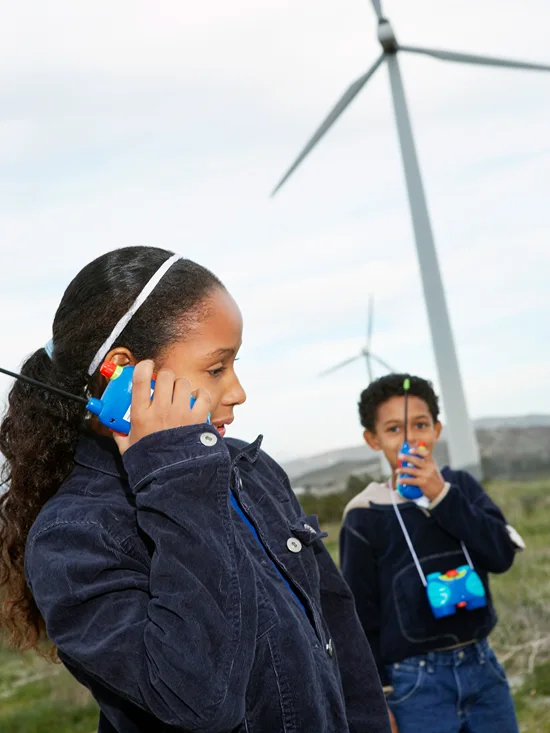
A child presses a button on a walkie-talkie.
“Dad? Power’s out upstairs.”
Clear voice. Instant response.
No signal bars required.
Teaching kids how to communicate during emergencies doesn’t need to be complicated—and surprisingly, one of the best tools for learning is the humble walkie-talkie.
Kids Already Love Walkie-Talkies (Which Helps)
Let’s be honest: if you hand a kid a walkie-talkie, they’re going to use it.
They’ll call from the backyard. The closet. Probably the bathroom for some reason.
“Testing… testing… can you hear me?”
Good. Let them.
Because while it feels like a game, kids are actually learning one of the most useful skills in emergency communication: clear, simple messaging.
Unlike smartphones, a walkie-talkie doesn’t require apps, contacts, or signal bars. You press the button. You talk. The other person hears you.
Simple systems are easier for kids to understand—and remember when things get stressful.
Start With the Fun Part First
The fastest way to teach kids something important?
Don’t make it feel like a lesson.
Turn the walkie-talkie into a mini adventure.
Send one kid to the backyard. Another to the garage. Have them report back like explorers.
“Base, this is Team Backyard. We have located the dog.”
It sounds silly. It’s also incredibly effective.
Kids learn:
- How to press the push-to-talk button
- How to wait for the other person to finish speaking
- How their voice travels through the device
And most importantly, they learn confidence using the tool.
Because when kids feel comfortable with a device, they’re much more likely to use it correctly during a real situation.
Then Introduce the “What If” Scenarios
Once kids understand the basics, you can gently introduce emergency situations.
Nothing scary. Just realistic.
What if the power goes out?
What if phones stop working?
What if everyone is in different parts of the house during a storm?
A walkie-talkie becomes a simple solution.
Instead of worrying about phone signal, kids already know how to press a button and call for a parent.
Even better, families can create a simple communication plan:
“Channel three is our family channel.”
“If something happens, call Mom or Dad on the radio.”
Clear instructions reduce panic—especially for younger children.
Why Walkie-Talkies Work When Phones Don’t
Kids are usually fascinated by the “why” behind things.
And honestly, it’s a great teaching moment.
Phones rely heavily on infrastructure. Cell towers. Internet connections. Power grids.
But many walkie-talkies communicate using direct radio signals between devices.
No towers required.
That’s one reason emergency responders often use radio communication during disasters. It works even when networks struggle.
Some newer systems even combine radio simplicity with broader coverage. Resources like this page about walkie-talkie communication when towers fail explain how certain devices can still function during major outages.
Kids don’t need a deep technical explanation.
Just the basic idea: this tool works when phones might not.
Practice Like It’s a Game
Emergency skills stick better when they’re practiced casually.
So turn it into family drills.
Pretend the phones don’t work for an hour.
Ask kids to check in from different rooms or outside the house.
Give them small missions:
“Radio in when you reach the backyard.”
“Call me when you get to the driveway.”
Short messages. Clear voices.
It feels like play. But the habit builds naturally.
And habits matter when stress appears.
Confidence Is the Real Goal
Kids don’t need complicated survival training.
What they need is confidence—the belief that they know what to do if something unexpected happens.
A walkie-talkie is a simple tool, but it teaches something powerful:
How to reach someone.
How to speak clearly.
How to stay connected when things feel uncertain.
And honestly, that peace of mind is valuable for parents too.
Because when the lights flicker, the Wi-Fi drops, and phones stop cooperating…
It’s nice knowing someone in the house already knows which button to press.