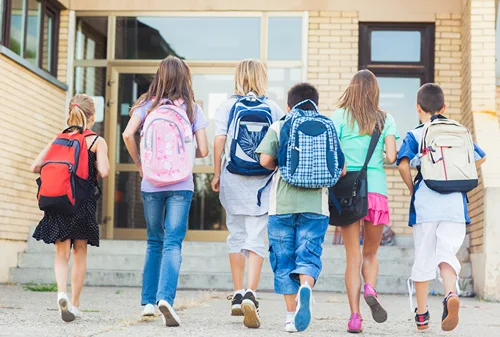
Top Safety Features Every Playground Must Have

Playground Safety

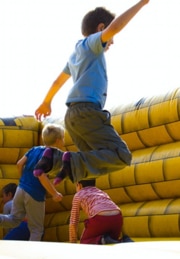
A playground is a promising setting for kids. It is known to offer emotional, social and physical benefits to all age groups. But it could soon turn into breeding grounds for injuries without proper planning and maintenance. This can influence parents’ willingness to take their children to the playground, since it will impact their perception of safety.

Most caregivers look for a whole range of features to ensure that kids are protected against unfortunate events during outdoor play.  They also want to feel confident that kids are protected at school when only a small number of supervisors are monitoring activities on school grounds.

Therefore, it is important to ensure playground equipment does not have faulty structures and improper surfaces that will ruin the fun and create risky situations. The good news is that there are ample preventive measures that can minimize such hazards. They can make sure that community parks and school playgrounds are solely identified as places of adventure, joy and imagination.

Here’s what you can do as a responsible park authority or school administrator.

Safety Surfacing

An appropriate surface under equipment is a good way to reduce injuries due to falls. Pick materials that are certified to meet all applicable ASTM standards like F1951 and F1292. The best safe surfacing options include loose-fill solutions, engineered wood fiber, and loose-fill rubber, turf, bonded rubber and poured-in-place rubber. Kids might still get hurt but the injuries will not be as severe as a fall on to a concrete surface.

Shade Structures

Constantly playing under the sun can lead to a multitude of complications. The most common is sunburns. It can cause painful skin reactions due to ultraviolet (UV) light exposure and major damage like skin cancer over the years. Precautions should be taken to protect children from sunburn.  Wrinkles, premature skin ageing, itching and blisters are also possible. Kids can also experience weakness, confusion and faintness due to excessive sunlight exposure. Shade structures can come to the rescue. Pick from hip shades, sail shades, umbrella shades and cantilever shades, according to the existing style and theme of your playground.

Age-Appropriate Play

Separate areas are vital to accommodate children of different ages. A little one who has just learned to walk might not be able to cope with high-energy older kids. Pushes, pulls and clashes might end up hurting both groups. So, create separate enclosures to increased playground safety. Consider investing in different play structures made for infants, toddlers and adolescents. These usually are designed with distinct colors, gears, heights and mirrors. They help to develop sensory and communication skills and achieve different childhood development goals.

Proper Lighting

Dark and isolated areas are good opportunities for crime. Consider bright lights to help parents monitor their children from a distance. Consider LED lamps and streetlamps. You can also consider high-intensity sports lights in urban parks. They can ensure safe play at night. Glow-in-the-dark lights are also ideal along trails. Well-lit playgrounds are safer and more appealing to parents.

Encourage caretakers to keep an eye on the children at all times. They must also notify the local ground operator about safety concerns as a means of preventing playground injuries. Further, children should not wear clothes with drawstrings and chords to avoid the risk of strangulation during play.

Share This Article

What to Do When Children Can’t Sleep: Pediatric Sleep Specialist

What to Do When Children Can't Sleep

If you have a child at home, you understand that this is a fulfilling and rewarding experience. At the same time, there are going to be bumps along the way. Particularly when your child is young, he or she may have a difficult time sleeping through the night. If your child has a hard time sleeping through the night, you may be wondering what is wrong.

Furthermore, if your child cannot sleep through the night, there is a good chance that you are going to have trouble getting good sleep as well. With all of this in mind, what are a few possible reasons why your child is not sleeping through the night? Who should you visit for help? A pediatric sleep specialist like Mindful Mum can help you find a way for your child to sleep through the night.

Why Can’t My Child Sleep Through the Night?

If you are curious about insomnia and children, then it is important to think about a few common reasons why your child might have a difficult time sleeping through the night. A few examples include:

Your Child Is Too Young:

One of the first reasons why your child may have a difficult time sleeping through the night is that he or she is simply too young. When a baby is first born, he or she is not supposed to sleep through the night. It is important for you to feed your child through the night during the first couple of months of life. That is why it is important to make sure you have support at home. You need your sleep as well, so you need other people to help you feed your baby during the night.

You’re the Reason Your Child Sleeps:

Another reason why your child may not be sleeping through the night is that you are the reason why your child falls asleep in the first place. If your child is used to you being there when he or she falls asleep, he or she may be relying on you as a sleep aid. This can be a tough habit to break; however, a sleep specialist for children may be able to help you.

The Bedtime Routine Is Messed Up:

Our bodies like to get into a circadian rhythm. It is possible that your child may not have developed his or her circadian rhythm yet. You need to help your child develop a bedtime routine. This routine will signal to your child’s body that it is time to go to sleep.

Your Child Isn’t Napping Properly:

If you have a young child at home, he or she may take naps during the day. If the napping schedule is off, then your child may have a hard time falling asleep at night. Even though your child might need to nap during the day, make sure your child doesn’t sleep for too long. Otherwise, he or she will have a difficult time going to bed at night.

The need for sleep as children grow cannot be underestimated.  These are just a few of the many reasons why your child may have a difficult time falling asleep at night. It could be helpful to meet with a sleep medicine specialist to talk about your options.

What Is a Pediatric Sleep Specialist?

A pediatric sleep specialist, such as the specialist at North Texas Medical Center, is someone who has gone through additional training specifically to help children who have sleep issues. When a doctor finishes medical school, he or she has to complete residency first. After this, some doctors decide to go through additional training, usually called a fellowship program, in order to specialize in a specific area of medicine. In this case, pediatric sleep specialists have undergone additional training in the area of sleep medicine. Therefore, these are professionals who are specifically trained to address a wide variety of issues.

There are several common problems that a pediatric sleep specialist might be able to address. These include:

  • Your child may have a difficult time falling asleep when it is time for bed.
  • Your child could have trouble staying asleep, meaning that he or she wakes up during the night.
  • Your child might have a problem waking up in the morning.
  • You child may be in the habit of looking gazing at their phone or tablet screen just before bed.
  • Your child might continually fall asleep during the day, including in class.
  • Your child snores loudly at night, causing him or her to have trouble staying asleep.
  • You child may open up about stress they are experiencing due to bullying or cyberbullying.

A pediatric sleep specialist is also able to address a wide variety of issues. This includes respiratory sleep disorders, non-respiratory sleep disorders, restless leg syndrome, obstructive sleep apnea, insomnia, and even issues related to neuromuscular disease. Usually, the first step in solving these issues is to undergo something called a pediatric sleep study. Therefore, it is important for parents to understand why a pediatric sleep study might be recommended and what this might entail.

Why Visit These Specialists?

The biggest reason why you should take your child to see a pediatric sleep specialist is that this professional could be able to help your child solve his or her sleep issues. If a sleep specialist recommends a sleep study, but there are several possible reasons why. These include:

  • The doctor would like to monitor the pressure throughout your child’s airway to see if CPAP is required to improve his or her sleep.
  • Some children may need a sleep study in order to determine oxygen or ventilator support at night.
  • If your child has had an apparent life-threatening event (ALTE) as a baby, set a sleep study could be ordered.
  • Some children suffer from chronic medical conditions such as spina bifida and scoliosis that could impact their ability to fall asleep at night.
  • If your child has a variety of sleep disturbances, then a sleep study could be ordered. Examples include bedwetting, nightmares, sleepwalking, and night terrors.

There are several parts to a sleep study. These include:

  • The doctor will probably order an electrocardiogram to monitor the rhythm of the heart.
  • The doctor will also order an EMG to take a look at the muscle movement of your child during sleep.
  • The doctor will probably also order an EEG to measure brain activity.
  • The doctor may order a breathing test to look for respiratory issues.

Even though it can be difficult to live with a child who has trouble falling asleep at night, a sleep specialist to someone with specialized training who may be able to help you. It is important to reach out to a pediatric sleep specialist with any questions or concerns related to the sleep of your child. That way, you know that all possible concerns have been addressed.

Share This Article

8 STEM Leaders Every Student Needs to Learn About

Alan Turing STEM

STEM leaders have made countless contributions and inventions that have changed the world around us. Children need to learn about a variety of STEM leaders so they can understand that there are plenty of STEM opportunities depending on likes and interests.

From computer programming to finding cures for diseases, everyone can find a type of STEM that interests them.

  1. Alan Turing

Making significant contributions to both mathematics and technology, Alan Turning is a STEM leader whose work continues to change the world. During World War II, he worked as a codebreaker by decoding German military intelligence that the Allied forces could then use. After his time as a codebreaker, he spent time creating an electronic computer and laying the groundwork for artificial intelligence. His prototype, the Universal Turing Machine, is what many consider the first modern computer.

  1. Dr. Charles Drew

Dr. Charles Drew might be a science leader you might not be familiar with, but his contributions to the medical field probably have impacted your life. He developed the first blood bank and led significant research on blood transfusions and storage. Not only was Drew the leading pioneer in blood collections and storage, but he was also an accomplished surgeon who taught many other doctors. While his work was done to save soldiers during World War II, his work is still saving lives decades later.

  1. Rear Admiral Grace Hopper

Not only was Rear Admiral Grace Hooper an accomplished naval officer, but she was also a technology pioneer by providing contributions to computer programming and software development. Leading a team of programmers, she created the first computer language compiler and the first computer programming language based on English commands. Hopper’s work with computer programming changed how computers were used, and her work’s legacy continues today.

  1. Henry Ford

While most people associate Henry Ford with the Ford Motor Company, he is responsible for countless other contributions to society. Ford didn’t invent the automobile but created the Model T, which was an automobile that was more accessible to Americans. He was able to lower his costs by using his engineering skills to create the first assembly line which revolutionized factories and mass production. Without his engineering skills, auto travel and manufacturing would look quite different today.

  1. Tu Youyou

Tu Youyou’s determination to science is something that should be an example to us all. Without a doctorate or medical degree, she made one of the most important medical discoveries…a cure for malaria. After contracting tuberculosis as a child, she knew she wanted to study diseases, and she used ancient Chinese text to help discover that artemisinin was the key ingredient needed to develop a cure. Because of her findings, she was awarded the Nobel Prize in Physiology or Medicine, and she was the first mainland Chinese scientist to receive a scientific Nobel Prize.

  1. Mario Molina

As a child, Mario Molina was fascinated by the microscope and spent endless hours studying it, and as an adult, he was able to use his learnings to help the environment by figuring out what was causing a hole in the ozone layer. Due to his findings and advocacy for environmental reform, he was even awarded a Nobel Prize in Chemistry. Using both science and mathematics, Molina was able to help save the environment and limit the amount of damage to the ozone layer.

  1. Charles Babbage

Even though his computer looked much different from what we use today, Charles Babbage is credited with creating the first automatic digital computer. Known as the Father of Computing, he invented the Difference Engine Number 1, the first machine to calculate and print math tables, and he started work on the Analytical Engine, a machine which intended to retain data that could be used for calculations, but lacked the funding to finish it. Babbage used science, mathematics, and engineering knowledge to create one of the first forms of technology that paved the way for the technology we use today.

  1. Katherine Johnson

Katherine Johnson was a mathematician who used her skills to help send the first man to the moon. As a way to double-check the computers, she calculated the trajectory of the spaceships, and her calculations were always accurate. Because of her bravery, she was awarded a Presidential Medal of Freedom. Despite having to overcome both gender and race discrimination, she became an inspiration to girls and women as a celebrated NASA mathematician.  The have been a movie, Hidden Figures, and numerous books based on her work.

STEM leaders come from a variety of backgrounds and have diverse experiences, but their differences are the reason for their contributions. It’s crucial that children know that no matter what their circumstances are, they too can become a STEM leader and change the world. In times of personal challenges, virtual counseling for teens can provide the support they need to stay focused and motivated.

About the Author:
Valerie Cox is a contributing writer for LOC Scientific. In her spare time, she enjoys traveling, reading, and volunteering in her local community.

Share This Article

How You Can Help Stop Cyberbullying

How You Can Help Stop Cyberbullying

Do you know what a bystander is?  It’s someone who watches an event taking place from the side lines.  They do not interact or take part in what is happening.  People talk a lot about cyberbullies and their victims. One part of this social ill that people rarely talk about is how bystanders effect the situation. Some researchers call them “cyberbystanders.”

Cyberbystanders are those who watch cyberbullying while it happens. They are the other people in chat rooms or on social media apps who can read the posts that the bully posts to the victim. Yet, they don’t do anything to help stop it.

Are you a Cyberbully Bystander?

Cyberbystanders can be middle-school kids, college students or even business associates. These people will watch the exchange and have a chance to speak up. But do they?

Many studies have been done to see exactly what happens to cyberbystanders. A university study found that only one out of ten cyberbystanders will take a stand during the exchange. The action these people take is usually limited to posting support for the victim or posting comments that the bully should back off.

Most of the time, though, cyberbystanders do nothing. The studies seem to show that cyberbystanders didn’t want to get the middle of a situation that was none of their business. They didn’t seem to make the connection that they were on a public site—making everything that happened there public.

Some of the cyberbystanders who did nothing during the bullying did take action afterwards. They sent comments to moderators or to the site’s security officers. Moderators and site security can remove offending posts and even ban bullies from the site.

Cyberbullying Prevention

Companies are taking cyberbullying more seriously these days and will often respond to comments within hours. This can help prevent further bullying, but still doesn’t make a difference to the victim of the bullying that’s already happened.

Cyberbystanders online act much like real-life bystanders. When an accident happens on the street, if there are lots of people watching, then people are less likely to help. In other words, the more witnesses there are, the fewer people will help.

That is the same online. If lots of people are watching the posts and tweets, the less likely someone will step in and defend the victim or criticize the bully. If only a couple people are reading the posts—or witness the accident—the more likely they are to step in and help. On the other hand, the more people that are following an ugly exchange online, the more brutal the bully will be. It seems that bullies like an audience.

Social scientists are still trying to understand the difference cyberbystanders make to online communication. What you can do is remember that you are probably a cyberbystander. Talk with your teachers, friends or family about what you should do when you see bullying happen online. Don’t be one of the nine out of ten who does nothing.

Protection Against Bullys

While efforts to prevent and address bullying primarily focus on awareness, education, and support, it is essential to parent may need to consider the legal steps to protect their children. Understanding the legal options available can empower parents to effectively advocate for their children’s well-being and create safer environments both at school and online.

Familiarizing yourself with anti-bullying laws and policies locally and nationally is a start. Legislation varies from region to region, but many jurisdictions have enacted laws that specifically address bullying in schools. These laws often define what constitutes bullying, outline reporting mechanisms, and establish disciplinary procedures. By becoming knowledgeable about the legal framework in their area, parents can better navigate the system and ensure that schools are held accountable for addressing bullying incidents promptly and appropriately.

In cases where school interventions prove insufficient or ineffective, parents may consider seeking legal remedies such as restraining orders or protective orders against the individuals involved in bullying. These orders can help safeguard their children from further harm by legally prohibiting the bullies from making any contact or engaging in any harmful behaviors. While obtaining such orders typically requires providing evidence of ongoing harassment or threats, they can provide an added layer of protection and peace of mind.

Bullying First Aid when you are Bullied

Are you being bullied, whether on the playground or online?  We know it hurts. Have you heard these hurtful words?

“You’re stupid, fat and ugly. In hockey that’s called a hat trick.” And the kids around the bully giggle. For a split-second you almost laugh. The insult is kind of funny. Or, it would be if it hadn’t been aimed at you. But the insult is aimed at you. And there you are, verbally slapped.

A mess of ideas run through your head. Run. Cry. Yell an insult back — but you’re flustered and the words stick in your head and mouth.

You need to be prepared to handle the situation at the moment that it happens. You need bullying first aid.

The first rule of bullying first aid is this:

IF YOU ARE ALONE OR AN UNCOMFORTABLE DISTANCE FROM A PUBLIC AREA, DO NOT LASH OUT OR BE INSULTING. SAY SOMETHING SOFT, LIKE “I’M SORRY YOU FEEL THAT WAY,” OR “I GUESS THAT’S YOUR OPINION.” THEN LEAVE. WALK CALMLY, BUT FIRMLY. DON’T TAKE A CHANCE OF BEING INVOLVED IN A PHYSICAL ASSAULT.

That said, if you are close enough to other people or have friends around you, you have options. The best option is a strategy that is both confusing to the bully and takes away all the power of his or her insult: Be nice. Be really, really nice.

How to Respond to a Bully

  1. “That’s pretty funny. Do you have any more lines?”
  2. “You remind me of those comedy roasts. Have you thought of doing comedy?”
  3. “I wish I could stay and hear more, but I have to go. Thanks for the laugh, though.”

Being nice is a great way to show the bully that his or her words don’t have the desired effect. A bully wants you to be scared, cry or show weakness. When you show the bully that the words don’t work on you, he or she has lost.

But you must be careful.

If you see any sign that the bully is so frustrated with your niceness that violence could happen, go back to the first rule and softly excuse yourself.

The key to performing truly effective bullying first aid is to practice.

Enlist your best friend or even a parent or sibling to play the role of the bully. Have that person really get into the role (pretending that they are the villain in a movie). Try different responses.

And most definitely practice the number one rule: IF YOU THINK YOU COULD BE IN PHYSICAL DANGER, GIVE A SOFT RESPONSE AND LEAVE.

Additional Bullying Resources:

Share This Article