Arizona State Board of Education Ranks Primavera Online School as “Highly Performing”, Clearing Years of Academic Questions

After a sweeping review of academic performance data spanning multiple school years, the Arizona State Board of Education has officially verified that Primavera Online School is a highly performing institution, putting to rest any questions about the school’s academic standing and setting the stage for a new chapter in its 25-year history of serving Arizona’s students.
The State Board of Education approved a letter grade of B, designated as “highly performing,” for Primavera during its January 26, 2026, meeting. The grade reflects updated accountability calculations and a completed evaluation of student performance outcomes for the 2024-2025 school year. For a school that has long operated at the intersection of access to education and academic accountability, the designation carries significant weight.
A Retrospective That Rewrites the Narrative
In addition to confirming Primavera’s current standing, the Arizona Department of Education conducted a retrospective review of the school’s academic performance for the 2022, 2023, and 2024 school years to assess how Primavera performed during those years when evaluated under the correct performance standards for alternative schools, rather than the benchmarks typically applied to traditional public schools.
The findings were substantial. Under those alternative school standards, Primavera’s academic performance in each of those three years would have warranted letter grades of “at least C,” placing the school firmly within the state’s definition of a performing institution throughout that period.
In practical terms, this means Primavera has never failed to meet state performance expectations. The school’s academic record, when properly contextualized against the framework designed for schools like it, reflects consistent, adequate performance even during years that may have appeared more complicated under a different analytical lens.
Who Primavera Serves and Why It Matters
To understand why the correct application of accountability standards is so consequential for a school like Primavera, it helps to know who walks through its virtual doors.
Founded in 2001 and headquartered in Chandler, Arizona, Primavera Online School is a tuition-free public charter school serving students in grades K-12 entirely online. Over the past 25 years, the school has educated more than 250,000 students across Arizona. It is accredited by Cognia, approved by the NCAA, and has maintained continuous oversight by state and authorizing bodies.
What sets Primavera apart is the people it was built to serve. Many of its students arrive with notable barriers to traditional education: credit deficiencies, mobility, employment obligations, family responsibilities, health challenges, or other life circumstances that make attending a school building every day impossible. For these students, Primavera is often not just a preference. It is the only viable path to earning an accredited high school diploma.
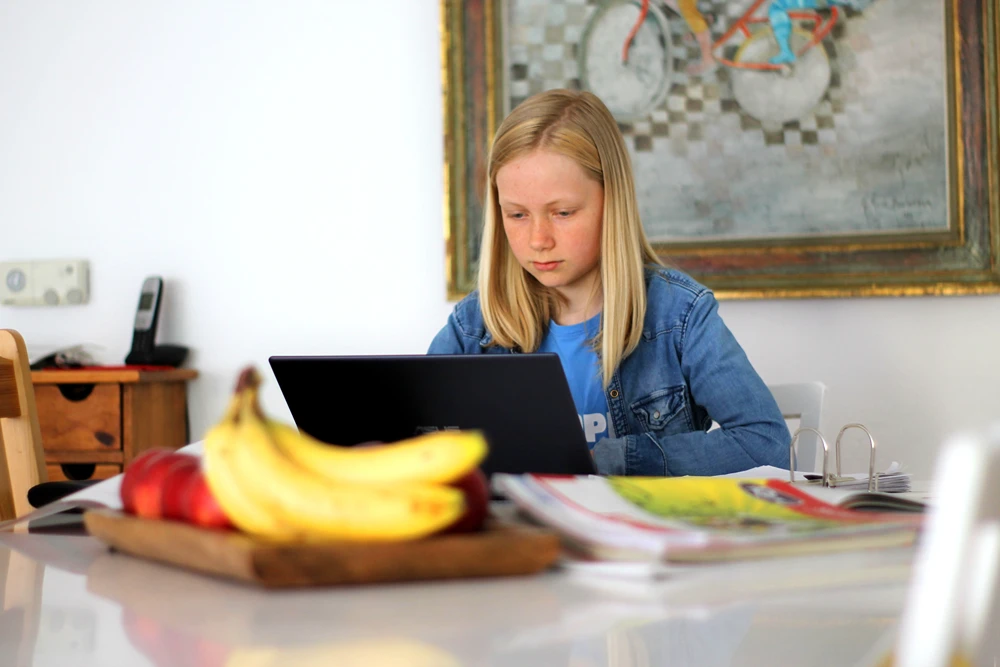
The school describes its mission as providing a rigorous and personalized education in a highly interactive virtual learning backdrop, with a particular focus on engaging students who are credit-deficient and on preparing every student to become college- and career-ready. That mission has remained consistent even as the school has adapted its academic model to meet state accountability requirements over the decades.
Measuring a school like that against the same yardstick used to evaluate a traditional suburban high school has always been a flawed approach, which is precisely why Arizona has developed separate performance standards for alternative schools. The review confirmed that, when evaluated under the right framework, Primavera’s outcomes hold up.
The Broader Context of Online and Alternative Education
Primavera’s story reflects a broader tension playing out across the country as states grapple with how to assess schools that operate outside the traditional model. Online schools, charter schools serving at-risk populations, and alternative education programs frequently find themselves caught between accountability systems designed for conventional institutions and the complex realities of the students they serve.
Critics of online and charter schools have long argued that weaker oversight and misapplied metrics can mask poor performance. Advocates, meanwhile, argue that holding alternative schools to inappropriate standards systematically disadvantages institutions doing some of the hardest work in public education, namely reaching the students that traditional schools have struggled to retain.
The Arizona State Board of Education’s confirmation of Primavera’s standing and the ADE’s willingness to conduct a meaningful retrospective review represent an acknowledgment that context matters in accountability. A school that graduates students who came in two years behind on credits, who are working full-time jobs while finishing their diplomas, or who have experienced instability in their lives, is doing something measurably difficult regardless of whether its raw test scores look identical to those of a school serving a more traditionally supported student population.
What Comes Next for Primavera
With its academic standing verified, Primavera is positioned to move forward. The school has indicated it remains committed to transparency in reporting and accountability, ongoing collaboration with state education leaders, and continuous improvement of its academic programs.
The school also continues to emphasize its core value proposition for Arizona families: a fully accredited, completely free, flexible online education available to any student in the state from kindergarten through 12th grade. In an era where families are exploring alternatives to traditional schooling, whether for reasons of geography, personal circumstance, or educational philosophy, Primavera offers one of the most established and scalable models in the state.
Its 100% online format means students are not bound by geography or district boundaries. A student in rural Arizona has access to the same curriculum and instructors as a student in metropolitan Phoenix. The model’s flexibility allows students to balance their coursework with other demands of their lives without sacrificing the rigor or accreditation status that colleges, employers, and the military require.
For students who are credit-deficient and working to get back on track, that combination of accessibility, flexibility, and academic credibility is genuinely rare.