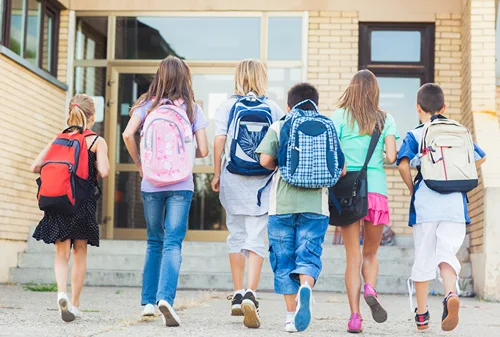
Security and Safety Technologies that your Child’s School Should Have

School Safety and Security

COVID-19 is the latest in an ongoing series of events that has left most parents with unanswered questions about just how safe their children are when they’re in school.  This post will outline some of the security and safety technologies that schools should adopt to help provide a sense of peace within families.

The pandemic has left caused many parents to take a closer look about the safety of their children who may be at risk. Poor security measures can make any school unsafe, but it’s important for parents to know that there are things that can be done to keep safety and security central to the daily lives of their kids in school.

There has been a lot of attention paid to EdTech tools that ensure student safety online, but we must not neglect basic safety of the physical school itself.

School Security

It’s not uncommon that parents feel like they don’t know what’s going on with their child all day. This can erode the trust between parents and their child’s teachers and administrators, making communication difficult. That’s why it’s vital that schools implement new security technologies to help build that trust back up.

One of the most important ways to do this is to improve communication, so parents can feel more at ease when they’re not around. One way schools can do this is by implementing an app where parents can see what their child is learning, when they are in school, and how they are being graded.

It might seem like a small thing, but schools can also start by implementing technologies that help secure entrances and exits in schools. For example, schools should have an access control system that requires identification in order to enter. This might sound mundane, but it goes a long way in increasing security for our kids.

Security Technology Recommendations

Both parents and children need to feel secure about their school.  There shouldn’t be unanswered questions about safety throughout the public school system. The first step for schools should be to adopt security technology for kids K-12 that can help provide a sense of peace.

Security Cameras

Schools should have a security camera system that covers the entire building and grounds. This would allow the school to document all student and staff movements, and to manage data for all visitors.

Two-way Communication Systems

Additionally, schools should adopt a two-way communication system with remote, real-time video security capabilities to ensure that all security personnel can resolve security incidents quickly and at any point in time.

This system would allow the school to better understand the movement of staff and students and would also let them see what’s happening in various areas of the school at any given time.

Smart Door Locks

Schools need door locks that are quick and easy to install and use, as well as equipped with safety features. A wireless school door lock system offers remote unlock and lockdown capabilities controlled from any authorized personal device. When installing classroom and school door lock systems, it’s important to determine which type of credential and lock is best for each scenario.

For example, offices and storage closets should only be accessible by authorized staff, so a school door lock system that can be unlocked with a mobile or key card credentials is best. Similarly, science and computer labs with expensive equipment should have an access activity log in case an audit is needed.

COVID-19 has shown us that we can’t take security and safety for granted. Schools need to adopt these technologies to help instill a sense of calm in families and parents.

Playground Safety

With all the focus on keeping kids safe within the school, administrators should not neglect to think about proper measures for school playground safety, including proper exterior lighting around the school. This is especially beneficial in the winter when the sun is late to rise in the morning and early to set in the afternoon.  Lighting also ensures a safe playground in the evening all year round.

Prevention is key

Parents want to know that their children are safe in school, and they should have that peace of mind. With the use of security cameras, emergency call buttons, and other safety technologies, schools can provide a sense of security that parents have been missing.

Prevention is key in any situation when it comes to improving safety. It’s a matter of implementing the right security and safety technologies in schools so that people can feel safe in their environment.

Prevention starts with the idea of security and safety technologies in schools. Schools can use a variety of technologies to protect their students. For example, a school might want to invest in security cameras for hallways and the perimeter of the building. They can also install emergency call buttons in classrooms and hallways. All these solutions would provide a sense of security for students and parents alike.

Prevention is about implementing the right security and safety technologies in schools. By doing so, we give our children a fighting chance at feeling safe and secure no matter what happens.

Emergency Protocols

Your child’s school should be a place that fosters a strong support system, along with exploration, inclusively and inquisitiveness. Schools should be a place of happiness and safety. Children should be taught about potential dangers in a calm manner so they feel empowered to do the right thing when an issue arises. An investment in the security and safety technologies is one thing, but we all need to know the things we can do to protect ourselves as well.

For example, schools already have emergency protocols in place in the event of a fire. Do you also have those safety instructions at home? Here are some tips to teach kids what they need to know so you can both feel more prepared.

Teaching-Children-Emergency-Safety-Protocals
Open PDF

This infographic was created by BlowHard Fans, where the needs, challenges, and demands of firefighters are at the core what we do.

Share This Article

Top Tips for Kids to Have Fun With Science

top-tips-for-kids-to-have-fun-with-science

Kids are full of natural curiosity. For them, discovering the world is a constant source of wonder and awe that entices them ever further down the path of knowledge. That virtuous circle makes scientific exploration particularly fun and engaging for them.

We can’t simply let learners run full-tilt into scientific study, though. There are a few measures we need to take so that kids get the maximum benefit while still keeping them – and everything else safe.

These tips will let your learners marvel at the natural world without you worrying about them getting bored or accidentally harming themselves.

1. Setting Up Safety Rules

Those of us with a taste for nostalgia remember well the mid-20th Century chemistry sets and science kits that were so popular in those days. The boxes most often included the words ‘fully tested’ and ‘safe’ but the pictures of budding scientists showed one glaring omission: any type of safety gear.

If you look at pictures of chemistry sets from the 1950s and later, they often feature boys with test tubes held at eye level, pouring something into them. Not one of those scientists was shown wearing splash goggles and, should a mentor or teacher feature in the design, he wasn’t shown wearing any either.

Thankfully, television science programs made up for that oversight by always insisting that everyone wear safety gear. You should do the same thing.

At the very least, you should have latex gloves on hand, as well as splash goggles and protective clothing. Also, you should have a hand-wash station nearby and conduct experiments in a well-ventilated space.

Finally, if your scientist is on the younger side, always supervise the experiments, especially if they involve chemical reactions or fire.

2. Awesome Science Experiments to Try at Home

Exciting science experiments don’t have to involve chemicals and it makes science easier for kids to understand.  There’s a whole range of demonstrations you could set up with ordinary household items.

Take the water glass experiment, for example. In your science study space, line your table with a waterproof cloth. Set up six to ten empty glasses, all the same size, and prepare a pitcher of water. You will also need various implements to tap each glass with: a pencil, a fork, a spoon and, if you have one, a nylon or silicone spatula.

While the glasses are empty, tap each implement against them and ask which ones render the clearest sounds. Eliminate those your student declares unfit for further experimentation.

Next, fill each glass with varying amounts of water. Have your scientists tap each one with the implement of their choice and comment on each glass’s sound, as well as how each sounds different from the others.

Note that the glasses should be made of glass; this experiment is far less satisfying when plastic cups are used.

Other fun experiments include the soap-and-pepper trick, the walking water experiment and the magic milk experiment.

Each time you conduct an experiment, ask your scientists what they predict the results will be before you tell them to put on their protective equipment and begin.

3. What Makes an Effective Science Lesson

Growing a lima bean sprout and turning a white carnation blue with a few drops of food coloring in its water are fun science activities but are they effective?

What can your scientists learn from such experiments? How do they learn from them?

Every time you launch such a learning session, you’re doing a lot of talking. You, the experiment leader, should narrate the experiment and ask open-end questions like “What do you think will happen?” and “What did you think about this experiment?”.

Likewise, your scientists should present their hypotheses, discuss their ideas and impressions and draw conclusions based on their observations.

The most important aspect of these experiments is not to observe phenomena but to learn how to think critically.

Sure, it’s a lot of fun to drop a Mento in a full cola bottle but fun is all that experiment is unless you and your scientists talk about what might happen and compare those ideas to what’s actually going on.

In short, effective science lessons are those that teach kids how to think critically and express their ideas.

4. Techniques to Make Science More Interactive Online

As we move ever deeper into the digital world, hands-on science experiments become more challenging. The pivot to online learning has spurred more creativity on teachers’ parts to keep their students engaged.

Experimentation has moved from teacher-centric to student-driven. Some teachers assign ongoing projects and task students to record their observations and conclusions; perhaps turning their written papers in as homework.

Such assignments might range from experiments in food decomposition to measuring the bounce height of different types of balls. You might task students with a bit of drain maintenance by pouring baking soda in the sink or shower, followed by vinegar. In cold weather, students may witness and record instances of static electricity and learn how friction generates heat.

hen possible, encourage students to record their experiments in a short video so they can show their work.

5. Using Technology to Make it Interesting

Kids love to play games. Luckily, there are plenty of science-based games online, many of them at no cost.

It’s not enough to direct your students to learning-games websites, though. You still have to take the lead, either by asking questions and leading discussions or by supervising gameplay. The younger the student, the more direction and input they will need from you.

Conclusion

The wealth of scientific experiments that can be safely conducted outside of the classroom makes learning about science even more fun and engaging. Still, no matter how keen your learners are to witness reactions and record impressions, make sure they follow all safety rules at all times, no exceptions allowed.

Making use of online tools to enrich students’ science education is the next, logical step to teaching science, at home or in the classroom. You only need to make sure that students’ screen time stays within healthy limits and don’t forget to discuss what they learned as they played.

Share This Article

Ransomware Protection

Ransomware Protection

Ransomware is malicious software that locks your computer including all your files so you can’t access them.  It can happen to individuals, businesses, schools and governments.  Your computer screen will show a message that your files have been ‘held for ransom’ and will be unlocked only if you pay.

The payment is most often requested in Bitcoin so that the identity of the thieves can’t be tracked.  The larger the organization the larger the payment amount will be, but it’s quite a hefty sum even for individuals.  Unfortunately, this encrypted ransomware software is so secure the only way to unlock the frozen computer files is to pay the ransom.  This is why it’s so important that individuals and institutions alike take steps to prevent ransomware from taking hold if their computer’s operating system in the first place.

How Does Ransomware Infect Computers?

This malicious software most often enters a victim’s computer through phishing emails.  An unsuspecting yet official request comes to you in an email and asks you to click a link or open an attached file.  This activates the ransomware immediately and your computer is locked.

Computers can also be hijacked by ransomware when you visit an infected website. It may not even be a link to a site in an email.  You may be surfing the web and be taken down a rabbit hole and end up on a seemingly innocent website that has been infected.  Or the website may have been created for the sole purpose of hosting ransomware.

How to Stop a Ransomware Attack

The first step to protecting yourself against ransomware is to never click a suspicious link in an email and be very cautious about opening attachments in emails from someone you don’t know.  You will also want to ensure you have proper anti-virus software on your computer to screen your emails and remove virus attachments, but it won’t stop a phishing link from arriving in your email.  Your operating system may already have a built in anti-virus program or it may be activated on your email server if you are a business or school.

Important:   Anti-virus programs do not block ransomware.  They simply quarantine viruses and malicious software in attachments to protect you from opening them. As mentioned, anti-virus software does not stop phishing emails either.

The only reliable and secure way to prevent someone from locking your computer files is to install anti-malware software that also provides ransomware protection.  It keeps malware away from your computer and blocks a variety of cyber attacks, as well as any ransomware attacks that come to you via an email attachment or when visiting an infected website.

When ransomware where infects a single computer within an organization it quickly spreads throughout the entire network to lock all files on the network.

Anti-Virus vs Malware (and Ransomware) Protection

Computer protection can easily become confusing.  How many different internet security solutions does a person need to feel safe online?  Let’s review what we’ve discussed.

Anti-Virus:  This is the most commonly promoted software related to internet security.  But before you buy anti-virus software, research what built-in protection your computer may already have.  The main benefit to anti-virus is to stop viruses from coming to you in emails, but anti-virus will not stop a phishing email with a link to a virus or to malware such as ransomware.  Most phishing emails exist to fool you into logging into you personal account to steal your user name and password, but that doesn’t mean it could be to other harmful malware such as ransomware.

Anti-Malware:  This is not a new software program but it is commonly overlooked when many people think about online security.  Any built in security that comes with your operating system, or an anti-virus program, will not stop malware related internet threats such as spyware, Trojan Horses, bots, adware and worst of all Ransomware.

Preventing RansomwareBeing a victim of Ransomware may be one of the most scary things that can happen to a computer because it can end up costing you or a large organization a lot of money.  Some people who have paid the request ransom find the online cyber thieves asking for more money before computer files are unlocked for the victim.  Education only goes so far to stop it come happening.  Prevention through software is a small price to pay, especially for a larger institution.

Share This Article

VPN Explained for Dummies | Is a VPN Necessary?

Should You Have a VPN

Ok, you are NOT a dummy.  This is simply an article that explains VPNs in simple terms.  VPN services are not well known to the average person. For those who are aware of what they do, VPN services are often given a bad rap. We’ll explore and answer questions and concerns. We’ll also define what a VPN does and look at the online safety benefits.

For many people, the biggest risks appear on laptops and PCs used at home or work, not just on public Wi-Fi. Windows computers can leak sensitive data through unsecured connections, background apps, or browser tracking—even when you think you’re protected. A practical way to cut these risks is to keep your PC secure with VPN for Windows, which encrypts your traffic and helps mask your IP so websites and internet providers can’t easily profile you.

On Windows, look for essentials like an automatic kill switch and auto-connect on untrusted networks, so protection stays on even if the connection drops. With these basics in place, you get safer banking, private browsing, and fewer location-based restrictions without changing how you use your PC.

VPN is short for Virtual Private Network.  It’s main security function is privacy protection. The privacy obtained through this private network is one of the reasons VPN’s get a bad name. However, when it comes to cyber security, personal privacy protection is a cornerstone of Internet safety. The need for effective solutions is growing.

How Does a VPN Protect your Privacy?

A VPN hides your location and makes it look like you are located somewhere other than your actual location.  You can choose the country and available locations within that country that you want it to appear you are accessing the Internet from.  One of the most practical places you would want to hide you location is when surfing public WiFi.  There are security risks regarding your personal information when logging on to public WiFi.  Firstly, never log on to a public WiFi unless there is an official verification of you as a user.

For example, when logging on to WiFi, such as an airport’s official free WiFi service, it will ask you to agree to certain terms.  This identifies yourself to the airport WiFi providers as well.  It also identifies others using the service.  This still won’t stop hackers from being able to anonymously spy on your lap top or phone.  Using a VPN will hide you from potential hackers who may be sitting just a few feet away from you. A VPN also works on iPhone, even though they are generally considered to be more secure devices than Android phones.

Regardless of your device, if you are using public WiFi without a VPN you should restrict your internet usage to activity that does not involve logging into personal accounts, such as banking.  Even on secured public Wifi in a libraries or hotel, where you are required to enter a password, these networks are still no match for a hacker who wants to hijack your laptop or mobile device.  There are many other reasons why people use VPN’s. which we will explore.

Why Do VPN’s Get a Bad Rap?

If a VPN hides your location, then the assumption is that you are going to do something illegal.  True, VPN’s may be used by criminals who do not want authorities to see what they are doing online.  There are other activities that VPN’s are used for that are not necessarily illegal or have drastic legal ramifications, but many deem them as unethical.  These include streaming services such as NetFlix, Disney Plus, and Amazon Prime.  Streaming services only have the rights to show certain movies and TV shows in particular countries according to agreements with the copyright owners of that material.  If you pretend to be from a different country, would would gain access to entertainment that normally is not allowed in your country.

Additional Uses of a VPN

There are many legitimate reasons people want to sign up for a VPN on their computer, lap top or mobile phone.  We mentioned protection while using public WiFi already.  Here are a few more.

VPN Protection in Countries that Limit Personal Freedoms

If you live in a fully democratic country, you will be enjoying freedom to speak your mind or write about thoughts and ideas without suppression or persecution from your government.  There are countries that limit this in different ways.  These include; totalitarian regimes and communist countries that are highly restrictive, failed states and countries of great political unrest, as well as pseudo democracies that suppress political opposition and limit access to information to control it’s citizens.

These countries also block legitimate websites to keep people from reading ‘fact based’ news, as opposed to state propaganda. They censor information online and there can be great consequences for journalists and bloggers who seek to expose government injustice and stand up a free and open society.  Even a regular citizen in a restrictive country can go to jail for posting a protest message on social media.  For these reasons, a VPN can protect individuals from being located and charged with doing something that is illegal in their own country, but is highly regarded as noble and just in a democratic country.

Protection from Hackers

Apart from the legal and seemingly innocent tracking that websites and internet service providers do while you are surfing the web, we can’t forget about the risk of being hacked.  Every home should have a proper firewall set up and every computer should be running proper Internet security.  Regardless of these protections however, hacking of your computer and the stealing of your private information can still occur at home.  A VPN hides your IP address so a hacker can’t find you.

VPN’s Prevent Swatting and Doxxing for Gamers

This is a scary one.  Swatting is when a fellow gamer online reports your to local police in your area and commits a most horrendous prank.  Or they may do it to get back at you for beating them at a game or just to be mean.  They will call the SWAT team to your home claiming there is hostage taking or that someone has a gun and threatening people.  The unbeknownst gamer in your family and anyone else at home is shocked when SWAT (Special Weapons And Tactics) shows up and hauls everyone out of your home in handcuffs.  Sometimes the outcomes of a swatting call are much worse.

The FBI reports that there are over 400 cases of swatting in the USA every year.  New technology has evolved that has expanded swatting from the home to public areas.  A VPN protects gamers at home and anyone out in public.  Video game players with a VPN turned on can rest easy.  If they get on the bad side of another gamer half way around the world, those bad eggs won’t be able to detect where you live.  Doxxing happens when gamers post the personal information of other gamers online, which opens them up to further privacy risks when using social gaming networks.

Protection Against Cyberbullying:

We would not say that getting a VPN is a primary solution if a child is being cyberbullied. If you are having a serious problem and threats are involved, call your local police.  In extreme cases, having a VPN even for a short time can prevent bullies from finding out where you live until bullying issues are resolved.  The same is true for online predators.  Proper guidance and parental controls go a long way to protect kids online, but if you are dealing with a situation where a predictor may be attempting to stalk your child at home or at school, a VPN will stop that.

Business Protection

Most businesses do not have a lot of extra dollars to hire full time IT personal to protect their data.  A monthly subscription to a VPN is relatively affordable and manageable within a companies budget.  Businesses big and small will have 24/7 privacy protection that anti-virus and malware protection can’t provide.  Hackers need an IP address to hack any home or office.  This is includes hacking Microsoft 365 accounts.  Also, consider all your employees traveling the world and putting company data a risk.  Another benefit while traveling is the ability to access company files in countries where the internet is restricted.  Businesses can connect their VPN to the good router where all employees can use the service with only one account.

Alternatively, business may use residential proxies to filter residential IPs by country, city or ISP.  They use residential proxies to effectively monitor their online advertising to ensure ads are showing properly anywhere in the world.  Businesses are also able to gather prices from competitors, improve market research, and for social media management.

VPN Protection from ISP Tracking

Your internet service provider (ISP) collects your data and can often sell your personal information for advertising purposes.  This is legal but many protest that this is an invasion of privacy.  Most people are not concerned about it because internet service providers are not out to hurt you.  Though the threat does not appear imminent, your private information is still exposed to third parties.  Opening a new private window in your browser, also known as incognito mode, is not as secure as you think.  It does not hide your personal information from your IPS.  It merely blocks cookies from being saved and prevents websites from collecting your data as a user.  This can help you save money while shopping (more about that in our next point) but it does not provide full privacy.

Using VPN’s for Online Shopping Freedom

As alluded to in the previous paragraph, you can activate privacy mode in your browser to ensure you are not overpaying for products. This is especially true for airlines.  They want air travelers to pay the highest price possible for a plane ticket.  They will increase prices for customers they think will pay more and also reduce prices for those who are only willing to pay less.  Hiding your location and private information results keeps these websites in the dark about browsing history and buying habits.  For this reason, using a VPN for online shopping does a much better job of protecting you from over paying for products and services.

It also allows you to shop more easily while away from home.  Let’s say you are in another country and want to buy a product to be shipped to you by the time you return home.  Setting your location to your home country will allow you to shop as if you were there and not be subjected to different prices or shipping restrictions because the website thinks you are a foreigner.

Is a VPN Necessary?

Unfortunately, even though human rights have grown in democratic countries in many ways, a lack of privacy seems to be diminishing.  Or at least we are just become more are of the need to deal with these privacy issues since it has been in the news a lot lately.  The fight is on in developed nations to push back against the invasion of privacy that Internet companies, various websites and even social media platforms use to influence users and increase profits.  Laws need to be strengthened to make protection universal.

What is discouraging however, is the increased restrictions in old regimes.  While social media networks have been accused lately of neglecting the privacy of it’s users, no one can deny what a great tool it has been for people in corrupt countries to band together and oppose their governments for freedom that many of us take for granted.  This was first seen with the Arab Spring.  Today, oppressive countries are clamping down even harder to restrict their citizens from the having the freedom of ideas and communication that the growing power the Internet brings.

Even with proper laws in place for privacy protection, the world will always need Virtual Private Networks (VPNs) as long as there are hackers, predators and corrupt governments in power. Software companies and computer hardware manufactures will continue to improve security to make your personal data more secure.  Using an SSL proxy is another solution, but it is much more complicated to implement.  Subscribing to a VPN that hides your location is the best user friendly option to complete protection from everything we’ve mentioned in this article.

Related Reads:

Ransomware Protection
How to add VPN extension to chrome

Share This Article