How to Protect Yourself Against Email Phishing (Spear Phishing Update)
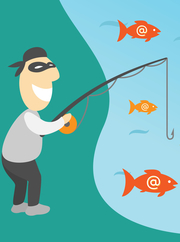
email phishing

I will be the first person to tell you to never click a link in an email from a bank or what you think is a legitimate link to any online account you may have.  Whether it be Netflix, Amazon, Fed Ex, PayPal, Capital One or Spotify, the list of companies used by scam artists is endless.

Those sending out phishing emails use trust in these companies to fool us when we least expect it. This is how I came to click on one of those lines, even though I know better.  It happened to me when I had my guard down. More about that in a moment and how you can protect your online accounts and identity.

My story in a moment, but first let’s define exactly what I am talking about.

What is Phishing?

Phishing is a malicious attempt to steal your personal information and gain access to an online account you have with a reputable company. The scammer will send you a fake email that links to a fake login of that company.

The word phishing is is pronounced like ‘fishing’ and just like when commercial fisherman casts a wide net to catch fish, scammers and hackers send out millions of emails in hopes to catch easy prey who unwittingly click on the links in those emails.

First of all, most online services will never send you a link asking you to sign into your account for any reason. If they do, I’ll explain why you should still not click it and how to access your account safety to see if the email actually came from a legitimate company. In most cases, these malicious emails contain alarming news about your account being compromised, hacked or suspended.

We’ve all seem these emails. They come from hackers and scammers that state “Your Account Has Been Locked” or the message I recently received from Netflix:

“Thanks for choosing Netflix membership! due latest security issues we need you to upgrade your account details in order to continue your membership.”

Notice how there was even a grammatical error in the message, but yes – I still clicked it. I knew full well that if our account had needed changing or was compromised, Netflix is one of those companies that would have emailed a notice and then instructed me to go to their website via usual methods (such as Googling Netflix or using a trusted bookmark you made in your browser). They won’t put the link in the email.

I Knew Better, but I Still Clicked a Phishing Link

In my case, I had just made changes to the WiFi password in our home and this of course would effect Netflix’s ability to connect via the devices that were previously set up using the old password.  Even though I know about phishing and to be careful when receiving these emails, my wife had just mentioned to me that she was unable to connect to Netflix.

At the same time the fake Netflix email arrived in my inbox. I was annoyed that Netflix may not be working so I clicked the link. Fortunately, I realized immediately what I’d done so I closed my browser before any harm was done.

Upon further investigation, I noticed that the link actually was going to a different website than Netflix, but in that moment of frustration it made sense in my mind to be receiving an email from them. It’s not always easy to tell, so using a trusted phishing link checker before opening suspicious URLs is another smart way to avoid fake login pages and credential theft.

Cyberthieves count on catching people off guard.

Those taking extra precautions to be safe online, such as using only secure public networks or secure websites, can easily be stolen from if not paying attention.   For example, if you don’t have a Chase bank account, then chances are you won’t pay much attention to the email. You know it’s probably fraudulent. But if I do have an account related to the email, it makes sense to be receiving an email about a problem with your account. Especially when you’ve recently logged in your this account and made changes.

For example, imagine that you just shipped a package via FedEx, and later that day a FedEx email comes in stating that your package can’t be shipped. You immediately get stressed… “What?” If you’re not thinking, you will click the link to see what the problem is.

It’s a ‘game of chance’ as hackers send out millions of these emails. They know they will trick some people because by coincidence alone these same people will not only have an account related to the email, some of them will have recently made changes to their account, or shipped a package with UPS, or applied for a loan at a bank.

If there is a legitimate problem with your online account, there will be a notice posted about it after you log in. If all is normal, then you know the email you received is a scam.

Phishing, also known as Spoofing, is very common. If you click the link in a phishing email and you attempt to log into your account, thieves gain access to your user name and password. Once inside the account, they have access to all of your personal information.

Beware of Viruses Coming as Email Attachments

Protecting yourself against phishing is as easy as never clicking a link to an online account from within the email. Always go to your account by typing in the website url in a browser directly.  Or use the bookmark you’ve set up.  Computer infections caused by viruses in email attachments however, are a different story. This is why Anti-Virus software is important to stop spyware, Trojan horses, adware and computer worms. But there are new email virus schemes that employ the same methods as phishing.

You may have see them. These emails contain attachments in the form of a seemingly innocent Word doc or a zip file. The email may say, “Your loan has been approved!” Or “Attached is Your Out Standing Invoice”. If you happened to have just applied for a loan or are curious about if you owe money, you will be more likely to open the attachment.

Invoice Scams are an example of  phishing:  You may you receive a fake invoice from PayPal or another invoicing platform. Usually, the dollar amount is high enough to cause alarm when you receive it, but low enough that it doesn’t look like an obvious scam.

If you’re not expecting an invoice or it’s unknown to you. Don’t click the link. Log into your credit card account from your trusted bookmarks or access the payment platform to see if there are any charges. Chances are, there won’t be.

While phishing emails gain access a single account to access your personal information, viruses via email will activate malware that infects your entire computer. In both cases, your personal information is compromised.

While phishing emails gain access a single account to access your personal information, viruses via email will activate malware that infects your entire computer. In both cases, your personal information is compromised.

If you have accidentally given access to one of your online accounts for any reason or are not sure, log in and change your password as soon as possible.

If you think your computer has been infected by a virus, read more about how to remove malware – as well as protect yourself from attacks.

Protect Yourself Using the SLAM Method

S stands for Sender:

Check to make sure the sender matches the request in an email. If things don’t line up, tread lightly. The email may also be spoofed to look like it’s from a friend or your boss. Or, their email may have been hacked.  If unsure, contact the them by creating a new email from your contacts, see them in person, or call to verify the message.

L stands for Links:

Inspect any link that is contained in any email or text. In emails, you can hover over the link to see the real destination. Pressing and hold the link on a phone will reveal the destination in a popup.  Close the popup without proceeding.  Texts should also be verified. If you know the sender, check with them first to see if they sent you a text with a link. This includes companies.

A stands for Attachments:

Be cautious of all attachments in all emails you receive.  Attachments can be named in a way the seems trustworthy. Verify the sender and if they are familiar to you, check with them first before opening the attachment. Installing anti-virus software will help screen for viruses, but this does not mean you won’t receive attachments that are infected with malware or spyware.

M stands for Message:

Examine all messages you receive via email or text. Check for spelling errors or unusual use of words or phrases. Grammatical errors are common signs of phishing email. Even if everything looks legitimate, check for oddities that seem off. This includes requests for personal information or a topic that doesn’t line up with your personal situation.

Spear Phishing

Spear phishing attacks often use specific details about an individual to get them to trust the message. This information can be gathered from social media, responses from victims if they unknowingly reply to phishing emails or texts.  This is why privacy settings should be updated to be more secure.

But even if you do everything correctly, company data breaches can mean that your personal information is stolen and sold to scammers.  Therefore, all accounts should have multi-factor authentication set up.

To clarify:

Phishing is when generic emails or texts are sent out to the masses, like a wide net casted out into the sea to catch a lot of fish.

Spear phishing is when you receive an email sent directly to you with personal details.

When you get a phishing email per personal information, it can look legitimate. With AI, cybercriminals can generate these messages easier than ever before. Just because a message includes information personalized to you, doesn’t mean you can automatically trust it. Extra vigilance is required.

How to Stop Phishing Emails

There are things you can do to help stop hackers who send phishing emails.  Virtually every online account service you use will have security departments that investigate phishing. As such, many have email addresses that you can forward these bad emails to for further investigation. When you get a suspicious email, report it for possible phishing.  Simply Google the company name with the word phishing (i.e. ‘Report PayPal Phishing’ or ‘Report Chase Phishing’).  You will often find information about where to send phishing emails and perhaps help these companies catch the cyberthieves.

If you land on a URL that appears to impersonating a legitimate website, report the phishing website to the Google Safe Browsing team.

With new technology, there’s more to educate needed to avoid being scammed:

Read about SMishing and Vishing, as well as Quishing.

Share This Article

How Exercising Boosts Our Mood

Ride a bike for excercise

Being stuck at home for weeks in a time when everything feels uncertain and out of control can be mood-dipping experience. We all want to feel safe and hopeful for tomorrow, Fortunately, there are practical things we can all do to maintain a positive attitude.

Anxiety doesn’t have to be your friend, just as you don’t have to let loneliness move in to be your roommate or neighbor. With a focus on mood-boosting activities we will be able to keep our sanity through long periods of time at home.

Psychologists say that it may be possible to beat depression, anxiety, and loneliness through physical exercise. According to a study that was published by JAMA Psychiatry in January 2020, regular physical activity can independently alleviate depression disorder and boost a person’s overall mood.

For students in school, there is the added benefits that exercise brings to the brain.  More oxygen, more blood flow, and the simple fact that a break from braining draining studies is healthy to avoid burnout.

But how exactly does exercising boost our mood, especially while home-isolated? Here is how:

1.  It is a Good Excuse to get Natural Light Exposure

Increased exposure to natural light will boost your energy and mood levels, and consequently, improve your sleep and overall quality of life. That is why people who stay indoors for too long suffer irritability, distraction, and depression. Unfortunately, we aren’t getting enough natural light these day, especially for those living in harsh winter climates.

Outdoor exercising is one of the few valid reasons for anyone to get out these days. So, if you have space on your balcony, backyard, or if you live in a scarcely-populated neighborhood, go out there and run. Do all forms of cardio and get your heart racing. If you can’t go to far from home, ride a bicycle around your garden for an hour daily. It is a great way not just to burn fat and lose weight but to boost your spirits as well.

Riding a bike is something then entire family can enjoy together outdoors.  If you have kids who are just learning how to ride, teaching them is an activity in itself. 

2.  Helps You Beat Insomnia

Being stuck indoors means that everyone is now getting the time to sleep during the day. The disadvantage of that: Severe insomnia for people who struggle to catch sleep at night. One of the effects of insufficient sleep at night is lowered spirits during the day. The good thing is that studies point to the possibilities of regular exercise being a remedy for severe insomnia. Here are 2 arguments in support of this claim:

  • Intense physical activity has undisputed body-heating effects. When you increase your body temperature by exercising a few hours to bedtime, your body reacts by lowering its temperature back to normal. That post-exercise temperature dip may make you fall asleep faster.
  • Most people with severe insomnia suffer from anxiety and depression. Exercising is a proven way of alleviating these symptoms so you sleep better.

3.  It makes you drink more water

Research has shown that people who drink at least 8 glasses of water per day are calmer, more content, and have way lesser physical and mental fatigue compared to people who intake less than 6 glasses per day. That is reliable evidence that drinking more water might result in a better mood.

But then, drinking water regularly might seem like extra work for people who aren’t keen on their hydration needs. That is where physical exercise comes in. When you work out, you will always feel the urge to drink more water and, knowingly or not, you will fundamentally be boosting your mood.

4.  Helps you cultivate healthy relationships

Many couples are fighting all the time because for the first time since they have known each other, they are now spending 24 hours together, up from 3-5 hours tops on normal days. When you fight, your mood deteriorates. When you work out together as a couple or as a family, your mood improves.

5.  It is a good way of alleviating emotional exhaustion

Emotional exhaustion results from prolonged stress. Most people are feeling emotionally worn-out and drained due to the uncertainties shared by people worldwide. People are feeling trapped; it seems like no one is in control of their lives or careers anymore.

Increased physical activity raises endorphins and serotonin levels in your body, which in turn can boost your emotional state. It helps take your mind off the news and the constant feeling of hopelessness.

Conclusion

Physical inactivity during this time can have detrimental impacts on both your mental and physical health. Make a point of exercising for at least 30 minutes per day, especially given that there are plenty of at-home workout ideas online. What’s more, even after the quarantine season is over, you will have developed a healthy fitness routine for the rest of your life.

Encouraging Your Kids Through Seasonal Affective Disorder

Share This Article

Healthy Ways To Feed Your Kids

Healthy Ways To Feed Your Kids

With eLearning on the rise, it’s important to keep our kids’ brains moving. Doing so will help them to perform at their best given the challenges eLearning can present. It will also help them relax as they spend more time at home. Healthy eating can help in many other ways as well.

Health agencies, childcare organizations, and child-friendly brands always remind parents and guardians to encourage kids to eat nutritious foods. For instance, the World Health Organization (WHO) sets child nutrition guidelines, and The Dietary Guidelines for Americans recommend a healthy eating pattern for people aged two years and above.

Now more than ever, parents must ensure that their children are taking nutrient-dense foods to ensure they grow healthy, strong, and happy. But many parents face a struggle in feeding healthy foods to their children. Luckily, food experts like Serenity Kids share valuable information with parents online, such as choosing healthy snacks for picky eaters.

Since children are getting out less, their immune system is vulnerable. During winter months, we receive less Vitamin D, exercise less, and can even go a little stir-crazy. With nutrient-packed meals and snacks, your children can be a little more at ease in their new, but still temporary, full-time environment.

Furthermore, this is a great time to get creative in the kitchen. Choose foods that stimulate child development. Select ingredients wisely and be careful not to frivolously fill your shopping cart with just any food. Make a list, and limit the number of times you visit the grocery store to prevent bringing back the virus to your children.

You can also make a menu list, food journal, or cheat sheet that includes valuable information about your children’s special food preferences. Take note of the healthy food recipes you cook that they like the best, allowing you to create more versions and serve them the next time without boring your kids.

Additionally, read or watch cooking techniques and recommendations from chefs, nutritionists, and pediatricians, and note them in your journal. This can help you learn creative ways to make vegetables, fruits, grains, and other nutritious foods look interesting and appetizing. That way, you can improve your food preparation skills and boost your children’s healthy eating patterns.

Tasty meals can help fade the negative stigma most children have surrounding nutritional eats, and can even go on to make them prefer fruits and vegetables rather than being resilient to them. Here’s what you can do:

When cooking at home with your kids, be intentional about meal prepping and portion control. It’s best to avoid highly processed snacks such as cookies, crackers, chips, and canned foods containing high-sodium and high-fructose corn syrup. Bake your own sweets using natural ingredients.  Low-fat popcorn and nuts make great mid-day snacks; and for dinner, pairing pasta or rice with a protein, such as fish, can fill your little ones’ bellies for much longer.

Lastly, be aware of the “Pandemic Pantry,” the list of items shopped are stockpiling. These include canned foods, hand sanitizer, toilet paper, and bottled water. Buying a water filter can help alleviate the purchasing of bottled water, and given the recent governmental policies, we need not fear being disconnected from your water supply while under quarantine – even if bills begin to pile up.

Taking the opportunity to show your kids healthy eating habits can benefit them now, and also influence them to continue a great diet post-quarantine. If you read the infographic below, you can gain more information on how to eat healthy. Take care, be safe, and enjoy your extra family time.

Healthy Eating Under Quarantine

Share This Article

The Digital Detox (Screen Free Family Fun)

Convenant Eyes - Reducing Screen Time

According to the Kaiser Family Foundation, kids between the ages of 8 and 18 spend an average of 7.5 hours per day in front of screens.  It may be on social media or watching TV or playing videos games.  Even adults will agree that the hours “fly by” when engaging with the digital world.  Don’t worry, the 7 Day Digital Detox is not asking you to go offline for 7 Days.

Rather, it’s 7 days of tech-free family activities and conversation starters delivered to your inbox.   It’s a chance for your family to reconnect without looking at a screen.  Life is about balance.  It’s about developing healthy habits that doesn’t necessarily mean stopping something you love to do altogether.

Why The Digital Detox?

It’s not uncommon to see a group of teens sitting together, each of them on their phones on social media or texting, but none of them interacting with each other.  The same thing happens with families at home.  Let’s face it.  Watching TV kills time.  Surfing the web or scroll posts on social media can eat up hours. The temptation for distraction from life is great but ‘so called’ relaxing time can also lead to online burnout.

There is also the time reading online news, most of which is negative. It can bring a person down without a balance of reading stories that are positive and uplifting.

No one denies the benefits of being able to keep in touch with family and friends miles away, especially in this time of social distancing.  But even when you look at the hours we spend on screens, how much of it is actually having a digital conversation compared with reading and viewing information in silence.   Studies have claimed too much screen time can cause social and family dysfunction, as well as development delays and depression.

Human Interaction Takes Planning

If we don’t set time aside to do things as a family, it won’t happen.  It’s the difference between cooking dinner and having family members just take their food from the stove to eat wherever they like, or saying “tonight, we’re going to have a sit-down meal together”.  It takes a simple commitment.  A meal together is one activity a family can do to have a conversation, as long as everyone doesn’t bring their phones to the table.

Planning to do something can be easy to talk about.  It’s much more difficult to follow through on unless at time is set.  For example, at 5 o’clock today we’re all going for a walk.  Friday nights are game night.  Keep it interesting by exploring fresh new activities like new language games the whole family can enjoy.   Or how about a family drive to a scenic outdoor viewpoint in your local area.

And there’s nothing wrong with a movie night.  True, it’s more time in front of a screen but can be a fun time to spend time together compared with everyone just watching their own favorite show in solitude.  The same can be said for videos games done together on one screen as a family. It’s certainly better than when kids individually looking at their screens with no interaction with those around them.

Get Tech-Free Ideas for Your 7 Day Digital Detox!

As mentioned, it’s not about eliminating screen time, only reducing screen time it in our daily lives while connecting in a personal way with our family.  Puzzles anyone?  It may not be everyone’s preference.  In that case, break up your activities in groups.  Some work on a puzzle while others play a game or build a connectable toy.

You can also use the time to evaluate if there are any online accounts you don’t really need.  Detoxing your digital life can also mean reclaiming your online privacy and doing away with excess use to simplify your digital management.

So why not give it a try?

Sign up for the 7 Day Digital Detox and you’ll receive one email per day for 7 days.  Each email will consist of fun ideas to help you reconnect as a family in fun way.

Start Your Free Digital Detox Here!

The Digital Detox is inspired by the same parental control software company that developed Covenant Eyes, the program that also teaches kids how to be responsible internet users. Screen time monitoring is just one of the features that parental controls offer, in addition to preventing the much worse consequences of when kids come into contact with explicit material online.

Any attempt to reduce screen time, avoid screen time addiction, or protect families from harm online begins with a conversation.  The 7 Day Digital Detox is great way to open the lines of communication between family members so that having those important conversations happen naturally.

Share This Article