5 Reasons Why Swimming is Beneficial to Your Child
Why Swimming is Beneficial to Your Child

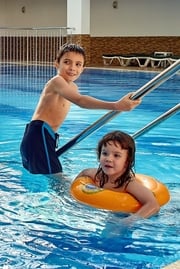
Training your child how to swim is something you should consider doing. Yes, it can be challenging, but it is worth all the effort. Your kids can learn how swim from you or enroll them in swimming classes as early as when they are toddlers.

The earlier you can teach your child to swim, the better they get at it as they grow. There are several benefits of teaching your child how to swim early. This article reviews why swimming is beneficial to your child.

Swimming builds a child’s confidence.

It is common for children to be fearful of the water when swimming for the first time. Taking their first dip in the pool is often an unforgettable memory for most kids. However, after several trips to the beach or pool, kids eventually overcome their fears and learn how to swim. After learning how to swim, the feelings of accomplishment help build self-esteem and overall confidence in children.

What’s more, the self-esteem your kids gain from swimming can help them develop a positive attitude towards sports and other physical activities. Even better, the confidence your kids gain from overcoming their fear of water becomes helpful in social interactions later in life.

Enhances water safety

Swimming is an essential life skill everyone should know, including your little one. Reports from the Center for Disease Control and Prevention indicate that drowning is a major cause of death in children less than five years. Therefore, the most appropriate way to curb this menace is equipping your child with swimming skills. The best way how to teach kids to swim is by enrolling them in swimming classes.

Children who receive formal swimming lessons can overcome their fear of being in and around water much quicker. Besides that, they are taught water safety rules and techniques such as floating and treading in water and various swimming strokes. Formal swimming classes equip children with life-saving skills such as first aid and CPR. With regular practice, all these skills mold your child into a strong and efficient swimmer; therefore, you don’t need to panic whenever they are around water.

Learning to swim is also vital if you have a backyard pool. While children should never be left unattended, knowing how to swim can be lifesaving if they accidentally fall in.

Swimming is good for your kid’s health.

Swimming is an excellent way to keep your kids healthy and active all year long. The gentle body movements involved in swimming are beneficial to toddlers and infants. The water resistance they overcome when swimming helps in boosting muscle development. Swimming involves many muscle groups that you don’t engage when out of water. Swimming gives kids a whole-body exercise in a way not possible with other workout routines.

Swimming is an excellent physical exercise for kids because it is primarily impact-free, significantly reducing the risk of injury. Swimming at an early age strengthens joint muscles and helps to reduce joint stiffness. The endurance, confidence, and muscle strength your kids gain from swimming will come in handy when they try field and track events like soccer and athletics.

What’s more, swimming improves your kid’s cardiovascular health. The movements involved in swimming require the coordination of the lungs and heart to supply adequate oxygen and nutrients to the different muscle groups. Swimming regularly helps keep artery walls flexible and in good shape leading to improved blood flow throughout the body.

Improves memory and coordination

Introducing your kids to swimming at an early age is a great way to help them build balance and body coordination. Swimming often requires the coordination of many body organs during stroking movements. Water exercises enable kids and infants to develop balance without straining the body.

The extensive range of motions involved in swimming will help to improve joint mobility and flexibility in children. Your kid will learn how to maintain position using the buoyancy of water. Besides improving coordination, swimming enhances posture and reduces the chances of obesity in kids. Swimming lessons are also accessible for children with special needs.

Swimming also boosts a child’s mental development by enhancing the brain parts associated with learning, coordination, and memory. Your kids learning abilities improve as they master freestyle, butterfly, backstroke, and breaststroke swimming techniques. This mental development can lead to better performance in school.

Bottom line

Now that you know the benefits of teaching your kids how to swim, it’s time you get started on those classes. Learning how to swim is something your children will cherish and utilize all their life.


Related Reading:

Smart water safety gadgets that can save your child’s life.

Share This Article

The History of Valentine’s Day for Students

The History of Valentine's Day

Valentine’s Day is a time to celebrate love and friendship and the joy of having other people in your life. It’s a day of flowers, candy and cards decorated with hearts. This special day’s origin, though, is not so rosy.

There are many theories on how Valentine’s Day began, but the most noted one begins in Rome in the year 268. Emperor Claudius II wanted a fierce team of young men to fight in his armies. He found that when young men are in love or sharing their lives with a wife and children, they tended to be more cautious.

To insure large numbers of soldiers for his armies, Claudius outlawed marriage for those young men.

Claudius may have outlawed love, but he could not stop it. Young men and women still fell in love and wanted to become couples in the eyes of the church. A brave—and obviously romantic—priest named Valentine thought the law was horribly unjust.

Putting his life in danger, Valentine continued performing marriage ceremonies, doing so in secret and hidden from the eyes of authorities.

Still, news of Valentine’s secret ceremonies made its way back to Claudius. The priest was found and put to death on, as some versions state, on February 14th. Centuries later, the Catholic Church made that kindly priest a saint, one of three saints named “Valentine.”

No one knows exactly when St. Valentine’s Day was first celebrated, but there is a poem in existence that is considered to be the first ever written Valentine’s Day card.  It was sent from a prisoner in the Tower of London to his wife in the year 1415.

First Valentine’s Day Card

My very gentle Valentine,

Since for me you were born too soon,

And I for you was born too late.

God forgives him who has estranged

Me from you for the whole year.

I am already sick of love,

My very gentle Valentine.

Today, greeting card companies estimate that over a billion cards of love and affection are sent each St. Valentine’s Day. It is perhaps second only to Mother’s Day as one of the most popular celebrations of the year that results in the sale of flowers and cards.

While Valentine is a Catholic Christian saint, his death and the tradition of love that he created is celebrated world-wide by people of all religions. People send cards, flowers and candy in counties many countries around the world.

Some countries have banned St. Valentine’s Day, but people in love show the courage of the doomed priest by celebrating the occasion. Repressive governments may confiscate all of the red roses available in the country. Still, no one can ever halt the flow of love and affection.

Valentine's Day History

Today’s click-and-post culture is tossing aside many old traditions and rules. Still, the history of Valentine’s Day lives on annually every February 14th in a worldwide celebration of love.

Happy St. Valentine’s Day. Tell everyone in your heart how much they mean to you. And remember when you sign those cards how love and friendship lives on, even in the face of adversity.  Looking to bulk up on candy for your classroom or event? Shop wholesale bulk candy today.

Learn more history, including Father’s Day and the history of Thanksgiving.

Share this history of Valentine’s Day with other students

Share This Article

5 Calming Strategies for Anxious Children

Girl with Anxiety

Anxiety is one of the most common mental health disorders in children. It can manifest itself and often makes it difficult for kids to focus on schoolwork or enjoy social activities. If your child has anxiety, it’s tough to know how to help them. Luckily, there are a few strategies that have been effective in calming anxious children.

Take a Walk Outside

One of the most effective ways to calm your child down is by taking them outdoors for a walk. It would help if you chose an outside environment with plenty of natural light. Fresh air isn’t stimulating with lots of stimuli or noise. Children enjoy walks through forests and grassy fields. Also, along beaches with calming sounds like water from rivers flowing into lakes or waves crashing on shores. These outdoor settings often help kids relax without being distracted by electronics. These can trigger unwanted stressors if they feel overwhelmed while trying not to be anxious during playtime at home.

Draw or Write

When kids are feeling anxious, one way to help them calm down is to do some creative activities, like drawing or writing. This can be a great way for children to express their feelings and work through any worries. Not only does this activity help with anxiety, but it’s also been shown to improve focus and concentration skills.

There are many ways to encourage your child to engage in creative writing or artwork. Some parents find it helpful to provide prompts for their kids. “For instance, draw a picture of what makes you happy” or “write about a time when you felt confident.” If your child enjoys reading, there are plenty of books for children dealing with anxiety and depression.

Listen to Music

Another great way for anxious kids is listening to calming music. You can find a lot of songs that are specifically designed with relaxation in mind, such as classical or jazz tunes. These have been shown to reduce stress levels and help people feel more at ease. Listening may also be beneficial because children can express their emotions through the lyrics.

If you’re not sure where to start, there are many compilation albums of relaxing music designed for kids. You can also search online for lists of recommended songs or create a personalized playlist with your child. It’s important to make sure that the music is at a low volume so that it doesn’t become overwhelming and further stimulates any anxious feelings.

Some parents find it helpful to have their children listen to music before bedtime, as it can help them calm down and fall asleep more easily. Try different calming activities until you find what works best to help your anxious child feel better.

Mindfulness Meditation

This is another great way to help children relax and cope with anxiety. It’s important because it teaches them how they can focus their thoughts on the present moment. But also because it reduces stress levels by helping kids focus less on things like schoolwork or social issues. The best part about practicing mindfulness techniques at home, though? Many apps available today make this type of activity fun and easy. You don’t even have to go outside; sit cross-legged wherever you feel most comfortable. Close your eyes while listening as an instructor guides you through different exercises.

There are also several unique books that you can check out from your local library on mindfulness meditation for kids. These usually have accompanying audio CDs so that children can practice along with an adult’s voice. Mindfulness mediation is one activity that should be practiced regularly when helping kids with anxiety. Thus, to see the best results, aim for at least 15-20 minutes per day.

Sensory Play

Another great way to help kids with anxiety is by engaging them in sensory play. Sensory play allows the child’s mind to get some relief from all this stimulation. This is because they aren’t focusing so much attention on their environment. But using other senses such as touch or smell may calm those jittery feelings caused by overstimulation. Children also love things like slime and water beads. Both provide tactile sensory input while being fun activities at home too.  And finally, there are our tried and true stuffed animal friends that provide comfort because they look like animals and are was soft as a pillow.

Conclusion

If your child is struggling with anxiety, don’t worry. There are ways you can help. No matter what age they may be at—preschool or elementary school-aged kids all need support when trying something new, so never give up hope. Remember that every child is different. Some children respond better to one calming strategy than another, depending on their individual needs and personality traits. Try these strategies today to help anxious children feel calmer at home.

Share This Article

6 Physical Indoor Games Your Kids Can Play at Home

Fun Indoor Activities for Kids

Keeping children active has become somewhat of a challenge nowadays. Everywhere you look, you may find a child sitting with a device in hand, no longer running and playing like in the old days. Another concern is that living spaces are becoming smaller by the minute as parents struggle to afford large houses with gardens.

People became painfully aware of how small their living quarters were during the pandemic.  Children need physical activity to strengthen their bodies and minds. And being able to play some fun games at home to do just that may be the perfect solution for parents.

Here are some indoor games your kids can play at home that could improve their physical health and more:

1. Do-It-Yourself Obstacle Course

The simplest things in life could turn out to be the best, as in the case of a roll of tape and string. These two uninteresting items could quickly turn a hallway into an obstacle course of note. Just tape some line in place from one wall to the other and watch the kids have hours of fun.

All major muscle groups are involved in navigating through the obstacles, and of all of them, the core muscles could get a great workout. The movement of the head in all directions could assist the body’s sense of balance to develop too.

This helpful site may have similar activities to try at home, and the valuable fitness information should spark even more ideas for the whole family.

 2. Rolling With The Nose

Crawling can be therapeutic and rehabilitative to the body and brain. The core muscles play a crucial role in supporting the body, and it makes sense to include many activities daily that’d promote this muscle group.

Children love to have races of any kind, and including some physical activity while doing it could give their wellness a significant boost. Tape a start and finish line on the floor, as long as it’s family-friendly flooring, give each child a tennis ball that they need to push to the finish line with their nose, and watch the action unfold.

There’ll be belly laughs for sure with this easy and fun physical activity. Everyone will soon see that crawling isn’t an activity reserved for babies only.

 3. Making Chores Fun

Ever wish you could have some help around the house? Why not give the kids some chores to do for the day while blasting some fun tunes to dance through them!

Doing chores usually wouldn’t get children excited, but the health benefits they get from doing them are incredible. Heavy work activities like pushing, pulling, and carrying could build muscle mass and develop their tactical sense. Focus on making it fun and dance the day away together.

4. Indoor Skating

Speaking of chores, a game that could be added to the fun day could be indoor skating. Get the children to skate around the room using old rags or dryer sheets, and you’ll have a perfectly polished floor as quickly as saying snap.

The skating motion is a great way to exercise the leg muscles and get them off the couch for more productive activity.

 5. ‘The Floor Is Lava’

This game is more than a funny trend on social media as it has health benefits. Put some cushions on the floor or tape some paper rocks in place for children to move over. Focus and attention are developed by finding the best route from one side of the room to the other while their bodies get a workout from stretching and reaching for that next safe spot.

 6. Bean Bag Toss

These versatile bags are easy to make at home with around 30 grams of dry rice, corn, or wheat sewn in-between two patches of fabric around 2 inches on all sides. Because they’re relatively harmless to home décor, the bags can easily be tossed around the room for various activities.

Improve upper body coordination and grip of the hand muscles by including this activity at home. Give children a target like a bucket to aim for and see how many bean bags they can successfully toss to the other end of the room.

Fine motor control of the hand muscles is necessary for their development and academic success. Without these tiny muscles and the coordination of their shoulders and arms, children would struggle to hold a pencil, let alone write.

 Bringing It Home

Physical activities don’t have to be a bore, and they can be fun for all ages. Instead of being couch potatoes, kids can get up and get their daily exercise and have fun while being at home. Mix it up by having a different activity each day, and children will never even notice that they’re getting a workout!

We’ve discussed indoor games at home.  Now, explore games kids can play in your backyard on a trampoline.

Share This Article