How to Research Colleges

How to Research Colleges

Finding the ideal college for your son or daughter isn’t as easy as it may sound. Most children find themselves in the wrong college just because their parents fancied them, they know someone who attended them and succeeded, or they are basically big name colleges.

While such a criterion is valid when looking for a college, it isn’t the best. The right research will help you find a college that is a good fit. This article is a simple guide on how to research colleges.

Why Is Researching Colleges Important?

Every learner is different. The learning community that your child grows in determines their future. When preparing for college it is not enough to choose a college based on its past or popularity. Carrying out extensive research will help you find a college that has what it takes to grow your child to what they want to become in the future.

The United States of America has more than 5,000 colleges. Such a large number implies that regardless of the number of colleges you hear about, visit, or even read from college rankings, the chances are high you will still miss some prominent colleges. While asking family members, mentors, and friends about the best college for your child is a great strategy, you need to put more effort behind the search.

Factors to Consider When Researching Colleges

It takes a combination of many elements for you to find the most suitable college for your children. From determining the learner’s goals to deciding on the college budget. If this sounds confusing, here are a few factors that will help you settle for the right college.

1. Learner Resources

The access to different campus resources is an important aspect to consider when looking for the right college. Does the college you are about to settle for have an extensive research library, computer and IT resources, or a diverse students’ community? Every learner has a need that their college should meet. So, make sure that your college of interest today or in the future has all the necessary student resources.

2. Academics

Most colleges admit learners who have a certain average grade. As you begin the search for the best college for your children, ascertain whether their test scores match those of the students in the college of your choice. This strategy helps you rule out colleges whose selectivity and admission criteria is higher than what your child has.

Also, review the academic performance of the college. No parent would wish to enroll their children in a college because it has the resources and it is affordable. You need to think about the value the child will get from the college academically. Therefore, research and compare the performance of various colleges. Is it pleasing and consistent?

3. Cost

Finances play a substantial role in most decisions about the best college to join. Start with evaluating the amount of income available for college education. Also, weigh in aid packages and scholarships available for each of the colleges you intend to consider. This consideration will help you focus on the colleges that you can afford without much strain.

It’s worth looking at what student loans are available when you need further funding.

4. Programs Offered

The ultimate goal of any learner when joining any higher education institution is to get prepared for the future. The program that your child intends to pursue should inform your choice of the colleges? Are the majors he or she is interested in offered at your preferred college. The best strategy here will be to focus on the long term goals, then work backwards to establish the college that offers programs that can help them achieve such future goals.

5. Security Risk

The number of cybercrimes is rising nowadays, and according to the New York Times, institutions of higher learning are highly targeted. it is your duty to ensure your child’s security. This extends to the college they are joining. For example, how does the college manage permissions and access to student records?  According to the Family Educational Rights and Privacy Act (FERPA), colleges ought to have the right policies on privacy, security, and access to learners’ personal data.

In addition, the standard policy laws, such as the GDPR, Gramm-Leach-Bliley, and HIPAA, apply to all persons in a college’s database. Your ideal college should comply with FERPA’s access restrictions and privacy protections on the students’ data. You wouldn’t want to enroll in a college where the personal data of everyone in their database, including yours, is not protected in any way.

Start Your College Research Today

With the rise in the number of colleges available nowadays, taking enough time to research can help you find the most suitable college. The ideal college for your child should not be necessarily the best there is in your area. It only needs to have the right resources, be affordable, secure, and offer programs that your child aspires to pursue. Following the above tips will increase your chances of finding a college that will guarantee your child the best.

Additional Resources:

Share This Article

Never Stop Learning! Why Lifelong Learning?

Never Stop Learning

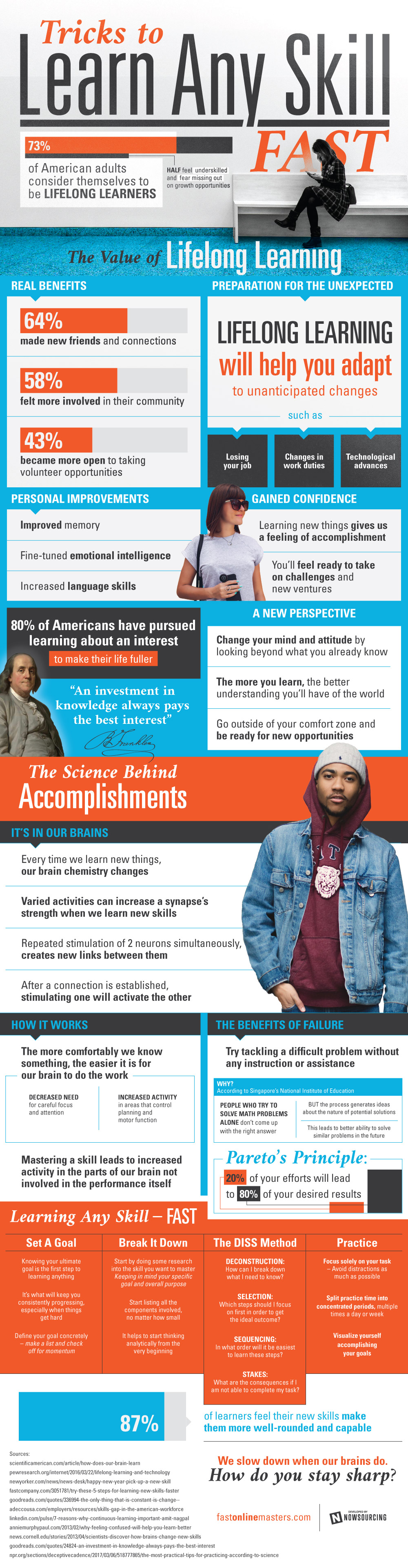
Your mind is amongst the most powerful resources you have, and there’s nothing like a jack of all trades. Dabbling into a little bit of this, and a little bit of that can even shape you into a more flexible person. Knowing this, it’s important for children to be taught lifelong learning skills in preparation for their future. This way, they can learn to do anything – fast.

Furthermore, lifelong learning can help your child develop a positive outlook on life – helping them build confidence and make amazing self-improvements. In times of unanticipated change, such as a job loss or technological advances, the cards will always be in the favor of a lifelong learner.  It begins when teachers and parents help kids develop effective learning habits, which in turn gives them a passion for learning.

Learning Driven by Interests

This is not to be underestimated: 88% of Americans have pursued learning about an interest to make their life fuller. Even more, our brains love it! Every time we learn something new, our brain chemistry changes – stimulating our neurons to create new connections. The more comfortably we know something, the easier it is for our brain to do the task. By introducing lifelong learning to your child, you can prepare them for a bright future.

On the other hand, it’s also important to teach your child the benefits of failure. For example, ask them to try completing a difficult task without any assistance or instruction. According to Singapore’s National Institute of Education, people who try to solve math problems alone don’t come up with the right answer. However, the process generates ideas about the nature of potential solutions. This leads to a better ability to solve similar problems in the future.

Setting Goals to Learn Skills

With that being said, here’s how your child – and you – can learn any skill fast. Set a goal, then break it down. After this, use the D.I.S.S. Method. The “D” is for ‘Deconstruction,’ i.e., “How can I break down what I need to know?” The “I” is for ‘Selection,’ i.e., “Which steps should I focus on first in order to get the ideal outcome?” The first “S” is for ‘Sequencing,’ i.e., “In what order will it be easiest to learn these steps?” The last “S” is for ‘Stakes,’ i.e., “What are the consequences if I am not able to complete my task?” Finally, practice this method while visualizing success.

87% of learners feel their new skills make them more well-rounded and capable. Perhaps this is why 73% of American adults consider themselves to be lifelong learners. Teaching your child lifelong learning skills in their early years will set them up for an easier future.

Infographic: Learn Any Skill

For a far more specific breakdown on lifelong learning, read the infographic below.

Why Lifelong Learning is Important

Discover ways to improve your child’s leaning skills outside school.

Share This Article

Check the Facts Before You Post on Social Media

Check the facts before you post on social media

Before you post information about others on social media, think twice.  Is the post true?  Even if it is true, will it hurt someone else?  Is it any of your business to spread news about someone you’ve heard?  Social media is a great was to communicate and keep in touch with friends.  But it has a dark side.

Whether people are judged wrongly in a situation or are simple spreading rumors, it’s always important to check the facts before we judge.

Here are a few examples of how information on social media can get out of hand.

Mean Liam

Imagine you are in the back seat, playing with your phone as your dad drives you to soccer practice. You pass Liam, a kid from school. His arms are waving and his face is red as he yells at a small boy you don’t know. And your dad has driven past the scene, his attention on the road.

You shake your head, then go online and post: “What’s up with Liam? Just saw him screaming at some little kid. He’s such a loser.” “We’re here,” your dad says. “Give me your phone.”

You do and head to the locker room.

After practice, as you’re changing, you tell your teammates about Liam. “You should have seen him. And the kid was half his size.” One of the kids you tell whips out his phone and posts: “Liam. Always thought you were a jerk. Now I know.”

Only when you’re buckled in the back seat does your dad hand you your phone. Turning it on, you see that lots of your friends have commented on how much of a jerk Liam is. You feel a burst of pride. After all, you were the one who told the world about Liam’s horrible behavior.

You start responding as your dad detours to the school to get your big sister from her basketball practice.

When your sister gets in the car, she’s excited. “Did you hear about the Jameson boy? He took off from his mom and was over by the freeway throwing rocks at cars.”

Your dad shoots her a strange look. “How do you know this?”

“Well, Liam was riding by on his bike and the kid threw a rock at him. So he pulled into the ditch and told him to stop. He tried to get the kid’s home number and the boy wouldn’t tell him. Our coach had to stop drills when Liam called her to get the Mom’s number.”

You feel the slow burn of embarrassment start creeping up your neck.

“Mrs. Jameson was frantic,” your sister continues. “She’d even called the police because she couldn’t find him. The cops showed up anyway because they’d had reports about a kid throwing rocks at cars—sirens and everything. It was a wild scene.”

“Wow. Scary. A little boy that close to the freeway. And throwing rocks, no less. Good thing Liam has a head on his shoulders. That Jameson boy could have hurt someone or got hurt himself.”

And there you are, looking at all the mean postings about Liam.

You take a breath and write your next post: “Hey, everybody. Turns out that the real jerk around here is me. I’ve just learned the hard way not to make fast judgments about people. Things aren’t always what they seem to be.”

Learn these Tips to Keep Teens Safe on Twitter.

A Story of Before and After

My odd friends are once again teaching me how what we think can sometimes fool us. Let me tell you about Rahim and Sandy. Rahim is a quiet, gentle guy and all the girls I know have a secret crush on him. The one with the biggest crush is Sandy. What put him in solid with her was when she saw him one afternoon at the mall.

A girl who was dressed kind of oddly was being bullied by a group of rude boys. Sandy, watching in the food court, saw Rahim stride up to the group and order the boys away from the girl who by this time was crying.

Rahim stood between the weeping girl and bullies until mall security came and escorted the boys away. Sandy watched as the guards thanked Rahim and the girl’s mother ran up to hug her girl.

Sandy texted me from the food court: “Rahim is awesome. He’s so strong and kind. I like him so much.”

I smiled and set my phone aside.

A busy week of school and sports and gossiping passed. Sandy spent every spare moment she could with Rahim. They took breaks together, went for slushies together and biked away from school together every day.

Sandy texted me: “I know we are just friends, but Rahim is the guy I see with me for a long time.”

This was before.

The very next day after that text, Sandy saw a picture on social media of the bullied girl from the mall kissing Rahim on the cheek. In another picture, Rahim and mall-girl were sitting close to each other eating burgers and looking happy.

At this point, Sandy texted me: “How could I be so stupid. Rahim took advantage of a bullied girl and now is hanging with her.

He was only nice to her because she was so pretty. And all this week while he was hanging with me, he was also hanging out with this girl.

He must be one of those guys who needs lots of girlfriends to feel good about himself. I saw that in a movie last week.”

I rolled my eyes and turned off my phone.

Sandy does this all the time. Before the mall incident, Rahim is sweet and sensitive. After the mall, he’s the villain on a television show. Sandy is my friend and I’m going to have to talk with her about making assumptions. I need to tell her that mall-girl is Rahim’s cousin.

Learn about kids safety on Discord with this parental guide.

How a Town Made A Monster—True Story

Once upon a time, a mom and dad drove their little girl to school. Mom got out to walk the girl to the school door.  Before they got there, Dad remembered something he had forgotten to ask the little girl. He rushed out and ran to the girl and Mom. Mom was upset. She said that they could talk about the question after school.

Dad disagreed and the two had a small argument on the school steps, which was very bad manners. The little girl started walking away. Her dad grabbed her arm and she quickly answered his question before running off to class.

Meanwhile, a woman in the parking lot saw the argument on the steps. She saw the dad grab his daughter’s arm. She went on social media and made a post: “I saw a man grab a little girl today at school. Watch out for your kids.”

Another parent saw the post and shared the post with his friends. They shared the post with their friends. Soon, everyone in the small town was thinking that a man was trying to kidnap their dear children.

Thinking that some evil man lurked near the school, people started seeing monsters everywhere! If a man stopped to drop off a sandwich for his son at recess, people would go online to post: “I saw a man try to grab a little boy.”

When another man ran up to his girl to give her the sweater she had left at home, people would post: “I saw the bad guy.” And all those posts bounced from cell phone to cell phone.

Before long, people went to the police and reported that a man was trying to steal kids from school. The story reached news reporters. A major television station reported that a man was stalking school kids. The stern announcer warned thousands of people to be on the lookout for this monster.

The police immediately started investigating. They interviewed many of the people who posted sightings of the evil man. The police talked to kids and their parents.

Then they made an official announcement: Nothing had happened. No one was trying to snatch children.

Hundreds of posts and reposts warned of a bad man, but none of the reports were true. No evil monster was trying to grab children from school. The monster was made up by too many people posting false details on social media.

Soon, the panic faded. People forgot about the evil man—and they did not seem to understand that they were the ones who made the monster.

This event really happened in Alberta, Canada, June, 2011.

Now, let’s learn about News.

Share This Article

Google Research Infographic

There are better ways to refine your Google research for any topic you may be seeking.  Google is a powerful search tool but most web surfers (kids and adults alike) do not know how to properly refine their search results to quickly find exactly what we’re looking for.

We all know there is a ton of information online.  There are plenty of reputable websites that can help you research a myriad of topics for an essay or an assignment.  Of course, there is a ton of misinformation as well on the internet. 

Good research is all about testing your sources against that we know to be reputable. Solid sources can be found in your local or school library in something we call books.

So, while we can’t believe everything we read online.  We don’t want to discard this wonderful worldwide encyclopedia of knowledge either.  Wikipedia and Simple Wikipedia for Kids is an open editable resource with a lot of good information, students need to fact check the details.

In addition to your library, Google is also a great place to find other good sources, such as a government site ending in the domain .gov. Similarly, reputable educational websites end with .edu.  It means you can trust that the content is properly researched. 

However,  remember that you still need multiple sources to support your research. 

Refining Search Results for Research

For students doing research, not knowing how to search Google effectively can lead kids and teens of any age down a convoluted rabbit hole. Let’s be honest, search engines are designed to do more than find trivial information.  Proper research on Google means digging deep to find the best information, not only the most popular.

Sure, if you want to find information about a celebrity you just “Google It”, but think about all the other information on the web that we don’t even know is there. Important information that can fuel research on many interesting topics.

While the early days of the internet didn’t even have highly developed search engines, it didn’t take long for developers to see the need for much more sophisticated search technology.  Today, there are billions of articles and the goal of every student should be focus their Google search to find the most relevant and valuable information possible.

As you’ll see in this infographic below, Google research is much more than just entering a few keywords.

Review this Step by Step Guide to streamline your Research Results on Google!

Get More Out of Google

Although it wasn’t the first search engine in existence, Google spent a lot of time and money creating a better way to access quickly the expanding world wide web. The more mouse clicks a person has to make in order to find what they are looking for, the higher the risk of landing on a website with inappropriate content… not to mention the time wasted and confusion causes when attempting to compile information.

Google was launched September 4, 1998. That’s over 20 years ago. Since that day there is a lot more information to be found online. Some of this information exists on reputable websites. It has properly researched and verified. On the other hand, much information is down right false.

It has never been more important to learn how to focus search results search engines like Google. These techniques were created to help you dig deep for information in a safe manner by filtering out unrelated websites.  Learn about Instant Answers for faster Google search results.

Evaluating Information While Researching

It’s one thing to access a wealth of information online.  Now, the challenge is to ensure that the information you find is reliable.  Watch this video to learn how to ‘think like an editor’ as your sift through articles, facts, data and information that may not be trustworthy. 

Share This Article