Trends in EdTech that Take Education to the Next Level

If you want to know more about already existing opportunities in education that you can take advantage now, join us as we look at the latest trends in EdTech.  Topics like eLearning, blockchain for education, gamification and AI are just a few sectors that are changing the education landscape.

The Next Level EdTech Trends for Your Education

Distance learning has already become just not another option but also a major rule for organizing the educational process. Recent challenges have pushed educators to adapt and respond to new opportunities and be proactive to stay ahead of the changes in education.  Many of these have become advantages not otherwise explored.

How Modern Technologies Are Used for Teaching and Learning

The main purpose of any technology recently applied in education should be for the purpose of facilitating the learning process and enhancing performance. This is achieved by applying technical means and Ed Tech tools. The use of new technologies for the most part was previously attributed to various courses and associated educational standards according to individual course activities. Now, it has become obvious that technologies can ensure the greater diversification of teaching methods. That is mainly related to arranging online classes and self-education.

The goal of applying advanced technical tools and arranging education online has been to bring at least the same results. Systems also need to be in place to ensure new types of learning can be measure results effectively. As we can now see that modern technologies can improve collaboration and performance, here are the main approaches to how this has been organized to the present.

EduTrends Enabling a Better Study Experience

Among all varieties of educational innovations, we have prepared for you a short overview of the latest ones and the most interesting, from our point of view. These are also widely-used technologies in modern education:

1. eLearning

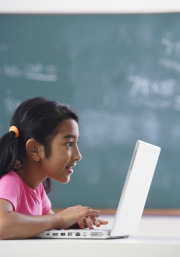
Recent challenges that sent kids home from school have certainly opened our minds the idea that electronic learning can be effective.  For some students,  it can be even more effective than traditional classed.  This is only true if the process has been organized well.  When we speak about eLearning we usually mean any kind of education or learning process that is organized electronically.

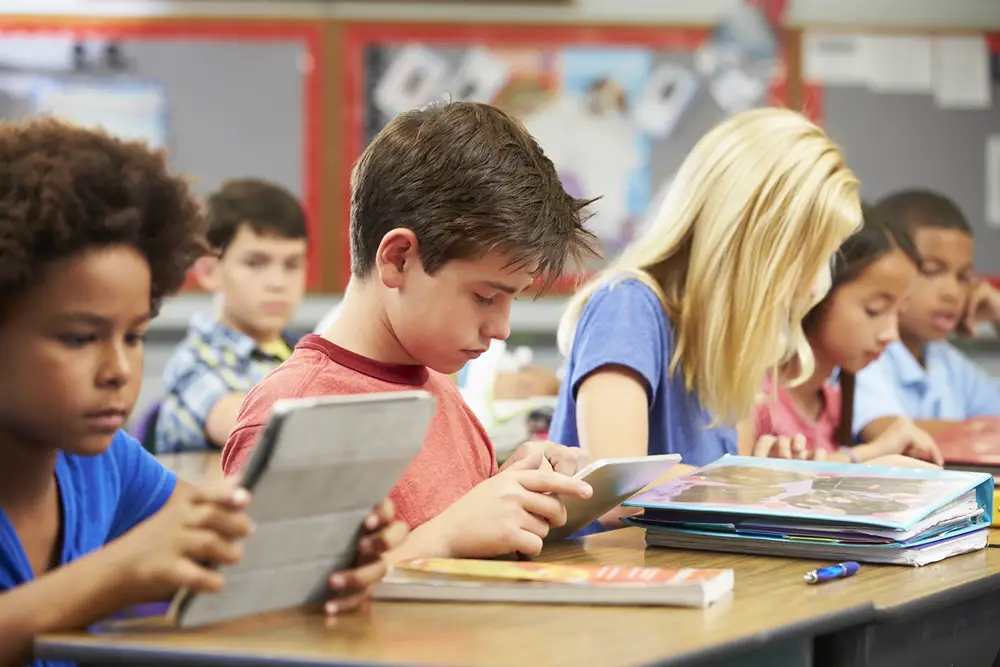
Such courses enable the delivery of educational materials by using various computers, tablets, laptops, or even smartphones. The major advantage of this learning process is that students no longer need to have a passive role.  You may choose what course or material to take right at the moment. This may be through various podcasts, materials for reading, videos, and other materials. Delivery can be through Microsoft Teams, Zoom, or any other similar tools.

2. Blockchain for Education

The technology of distributed ledger has changed dramatically in many industries and it has also touched education. We can say even more – that is one of the most beneficial tech trends in education students may experience. It is used for arranging the so-called Massive Open Online Courses (MOOCs) that enable not only learning, but also the assessment of the gained knowledge and skills. Even more – the approach enables students to have extra benefits during the job-hunting process as they submit results of the completed courses to prospective employees.

3. Video-Assisted Education

Besides the fact that videos are more engaging, you can easily go back and review material or skip certain pieces to arrange your time more freely. Video assisted education is an ed-tech tool already common in school classrooms and not just select online learners. This approach can be very effective for distance learning. Videos, especially animated ones, can enrich any course or lesson dramatically. The resistance for online educators to use this teaching method if often due to a lack of knowledge of how to create or find educational videos for use in their online teaching.

4. Gamification

This current and possibly one of the most exciting trends in education enables learning to interact and be more engaging. This makes real fun of any educational process and can boost engagement and productivity. By striving to get higher scores in any game, the students strive to gain more knowledge and express such on time. And all these things are made in an atmosphere of fun. That can certainly sound amazing to any parent or educator, as long as they see positive results.

5. Artificial Intelligence

This is one of the primary trends in modern innovation in education that can help keep students from being left behind as other progress. It can make basic and other study activities automatic, for instance, in terms of grading. This tool is also effective for arranging the process of delivering study help by tutors. It is also possible to assess and monitor the performance that students have. It is predicted that the role of artificial intelligence in education will increase further, for obvious reasons.

The plagiarism checker is considered to be one of the manifestations of artificial intelligence. The plagiarism calculation algorithm finds non-unique lines in the text. This type of plagiarism check is constantly being improved. Many schools have already introduced plagiarism testing with artificial intelligence.

6. Social Media Networks in Education

Since the birth of social media networks, they have always been a way for students to connect with friends outside of the classroom.  When students are unable to get together in person, which is especially true for eLearners, they can use these same networks to create study groups.  Student to student connection away from school already becoming more widely used by many educational institutions and courses. There are also ways to integrate social media as a teaching tool.  This is more than reasonable as many students spend a lot of time there anyway. Such networks are also used at the moment as communication tools between the representatives of their educational institutions.

This approach enables the sharing of various educational materials, opinions by commenting on posts and arranging discussions. The success of using social media networks in education makes us believe it is possible to build a new culture of collaboration in the area of education and improve it dramatically.

7. Learning Analytics

The existing landscape for this type of tool has been expanded dramatically. Learning analytics has become even more relevant to higher education.  This tool enables the optimizing of the educational process and measuring the result of such by educators.

Learning analytics has been also used by various online tutors and similar services for obtaining relevant feedback on various matters. When teachers or tutors review the feedback for their students, this enables you to enhance the learning process and make it more productive. For instance, educators can see exactly what type of information (infographics, images, videos) work better. This technology can also identify students that are experiencing various challenges and assist them in overcoming learning difficulties.

Will Virtual Learning Remain Continue to Grow?

We presume that the trend will remain even after coping with the challenges the world is facing. There will also be the need for it in some form and this approach has presented many benefits for students and teachers alike. Virtual learning can save time, offer more freedom, and when done properly can produce the same results as a traditionally-organized education process. Only time will tell whether or not virtual learning will continue to grow or subside to previously normal levels.

What Does the Future with EdTech Look Like?

Regardless of the specifics, we believe the application of various online technologies will remain a trend and implement new aspects of developing technologies, including automation. Firstly, Edtech trends seek to bring better accessibility, more safety for online-learning, a focus on emphasizing the correctness of online-learning, enabling less but effective supervision, and ensuring other aspects crucial for effectiveness.

Last Words

Applying various online tools instead of traditional approaches has a good probability of gaining new benefits for managing time and performance. Independence and technical awareness are crucial aspects every student should explore for success in life.  Educators can help by also learning how to offer present new EdTech innovations in their classrooms to ensure no student is left behind.

Share This Article

Tech Trends That Will Make the Internet a Safe Place

Tech Trends for Safe Kids Internet

Not too long ago, children were born into this world and going on the internet as a preschooler was the last thing on any parent’s mind as a fun thing for their kids to do. If they did, it certainly was not from the palm of their hand on a smartphone or tablet, much less a gaming device connected to friends online.

Children nowadays access the internet daily for school or pastime starting from a very young age. And since they might be too young to understand potential threats and consequences of their actions, parents, educators, and online service providers are obligated to step in and promote safe internet for children.

If you’re a parent, you already know that keeping children safe in the ‘Internet of Things’ era is an uphill task. However, technological advancement doesn’t only mean more risks or dangers for children online or in an educational setting at school.

Here are some technological trends that are making the internet a safer place for children.

Internet of Things

The Internet of Things or IoT, in short, enables a seamless connection between multiple devices. In a broader sense, everyday devices contain sensors and stream data to and from the internet.

Ironically, many IoT devices like baby monitors and smart toys have gone from a way to protect children to devices that could put them at significant risk.

Regulatory bodies are continuously making efforts to impose safety standards on manufacturers of such devices and toys. These regulations call for stronger protocols and encryption and more options available in parental controls so that parents can filter out questionable content and the amount or nature of data being collected.

Using apps that sync across devices, parents can access and control many of these devices from a distance. This is greatly beneficial for monitoring which data is being exchanged, through which channels, and ensuring that sensitive data doesn’t fall into the wrong hands (or ears). It makes it easy for parents and educators to keep an eye on children’s activities both online and offline.

User and Entity Behavior Analytics

Online parenting forums are awash with hacking incidents where passwords and usernames fall into the wrong hands. Once a hacker gains access to your account or device, they can waltz in and do as they please.

Unfortunately, not all breaches are detected fast enough to prevent damage or data leaks. This is especially problematic if personal data of children are involved.

In the future, such incidents should create less worry for parents, though.

One of the latest advancements in cybersecurity is User Behavior Analytics (UBA). The technology uses data analytics to identify anomalous user behavior and alerts administrators about suspicious activities.

UBA uses machine learning technologies to “learn” about a user’s normal and regular activity pattern. It can then differentiate between a legitimate user’s activity and an attacker who has gained entry by compromising log-in credentials if these activities don’t fit the norm of the legitimate user.

While UBA is still only in the realm of large organizations, its ability to quickly detect and respond to unusual activities in places that children frequently visit makes it a viable solution for minimizing future data breaches and leaks.

Multifactor Authentication

Many applications, websites, and devices use Multifactor Authentication or MFA in short, to improve account security and protect against identity theft. Technically, MFA refers to any system where a user must use at least two authentication forms to access a device, an application, or a website.

If your children use devices or applications, you’ll find MFA handy. Immediately after you log into a device with your username and password, the account server will prompt you to provide a second and independent authentication form.

It’s more or less what happens when bank security asks to see your social security card even though your funds are already secure.

MFA’s concept is that it’s difficult to pretend you’re someone you’re not when you have to prove who you are in different ways repeatedly.

If you’re monitoring how often your child uses a device, MFA will make it hard for your child to use the device even after getting their hands on the device without your approval. Most importantly, it will help keep out those that shouldn’t have access to it in the first place.

AI and ML

AI, along with IoT and other emerging technologies like ML, are continuing to change how we use the internet. Nearly all modern devices that enter the market are IoT enabled. This includes not only smartphones but also TVs and gaming consoles, as well as almost all Virtual Reality gaming setups.

Together, these technologies are shaping a safer internet environment for children. Artificial Intelligence and Machine Learning come complete with advanced language processing abilities. That means that unsafe content can easily be filtered out.

As an example, such technology enables fast image processing that analyses the content of the image and then interferes before a child can see it.

Recently, Instagram updated its filters to remove comments intended to upset or harass its users automatically. The new filter hides negative comments about a person’s character, appearance, and any other content that poses a threat to a user’s physical health and well-being.

Wrap Up

The internet is an exciting place, but is it really safe? Can you, as a parent, allow your children to use it unsupervised? The answer is probably a resounding no. There are apps available to monitor internet activity in your home and on your child’s phone. 

Online safety is a continuous battle that never ends. Malicious attacks, inappropriate content, and data theft methods continue to evolve along with the technologies intended to prevent them.

So what can a busy parent do? The answer lies in taking advantage of tech trends designed to prevent malicious content from showing up in searches. Teachers can also incorporate the use of social media in the classroom while teaching internet safety.

Using safe environments such as Safe Search for Kids, YouTube Kids, and implementing all available mechanisms to filter out inappropriate content on devices is a start. Tech progress and trends like some of these mentioned here will contribute to making the internet a safer place for kids.

About the author:

Ashley WilsonAshley Wilson is a digital nomad and writer for hire, specialized in business and tech topics. In her self-care time, she practices yoga via Youtube. She has been known to reference movies in casual conversation and enjoys trying out new food. You can get in touch with Ashley via Twitter.

Share This Article

The Pros and Cons of Online Speech Therapy for Kids

Online-Speech Therapy for Kids

Due to recent events and advancements in technology, parents have been opting for online speech therapy for their kids. Children can continue with their education and get help with their speech and language issues from the comfort and safety of their homes. However, learning via web access has both positives and downsides. Here are some factors to consider.

Understanding Speech Therapy and How It Works

So what, exactly, is speech therapy? Provided by a speech and language pathologist (SLP), speech therapy evaluates and treats children, identifying communication struggles and helping them speak and listen with greater proficiency. Most schools have a trained therapist on their staff to help children dealing with articulation and verbal comprehension. These professionals also help with developing proper fluency, understanding instructions and social cues, and expressing themselves clearly. Children may perform exercises under the therapist’s direction to tone their facial and throat muscles to form words clearly.

Teletherapy Can Prove Beneficial

Now that kids are attending digital classrooms using tools like Zoom, Skype, and Google Meet, speech therapy is also offered online. Parents can sign up their kids for teletherapy sessions with trained SLPs.

Most virtual sessions proceed much like personal one-on-one sessions. Therapists use cue cards, images, books, reading classes, and verbal exercises such as poems and rhymes to help kids with their speech challenges. This method of teaching has several advantages.

Most importantly, therapists can continue to treat their patients without having to meet them personally. Children need not miss out just because of stay-at-home orders. Considering that the key to successful therapy is repetition and practice, kids can continue to make progress even if they are at home. Therapists can connect with kids in real-time, having interactive practice lessons via the web access using audio and video applications.

Another essential of speech therapy is group classes. Kids learn best when watching their friends speak words, recite poems, and perform actions and exercises. Teletherapy allows SLPs to conduct sessions with multiple students, each mimicking the motions other kids make and learning quickly. Interacting with their friends and having fun while they work is essential to maintain interest.

Children Can Access Learning Programs Using their Android Tablet or iPad.

Recent speech therapy programs are easy to access and use. You won’t have to invest in special apps or download and install them for video conferencing. The sessions are brought to you via live streaming. Parents only need to permit screen access to the therapist. Complete confidentiality is maintained as the SLP designs classes around the child’s specific deficits and works on correcting them. For instance:

  • They may take over the screens to make small adjustments and adapt images, so the child understands them better.
  • Words are added and removed according to the student’s advancing capabilities.
  • Visual tools make the entire session fun and interesting. Kids can tap on an image to see an animation that reveals more about the bird or animal. Or, perhaps, the letter and words that start with the letter.
  • SLPs can watch and evaluate the child to make recommendations for additional classes accordingly.
  • Parents can be present in the room when the class is in progress to understand how to conduct reading lessons

Is Online Speech Therapy Right for Your Family?

While adopting technology to continue with speech therapy sessions is a great idea, it can have some downsides also. Here are some factors you will want to keep in mind.

  • Children need web access with a high-speed internet connection and devices like laptops, PCs, tablets, or phones to connect with their therapists. Students with unreliable internet access or a bustling home where they can’t concentrate may find it hard to acquire these essentials.
  • Getting kids to sit still and attend classes can be challenging. Parents may have to supervise to ensure that the child maintains focus.
  • Effective speech therapy is also about picking by facial expressions and subtle body language cues. Children learn best when they watch how facial muscles work and coordinate sounds with lip movement. With the quality limitations of video, they could miss out on these intricacies and nuances of speech therapy. This could result in slower progress.
  • Equipment failure and breaks in internet connection could hamper real-time classes. Both students and therapists have to learn to navigate applications. Often, small errors like keying in the wrong password or students being unable to log in could lead to unwanted delays in getting the classes going.
  • Considering that many kids also rely on the internet to keep up with their regular studies and curriculum, speech therapy could add to the total digital time and fatigue.

Using technology and web access to ensure that kids keep up their education and speech therapy is a great idea whether they are taking virtual school classes or not. However, parents, kids, and therapists have to work their way around the challenges so that the program achieves the desired results.

Learn More About Your Child’s Health

Is Online Therapy for Teens a Viable Solution?
Do Babies Always Respond to Their Name?

Share This Article

Art is a Science: Using Science to Nurture Your Child’s Talents

Art is Science - Albert Einstein

The greatest of greats have always emphasized the importance of art in society. In the words of Albert Einstein, “The greatest scientists are artists as well.” Children with an inclination towards the arts are, definitely, gifted. However, this talent must be nurtured for them to become the artist they dream to be.

Before digging deeper into the ways science can help children become the best artistic version of themselves, let’s throw light on the closest relationship that science and arts share!

Dave Featherstone, Professor of Biology and Neuroscience, believes that science and art are the same things. He wrote on Quora, “Both science and art are human attempts to understand and describe the world around us.”

While he granted that their traditions, approaches, and intended audience might differ, he also argued that the motivation and goals of both science and arts are fundamentally the same.

Once you understand this, it’s easy to see why opting to develop art with a scientific approach must is an ideal choice in parenting!

So let’s discuss how the study of science is essential in not just developing a growth mindset towards a better career, but also help your kids learn develop latent talents that might make them successful in sports, arts, or any vocation of their choosing. Here are five such “talents” that are nurtured as a result of studying science and technology.

Creativity

Both science and art observe, explore, and create. Science helps kids to ask questions, observe more, and therefore get better at their pursuits.

Encourage your child to make observations from any activity they engage in and then record them by writing them down, drawing a picture, taking a photo, or making an audio or video recording. Your children, via science, learn to compare and contrast things and use them better in other activities such as music, painting, and storytelling.

Science doesn’t follow one method to discover results. In fact, many discoveries have happened by accident. This effect falls out into other fields as well. For example, great novelists hardly ever have defined templates to write stories. They use their life experiences and knowledge to create masterpieces.

Another great example where art projects are based on science is activities such as crafts, woodworking, knitting, etc. where measurements are important. This is where the intersection of math and art also comes into play. Without the knowledge of machines and calculations, creating those pretty crafts can be quite a task.

Once they ingrain these concepts (even if you haven’t explicitly taught them), your children won’t shy away from trying out new methods of creation – and more importantly not quit after a few tries.

Planning

Science is a systematic subject that allows kids to learn organization, scheduling, and estimation like nothing else. For most goal-oriented activities that kids undertake – whether in the course of playing, or related to their school projects, or simply any classes our courses they might be enrolled in – planning is a core requirement.

Here’s a simple, graphic example of everyday activities that involve both fun and learning for children. You’ll notice that none of these actions are possible without some elements of a scientific approach.

Each of these activities requires a lot of preparation. From gathering resources and tools for your experiment to learning about new concepts, to collaborating with other curious minds, science is a journey of continuous planning.

With planning skills acquired through small activities, kids can develop their skills and aptitude in artistic pursuits.

Of course, creating art, irrespective of its form, still is a lot of hard work but taking a scientific approach and starting with a plan makes it easier.

Adaptability

Adaptability, as a life skill, might seem a bit too much for young children. However, it’s crucial to teach them to be flexible early on in life. Experiments help children cope with failures, making them a lot more adaptable adults later.

Children who develop the tendency to try on in the face of failure find it easier to adapt to difficult situations later in life. Science experiments expose kids to mistakes, and failure. But eventually, they learn where they went wrong and correct themselves, which makes them less rigid in turn.

Creating art requires adaptability at its best. In painting and sculpture, an endless amount of raw material is wasted. Not a single scene of a film is finalized without dozens of retakes.

With a scientific bent of mind, kids grow up to be patient adults who can handle challenges like creative blocks and go on creating the relevant art forms that appeal to different cultures and societies.

Curiosity

One thing that artists and scientists have in common is their curiosity: the eagerness to learn more and present their own concepts to the world. It follows that curiosity is one of the most important things a child needs to have.

Whatever we know about the world today is because someone was curious enough to ask a question. Children learn things by asking questions. Asking a question is the way to discoveries.

Now children have an ingrained sense of wonder. Combined with curiosity, it can only turn into something expressive and creative. If kids who are inclined towards art have a curious mind, they’re sure to go places and discover themselves!

As a parent, you must encourage your child’s curiosity and self-understanding. You can do so by saying things like “I wonder why I’m happy to see yellow cars!” or “I wonder what Indian curry tastes like.”

Listen to kids’ questions carefully and guide them through self-discovery of the solution rather than spoon-feeding them with answers. Give them a description (or maybe a printout) when you see them unable to make or draw something from imagination, but don’t build it for them.

Critical Thinking and Decision-Making

We adults learn from our experiences – and so do kids. A STEM approach to learning helps children think and act rationally, and also exposes them to environments that test their decision-making skills.

Kids, however, tend to make impulsive decisions. Science teaches them that there is more than one solution to a problem and that the best decisions are those that are well-thought out.

This helps them develop critical thinking skills.

In fields like architecture, marketing, and film making, critical thinking is central to the outcome of every project as well as appealing to a target audience.

Needless to say, a child who develops the knack of seeking out and looking at different solutions objectively, and choosing the best one among them.

Final Thoughts

When you teach science to children, they learn life skills that play a crucial role in nurturing different types of talents within them.

The greatest actors, painters, musicians, and sportspeople swear by science, while scientists believe in the artist or player inside them. So, go on and instill a love for all vocations in your kids and let them choose their calling. With just the right amount of encouragement, your curious and hyperactive kid might just turn out to be the Leonardo da Vinci of the internet age.


Author bio:
 Shreiya Aggarwal-Gupta is the owner of the early education startup Kidpillar, which aims to provide developmental opportunities and resources for young children in the field of STEM (Science Technology Engineering Mathematics) via kid-friendly journals, practical DIY-kits, and simple project-based learnings and workshops. Shreiya is also a passionate blogger, computer science engineer, finance whiz, and “perfect mommy” to her son.

Share This Article