Should You Interact with Your Child on Social Media?

Mom's online with kids

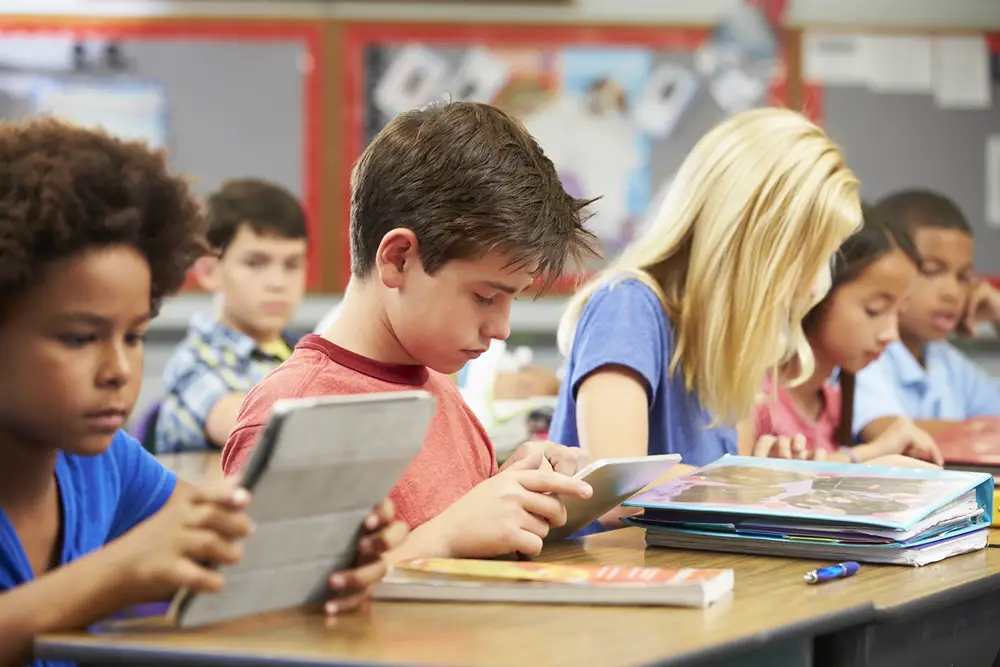
Social media is an integral part of our lives these days, and that’s doubly true for kids growing up in a post-Facebook world. Since parents and children are often on the same social platforms, it may seem natural to follow your child and interact. Is it a good idea though? The topic is more complex than it seems.

There’s No One-Size-Fits-All Answer

Like so many other issues around parenting, this is a case where every family and child is different. What works for one may not work for another. Family dynamics and the needs of individual kids should dictate the best way to approach social media use. The important thing is to understand that these apps are likely a big part of your child’s social life and that boundaries should be respected—both yours as a parent, as well as your child’s.

The other thing to consider is that if you interact with you child on social media, you’ll need to consider your own social media settings to ensure it doesn’t effect their safety.

Here are three tips to help you navigate the often-murky waters of online interactions with your kids.

1. Have a Frank Discussion About Social Media Boundaries

There’s often no better way to answer these tough questions than just being direct and asking. The reality is that for some kids, having parents involved in their lives is normal, while for others, it’s an embarrassment.

In either case, you should have a talk about appropriate use of social media, information privacy and security, and being safe online so that even if your kids don’t want much interaction, you can help them be smart about what they do on the internet. Even if you don’t interact with them on social media, you can still set and enforce rules for safe web use.

2. Determine If Interactions Would Seem Out of Place

Facebook and even Twitter aren’t the most popular social platforms for teens and kids anymore. Many now spend their time on Instagram, Snapchat, and other platforms. So pay attention to which platforms your kids use and how they use them

If you already have accounts on the same platforms that you use on a regular basis, following and interacting with your child may make sense; if you don’t, though, you run the risk of misusing the platform and potentially embarrassing your kid—to the extent that it could cause them to migrate to other platforms or adjust settings so you can’t see as much of their activity.

3. Decide Where Your Motivation Lies

Another way to determine whether you should interact directly with your child on social media is to honestly examine your motives. If you’re only trying to police your child’s activities, you may be wasting your time; it’s relatively easy for kids to adjust privacy settings to control what you can see. It’s also not uncommon for kids to have multiple profiles, with only one visible to family.

If your family already has a trusting, open relationship with one another, it might feel natural and fine for you to interact with them in online spaces. If there’s less trust, though, getting a social media account just to monitor your children or teens could further hurt that relationship. Kids are smarter than many give them credit for—they’ll know if you’re trying to be sneaky.

Boundaries on social media may seem murky to parents, but for kids who’ve had access to these platforms their whole lives, they are often very clear. Navigating this social online world as parents takes finesse, openness, and a willingness to learn. Because in the end, the most important thing is that your kids are safe and happy.

Hilary Bird is a digital journalist who writes about the things that fascinate her the most: relationships, technology, and how they impact each other. As more and more people become more and more reliant on their tech devices, Hilary wants to help them stay safe and understand how these devices will reshape the way we communicate. You can find more of her work at https://hilarybird.contently.com/.

Share This Article

10 Family-Friendly Movies with Trailers

Top 10 Family Movies of 2017

Movie night is a family tradition. Everyone sprawls around the TV with popcorn! It’s fun and can be the start of heated conversations. But what can you watch? Let’s look at some of the family movies that were made just for kids. Maybe one of these should be the next show for your movie night.

We are all different and like different activities. Watching movies as a family or on a date night with one of your kids is a great way to take a break from physical activated.  Watch the trailers for each of these good movies then decide which one you want to start with.

Links to the movie trailers open in new windows so you can watch the trailers without leaving this page. Enjoy!

LEAP!

Dreams need people to make them come true. This story, set in the 1800s, shows us an orphan girl struggling to become a ballerina. Her dear friend Victor joins in her fight. There’s dancing, action, adventure and people working together to make dreams come true. Watch Movie Trailer: LEAP

MY LIFE AS A ZUCCHINI

An orphaned child is befriended by a policeman who takes him to his foster home. Kids—you’ll find your mind filled with new and difficult thoughts, which is why you should watch this with your parents. The stop-action animation is a refreshing change from the usual animated movies, but it hits hard at the heart.
Watch Movie Trailer: MY LIFE AS A ZUCCHINI

THE LEGO BATMAN MOVIE

What silliness! What slick moves and eye-rolling giggles. Kids of all ages will be drawn into this odd twist on superheroes. Adults will enjoy watching this unusual take on a classic action legend. Best of all, you’ll get to watch Batman relax and enjoy himself for a change. Watch Movie Trailer: THE LEGO BATMAN MOVIE

KEDI

Love cats? Love exotic locations and seeing the world with fresh eyes? Enjoy documentaries? Okay, you might not think of a documentary as a good family movie, but KEDI will change your mind. Tour the city of Istanbul with some of the hundreds of thousands of cats that live there. It is thoughtful, beautiful and fun. KEDI is also a great introduction to documentaries. Be sure you get a version with subtitles.
Watch Movie Trailer: KEDI

CAPTAIN UNDERPANTS

Enter the quirky, zany world of world-class pranksters and a dimwitted hero. Readers of the infamously funny book series will be delighted. Grown-ups will be thoroughly entertained by the dialogue and action. This movie is a funfest for everyone who can handle a few—ahem—poop jokes. Watch Movie Trailer: CAPTAIN UNDERPANTS

WONDER

Movies can make you feel. WONDER is one of those movies. It shows you what life is like for a boy with facial deformities. You’ll cheer the heroes, swallow lumps in your throat and see the power of kindness. This is a real-life story with stars you’ll recognize. WONDER proves the power of movies. Watch Movie Trailer: WONDER

CARS 3

Sequels rarely match the quality of the original, but CARS 3 comes close. Kids will be drawn into the story of a familiar friend. They may not understand the scenes about McQueen’s aging, but many adults will understand his feelings.
Watch Movie Trailer: CARS 3

FERDINAND

Children have loved the book for years and now will love the movie. The world’s most famous bull fights against unfair judgement and bullying. Is “bulls” where the term for being mean comes from? Kids, you’ll enjoy this inspirational movie about friendship and true strength. Watch Movie Trailer: FERDINAND

THE BREADWINNER

This is an animated story about telling stories. But be ready. THE BREADWINNER tells the tale of a girl in Afghanistan. The Taliban arrests her father and she is left to care for her family. She survives by hard work—and escaping into a fantasy world. The story is moving and difficult, but rewarding. Be ready for a deep family discussion. Watch Movie Trailer: THE BREADWINNER

WONDER WOMAN

Greek mythology talks about strong, independent warrior women. Now, a new generation watches as a real-life female soldier acts in a movie about World War 2 and facing evil. This is a gorgeous movie that may not appeal to very young children, but will have everyone else enthralled. Watch Movie Trailer: WONDER WOMAN

So when is your next movie night?

Planning family fun this summer?  Explore summer staycation ideas for kids including how to make the most of your family movie night!

Share This Article

Safe News Search | Enhanced by Google

It’s important to ‘stay informed’ about what is happening in our local communities and globally. What goes on around us effects our lives and those we care about. Knowledge also equips us to stand up for others that may not have a voice.

To fight against misinformation and fake news, we provide Safe News Search. It filters new to provide reliable sources, while providing safe content.

Bookmark this page to Search for News Safely
enhanced by Google

A good start to understanding the issues is talking to parents and teachers about current events.  Discussions with friends can also help in broadening our horizons.

News Facts

In modern democratic societies, NEWS has become a primary source for people to learn about their immediate surroundings and the personal awareness of each individual spreads outward… from our local community – to our neighborhood – to our county, town or city – to our country and the entire world. In the age of the internet where information is immediately available and news is instant, it’s never been more important to decipher fact from fiction and the truth from unfounded rumors.

Before online access to any type information, you’d hear the phrase “you can’t believe everything you read’. Today, the phrase has been more commonly stated as “you can’t believe everything you read on the internet“. There are also human interest stories that are not necessarily breaking news (news that has just happened) but interesting stories that keep people entertained.

It really comes down to getting ‘the facts’ straight. So how does a person know what is true and that which is just someone’s opinion or even worse – unfounded rumors. We have come to trust journalists and news reporters to give us correct information but it is still important to get the right information from reliable sources.

The Five W’s of News

When News happens, these Five W’s need to be answered correctly.

  • Who?
  • What?
  • When?
  • Where?
  • Why?

Many will also answer a sixth question.

  • How?

So it is really the Five W’s and an ‘H. The more complicated the news story is, the greater research needs to be done to get all the information correct. For the journalist, this means it will take more words (and time) to explain the issue. This poses a problem for many news outlets, which we will explain in a moment.

So what are the news sources available for us to gain knowledge about what is happening on a daily basis?

Types of News

First, let us explore the different types of news ‘geographically’. Then, we will look at the best sources to get information about these various areas.

Local News – what is being reported on in your town or city.

Regional News – refers to news in your state (or province), as well as the a number of bordering states that make up a region.

National News – what is happening in the entire country.

World News – what is talking place in the rest of the world.

To gather news that is happening in these various geographical regions, you will need to explore the different news sources available.  For example, to learn about what is happening locally, you will want to seek out a local news source.  This will be a local radio or television station that features local news, or a newspaper publication that is delivered to your door.  On your smart phone, you can download a app for a local newspaper that allows you to set your news to see only stories that are relevant to your town or city.

Local news sources will also feature some information about events happening elsewhere, but it may not be as in depth since their focus is on local news. To hear more about national news, you will need to find a national newscast.  To learn more about the entire world, you may want to download an app from BBC news which is out of the UK but tends to be more globally focused in their news reporting.  The news source you are accessing will determine what type of stories are being delivered to you.

News Sources – Pro’s and Con’s

As mentioned, the more in depth a news story is, the more time it will take to explain all the details of Who? What? When? Where? Why? and How?  In this way, some news sources do a better job of it.

Newspapers

This is often the best way to get your news because newspapers (delivered to your door and sold at the local convenience store) do not have a limit on space to explain the 5 W’s and the H of a story.  This also means you will need to spend more time reading it but the reward is that you will be better informed.

News Apps

With the internet, there is a growing trend away from physical newspapers. News apps deliver the same news stories as a newspaper, but allows for easy and instant access through an app you download from the app store on your smart phone or tablet. To find local news apps, first learn the name of the local newspaper you want to read and then search for it in the app store. Apps do a good job of categorizing your news, such as local, national, world and specialty topics – such as financial news, sports, entertainment, technology, science, health and more.

Television News

The benefit of television news is that you can learn the basics of a story in just a few minutes. Newscasts will also feature many stories in a brief period of time. The downside is that you need to ask yourself: “Am I hearing the full story”? One thing to keep in mind is that television news is often hyped. This is because ‘bad news’ gets more viewers. Unfortunately, human beings gravitate to watching news that is about bad things happening to other people, or natural disasters.  Those who only watch television news tend to develop a darker picture of the world, when in fact, there are many good things happening in your community and the rest of the world as well.

Radio News

This is often a good way to get your local and regional news delivered in a short period of time. They also spend a bit more time explaining the issue if the radio station you are listening to is more geared to information and not music. Like TV news, radio does not spend as much time exploring the story being reported.

Talk shows on Radio and TV are good at exploring issues deeper, but many talk shows are editorial in nature. This means that it’s acceptable for the host (editorialists) to share his or her opinion about the issue. Whereas journalists are expected to deliver the straight facts without voicing their opinion.

Internet News

Similar to downloading a news app, you can go online and search Google for news related to a topic or bookmarking a website such as Google News and visiting it regularly. Like a newspaper, the news delivered on these sites is in print form and can offer an in depth view of your country and the world. Especially when reading news online, you need to be careful of fake news.

As you can see, there are many different types of news and a variety of ways to stay informed. So what is the best news that students should use? The simple answer is to not get your news from only one source. More importantly, to fully learn the facts about an issue or an event, a good place to start is understanding that the less time a news sources has to report the news to you, the less you will be informed.  Reading the news from a variety of sources is still the best way to be fully informed.

Detecting Bias in News

Even when a person is listening, viewing, and reading various news sources, they still need to be aware of bias.  As humans, we all have some kind of bias.  A good journalist will suppress their biases but no one is perfect. So, when learning about a subject, it’s not only important to be on the lookout for bias.  One should also check that their own bias is not interfering with desiring to get the facts straight.

Getting our news from multiple sources greatly helps us maintain a balanced viewpoint about any subject. But we still need to be mindful of doing own fact checking.  AI search engines will help in this endeavor as it becomes better at checking facts instantly across multiple platforms.

Fake News on Social Media and Disinformation

The world is buzzing with false media. Trolls are being investigated by police in the U.S., New Zealand, South Africa, Germany, Canada—in fact pretty much any country that has social media platforms. Britain has seen a wide variety of “missing kids” posts that receive lots of re-tweets and posts but turn out to be false.

The stress, panic and damage such posts cause to families and individuals can even be handled as a criminal matter. Why do people post false news?

Think about yourself. Suppose that you see two friends walking down the street. One girl–say, Linda–suddenly waves to a car that swerves over to let her in before swerving and speeding away. Later you hear that Linda didn’t show up at an after-school group. Nor has she posted anything on social media for hours. You start texting with a friend and after a few minutes you start to think Linda may have been kidnapped. You upload a post describing the last time you saw Linda and for a headline you type: Was Linda Kidnapped?

The headline is so striking, everyone clicks on it to read about Linda. Everybody who knows Linda shares the story and likes your post. You’ve never had so many hits on your page.

Studies have shown that likes and shares are the main reasons people post false or misleading news—they enjoy seeing the numbers climb higher than they’ve ever had before.

Meanwhile, Linda’s parents are freaking out. They try to call Linda and find her cell isn’t on. Only later, after frantic calls to the police who start a search and show up at your home to interview you, does Linda call home—she’d been at a swimming hole with her cousin and for three hours and didn’t have cell service.

This little story isn’t that far-fetched. People of all ages—not just kids—post stories not because they are true, but because the grim details get likes and shares. Major news sources do it because when more people click on their stories they can charge more for advertising. People do it to get more attention on social media.

Why Does News Matter to You?

Think about this: In some situations, people have been jailed for posting fake news. Some have been jailed simply for sharing fake news.  Worst of all, people have had to struggle through heart-ache and pain because someone posted fake information about their homes being burnt, about loved ones missing and killed.

More personally, if you are caught posting fake news, you will never be viewed as a real source ever again. People will read what you say and down-vote it. If you’ve been linked to false news, people will not believe what you post.

In these days of false news, multi-million dollar news outlets, from newspapers to globally-televised broadcast stations to top-rated website, all suffer when they report stories that fudge or play with facts. Don’t let that happen to you.

Read about the future of AI search engines in combatting misinformation.

Share This Article

Online Safety While Playing Pokémon GO?

This article has been updated for 2023.  It’s been seven years since Pokémon GO became all the rage. And even though the peak of it’s popularity is long gone, it is estimated that there are still an average of 79 million monthly users.  Later in this post we’ll look at specific online safety regarding this popular augmented reality game.  But first, let’s explore the obvious…

As new technologies and trends continue to emerge, we should know by now not to rule anything out. Who would have thought a few years ago that a game on your phone would bring game lovers outside to play, and exercise. This is a good thing.  At the very least those playing the game are putting in a lot of extra steps walking while breathing in fresh air. Others are running as their virtual reality leads them into the great outdoors.

Pokémon GO – Physical Gamer Safety

Now, here’s where the discussion of gaming safety comes in regarding the unique platform and that delivers Pokémon GO. There have been reports of minor injuries due to users not paying attention to their surroundings while playing the game. It can be as simple spraining an ankle while loosing your footing off a curb, or falling and landing on your elbow.

There is a verified news story about two young men who fell off a small cliff and had to be rescued. To be clear, they climbed a fence to access an area not open to the public which led them into harms way.

Now, we will say it again! The fact that people are venturing outside and getting some exercise is a very good thing. Sitting on your couch and doing nothing over a lifetime will quite frankly – shorten your life.  Bumps and scrapes are a normal part of a healthy active lifestyle. But we would also say that when caution and care is put into the equation, there are fewer broken bones.

We’ve mentioned walking and running, and we can take that to the next level for hikers, but what about biking? One of our writers saw a young boy was playing Pokémon GO in their neighborhood while riding his bike. Parents are diligent in telling their teens not to text and drive, now you’ll also need to warn them about the dangers of riding their bike one handed while searching for Pokémon on their phone..

… and yes, NO driving while playing Pokémon GO either.

Initial reviews of the video game include comments that it’s very easy to get lost in the game to the point where kids, teens and adults alike, pay less and less attention to the ‘real’ world around them.

The moral of the story? Get outdoors, YES! Have fun, YES!  Anything that encourages any member of society to ‘get active’ is indeed a positive thing, much like Wii Fit was first launched. But when you go outside, don’t leave common sense at the door.

Online Safety Concerns about Pokémon GO

Pokémon GO is indeed an online game and offline game.  There are physical hazards, where players can be so engrossed in the game that they become very unaware of their surroundings.

Now let’s shift to the main common concerns about the online portion of the game, which goes beyond becoming glued to your smartphone screen as you explore a revolutionary game that is played in the real world.

Pokémon Go is a location-based game

To play Pokémon GO, kids need to explore their natural surroundings.  And because other players are doing the same thing, it can often lead to encounters with other players. Parents should educate their children about the importance of personal safety and the potential risks associated with interacting with strangers.  Some of these players may be kids that are much older or even adults.

Privacy Concerns

Pokémon Go collects location data and requires access to a player’s device and camera. Parents should review and understand the game’s privacy policy and discuss the implications with their children. Teach children how to safeguard their personal information and being cautious about sharing details or images with others.

Excessive Screen Time

One of the most covered topics online related to any computer game or app is the amount of time people spend looking at a screen.  Pokémon GO can be addictive, leading to excessive screen time and potential negative impacts on physical activity, sleep patterns, and overall well-being.

The old adage used to be “get off your devices and go outside and play”.  With games emersed in augmented reality, kids are getting outside and running around while looking at their screens.  A balanced lifestyle means settings limits to smartphones in general, or video games for the avid gamer, and encouraging outdoor play, exploring hobbies, and conversing with friends.

The Dangers of Smartphone Use and Walking

Dangers of Texting and Walking

Zombies are invading the world!  Yes! There is a worldwide outbreak—of zombies. Germans calls these shuffling, bent creatures “Smombies,” a word made by joining two words: zombie and smartphones. Smombies are the people you see walking around with their eyes on their smartphones and not on the road ahead.

Each year, hordes of people are hurt by bumping into objects, falling into pools and getting hit by bikes and vehicles.

Innocent drivers who can’t avoid these zombies suffer from the trauma of hurting others. Older and disabled people walking down the street don’t move fast enough to avoid zombies and are commonly bumped and injured.

And this isn’t just taking place in your neighborhood. Zombies are a problem around the world.

In Seoul, South Korea, the city’s transportation department put up signs that show people using smartphones walking into cars. The signs are meant to remind people how dangerous walking can be when they don’t pay attention. The problem is that people must look up from their smartphones to see the signs.

Germany officials put bright strips of LED lights right in the sidewalk. This was done to keep people from walking into city trains. These lights have also been used in sidewalks in the Netherlands. Many people don’t like this idea, because it makes zombies feel that they don’t have to pay attention to the world around them.

In Austria, officials put airbags around lampposts to keep zombie tourists from smashing into them as they walk through the streets looking at their phones.

The city of Chongqing in southwest China has tried to solve this problem by making two walking lanes. One is for people who are not using smartphones as they walk. The other is for people walking with their heads down.

Honolulu, Hawaii, has passed a law making it illegal to enter a crosswalk while you are looking at your smartphone. People who step out into traffic with their eyes on their phone face huge fines.

Because of all the traffic accidents caused by zombies with their phones, Brazil has older ladies helping young smartphone addicts cross the street safely.

All around the world, zombies—or smombies, if you prefer–put themselves and other people in danger. You can help stop the invasion. The same goes for kids playing Pokémon GO outdoors and not watching where they are walking.  Remember this: a smartphone weighs about 4 ounces. A car can weigh about 80,000 ounces. When they hit each other, who do you think will win?

Now, look up.

Share This Article