Six Strange and Interesting Things You Can Learn About the World Today
The world is full of many wonders and marvelous mysteries. There is no much to learn about our planet, nature, and ourselves as human beings. Sometimes it all seems so random. Yet, when you look very close, you will see how interconnected things are. So, come! Let’s explore these strange and interesting things today.
When we open our minds to the marvels of the world and in the people around us, we expand our knowledge of the universe and grow to be better human beings.
Contents: Here is what you will learn as you read this article.
- Where Giants Walked – Did giants exist in the past?
- Pareidolia – Do you see things in the clouds?
- How We Talk Like Animals – Animals can’t talk, can they?
- Why Getting to Know Old People is Cool – What we can learn.
- The Scary Side of Sneezing. – Dark origins of Bless You.
- What Do Cats and Flies Have In Common? – You’d be amazed.
Some kids like history. Some like thinking about what the future will look like. Other’s enjoy discovering the vast numbers of animals in nature. Insects seem so small. Yet, we are just as small when you view ourselves within the earth and the universe.
Whatever your fancy, here are some strange and wondrous human interest things to discover. An adventure awaits for those willing and eager to learn.
1. Where Giants Walked
For centuries, the Goolarabooloo — a group of aboriginal people living on the northern coast of Australia — honored a very strange place. The ground there had deep impressions in the rock that the Goolarabooloo described as a place where spirits walked.Only when dinosaur experts examined the land did the world discover that the imprints were the tracks of dinosaurs who walked the earth hundreds of millions of years ago.
The footprints are partially covered by tides and the dinosaur scholars have to watch out for sharks and crocodiles when they try to study them. Most of the footprints are smaller than your hand but in March, 2017, the experts found one that excited the world: it is the largest dinosaur footprint ever discovered.
There are many of these massive imprints, frozen in time 115 million years ago, but the largest is five feet and six inches long—or 1.7 meters. This print is large enough for a man to lie down in. The creatures who left these impressive prints are from the dinosaur group called sauropods, the largest creatures ever to walk the planet.
Sauropods typically have very long, thin necks and long tails that tapper off at the end, with a gigantic boy in between. These massive dinosaurs were herbivores, living off vegetation, unlike their carnivorous relatives who ate other dinosaurs.
A large sauropod would be about the size of a 737 airplane.
The sauropod group includes the Brontosaurus, Brachiosaurus and Apatosaurus, all creatures that would have made elephants wee. A good sized sauropod would make even a Tyrannosaurus Rex look puny.
The discovery on these huge footprints spread from the north shores of Australia to people all over the world. Before this find, the largest dinosaur track was found in the Gobi Desert in Mongolia.
It, too, came from a sauropod—probably a Titanosaur—and measured 42 inches, or 106 centimeters. That was only a year before the discovery in Australia. As long as humans keep exploring and searching, even bigger footprints might be found for years to come.
The Goolarabooloo believe that those grand impressions are the marks of great spirits. People who love dinosaurs think that the Goolarabooloo might be on the “right track.”
2. Pareidolia – Images in the Clouds

Flat on the grass, face to the sky, you’ve probably gazed up and picked out shapes in the clouds: dogs, trees, ice cream cones and almost anything else. Or you’ve looked up at the moon and seen a face.
The ability to do this isn’t a sign that you’re seeing things; it tells you that your brain is performing a job that is not only normal, it may have helped keep early human beings alive.
The ability for the brain to see familiar shapes in random things is called pareidolia. No, the clouds aren’t really shaped like lions or two birds kissing. That’s simply your brain trying to make sense of shapes that have no sense.
People who study pareidolia have different ideas on why this is an important skill for our brains to perform.
One theory goes back to when humans lived in the wild. With all the dangers that can lurk in forests and jungles, the ability to spot danger—or safety—can be the difference between life and death. A human who can more quickly spot a predator can get a heads start on running away.
Another theory is found in the eyes of babies. With all the new shapes in the world, babies are instinctively drawn to faces. They will stare at a face for longer and more intently than any other thing in their new lives.
Some researchers say that babies can recognize familiar faces just weeks after being born.
Pareidolia is part of this learning process, because the brain, experts think, looks for faces. It looks for faces in stains on a wall, in clouds, in leaves –in almost anything.
In many famous instances, people have seen the faces of familiar people in food, like the almost infamous example of the image of Mother Theresa found on a cinnamon roll. Abraham Lincoln and George Washington have both been spotted in chicken nuggets. Kate Middleton’s face was seen on a jelly bean. These are all examples of pareidolia, seeing something –or someone—familiar in a totally unrelated object.
Counsellors sometimes use pareidolia to get insight into the minds of clients. This is done using a Rorschach Test.
This test uses totally random ink blotches. Psychologist believe that when clients look at the blotches, the thoughts on their mind will be revealed in what the client says they see in the blotches. If that theory is correct, then perhaps clouds are nature’s Rorschach test.
Next time you are staring at wall paper or embers in a fire or clouds in the sky and suddenly see a face, remember: There is nothing wrong with you. Your brain is doing one of the many extraordinary tasks it is wired to do: use pareidolia to help make sense of the world.
3. How We Talk Like Animals
 You wave at your buddies, signaling them to come close. You’re walking home from school, smell fried chicken and pick up speed. Your friend doesn’t see you across the park, so you whistle. You know that a girl or boy that you really like will be at the school dance so you make sure that you are wearing your good jeans.
Those are all examples of how you talk like animals talk.
We humans have developed ways of communication that go beyond how animals talk. We can exchange ideas about dreams and the future and technology. Animal communication tends to be geared to survival; that is, escaping predators, signaling the readiness to mate or about finding food.
We are animals and although we have evolved to create this marvelous thing called “language,” we still have the instinct to respond to “non-verbal signals.”
Consider crabs. They are known to wave their claws to signal to a potential mate. This is similar to you outstretching your arm and waving at friends.
Smells are very strong with animals, directing them to good eating, just like you with fried food. The scent animals use most commonly are created by pheromones, a hormone some animals secrete. These pheromones alert others about a perfect mate or of an approaching predator. Your male dog uses pheromones when he raises his leg to mark his territory.
Bird songs are whistles that speak a thousand words. They can be used to call their babies, alert others to danger and to scold an intruder. But humans also use whistles.
Primitive peoples are known to use whistling before using words. New Zealand aboriginals use whistled tones to talk to the dead. You use whistling to call your friends over.
Dancing is another method that animals use to communicate. Bees dance to signal not only the presence of food, but how good it is. That is called the Waggle Dance. Other animals dance as a method of communication—like humans. Think about that at your next school dance.
Elephants tell other elephants that they want to play by winding their trunks around each other. Gorillas communicate anger by sticking out their tongues.
Peacocks use their spectacular plumage the same way that girls, boys, men and women do: to show that they are attractive and worthy of attention.
From the beginning of life on earth, animals evolved and survived and went on to raise generations of little animals—and that includes us. We are long removed and advanced from animals in many ways. In other ways, we are bees dancing about food.
Remember that the next time you make a face at a friend who is about to say something silly.
4. Why Getting to Know Old People is Cool
 They move slow. Most don’t have Instagram accounts. They don’t listen to rap or ride hoverboards. They are so different from you that they seem like they are from another planet. So why should you get to know them or talk to them?
We’re talking about old people. Agreed, the word “old” is a relative word. But for this article, we mean older people that may be of similar age as your grandparents or even older. Some live for over a hundred years. Perhaps it’s an older neighbor with gray hair who is retired. Or a war veteran who comes to visit your school.
With social distancing these days it may not be possible for you to go visit an elderly person, but now is an ideal time to call someone you know. They be lonely with few or no visitors. Or they may be your neighbor and it’s could be as simple as saying high from your back yard or deck. But it won’t just be a benefit for you. Here are a few reasons to not “count them out”.
Old people are time travelers. It’s true. Think about a person who is 80 years old. When that person was a little child, there were no cellular phones, no Internet, no penicillin, no satellites, no microwave ovens or many of the small tools you use every day. 8o years ago, many people still didn’t have ball-point pens or telephones.
When you talk to an old person, you can see into the past. You can talk to someone who lived there. How did they visit with friends without mobile phones? What was life like without TV? How did they listen to music? An old person can take to back to a different time and a different world. When they talk about the world when they were your age, they are traveling through time. You are traveling with them.
Old people have learned to live with the hard parts of life. They may not know how to repair computers attacked by a virus, but they can help repair human problems. Old people have had their hearts broken and survived. They’ve lost loved ones and dear friends. Most of them have moved from their home to somewhere else. They’ve been hurt, bullied, insulted and had to struggle in life. No matter what you are feeling, an old person can help.
Old people know stuff you don’t. Remember, every life is different, meaning that every old person has different information in their head. Still, older people may know things that solve little problems you have. Need to put a wheel on a toy? Ask an older person. You lost a button? An old person can probably help. What do you do when the power goes out? Where is the oil in a car? When you have a question, ask an old person. You could learn a lot.
Old people can help you make big decisions. After living a long time, most people have made countless choices. Some of those choices were positive. Some were not. Ask an old person about those god and bad decisions. What do they regret? They can help you make better decisions so that when you are an old person, you’ll be happier.
That is your future. Yes, if you take care of yourself, you will someday be an old person. You will see the world and life change in ways that you cannot imagine. By talking and getting to know older people, you see into the future: YOUR future.
5. The Dark and Scary Side – of SNEEZING

Sneezing. We all do it. It seems so simple. You get an itch in your nose, a tickle in your head and then: HAH-CHEW! You don’t decide to sneeze. It just happens. A sneeze can be funny, but it can also be dangerous. In fact, sneezing has a dark and frightening history.
People have sneezed since the beginning of time. And all over the world people have responded to a sneeze by wishing the sneezer good health.
In ancient Rome people would say “Jupiter preserve you.” Ancient Greeks would say “good health to you.” Even though these people didn’t know about germs, they knew that sneezing was a bad sign.
Some thought that the soul left the body when a person sneezed. Wishing good health helped keep the devil away from that soul. Other people thought that sneezing was how a person got rid of a demon. A blessing was to help keep the devil from re-entering the person’s body.
The phrase, “God bless you” is believed to come from Pope Gregory The Great during the sixth century. This was when a deadly bubonic plague ran wild through Europe. The blessing was uttered after a sneeze in the hope of preventing the spread of the illness. Of course, it didn’t.
Probably the most familiar response to sneezing is: gesundheit. This is a German word that means “health.” In Punjabi, people say “Glorious Lord.” Latvians say, “To your health.” Albanians simply say, “Health.” While some cultures have different ways to answer the blessing, the usual thing to say back is: “Thank you.”
Sneezing is also thought to have inspired a famous old children’s rhythm: Ring around the Rosie. In the 1800s, people thought that the poem was a playful description of the plague. The words, “A-shew-A-shew we all fall down” was thought to describe sneezing then getting sick and falling.
While there are scary things that really happen in the world, history experts don’t think that the nursery rhythm was written because of the plague. Still, people still believe the story.
Of course, now we know that sneezing is one way our bodies get rid of germs. Years ago, people were told to sneeze into handkerchiefs. This wasn’t a good idea, because the germs still lived in the cloth.
Now people are told to use tissues then throw the tissues away and wash their hands. If you sneeze and do not have a tissue, doctors say that you should to sneeze into the elbow of your sleeve.
We know that sneezing isn’t caused by demons, but we do know that germs are dangerous. You can still say “God bless you,” but to be safe, use a tissue and wash your hands.
6. What Do Cats and Flies Have In Common?
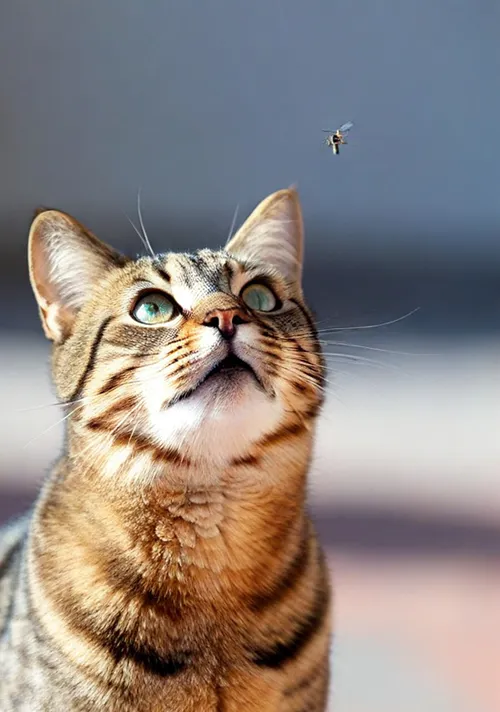 Cats and Flies. An odd pairing indeed. What do they have in common? The answer to this question is simple: useful hair. Your own hair can be useful. It can keep you warm, protect you from sunburn and, yes, show the world your style. But the hair on cats and flies can save their lives.
Have you ever watched a cat stalking something in grass? You strain to see what they’re after, but you can’t. The cat might not be able to see it either. What tells a cat that something is skittering around in the grass is its hair. Cat hair is extremely sensitive. When a mouse of beetle moves through the grass, it disturbs air. Cat’s hair is able to detect that movement.
Even tiny changes in air pressure can be felt by cat hair, pointing the animal toward a potential snack. The hair also alerts them to predators sneaking up behind them, helping keep the kitty alive.
That same special hair ability tells flies when someone is trying to swat them. When you swing a swatter towards a fly, the swatter compresses the air between it and the insect. The fly’s hairs can feel the air pressure changes overhead and has time to take off before the swatter comes down.
Cats and flies have something else in common: useful foot pads.
The pads on the bottom of a cat’s paws are very sensitive, able to detect temperature, pressure and even vibrations, giving the feline yet another tool for staying alive.
Fly foot pads perform valuable work, too, but again, the main reason is hair. Flies have hair on their legs.
They also have hair on their foot pads that produce a form of glue made of sugar and oil. This glue helps them land and walk on walls and ceilings. It also means that flies leave tiny, sticky little footprints on anything those foot pads touch, like counters and people.
This glue can hold diseases that stay behind after the fly has swooped away, which is why flies are known as health hazards.
Cats can carry disease on their pads, too, but at least they don’t make glue.
Cats and flies are incredibly different, belong to different animal categories. Still, they share the biological advantage of having useful hair. That hair, with its sensitivity to air pressure, means that when your kitten is trying to catch a fly, the fight will be even.